






Breeds
Australian Cattle Dog vs Australian Shepherd: Which Herder?
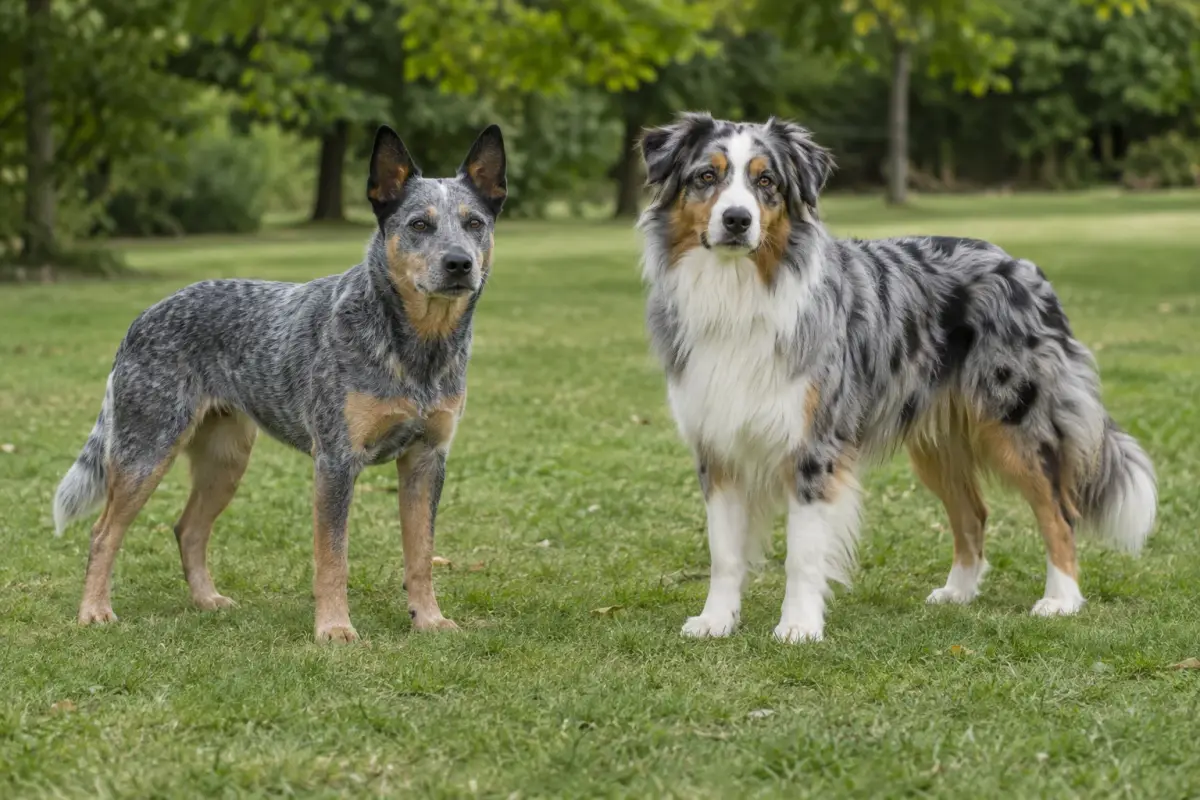
Despite their names, only one of these breeds is Australian. The Australian Cattle Dog, or Blue or Red Heeler, was developed in Australia and is related to the Dingo; the Australian Shepherd was perfected on American ranches. The Cattle Dog is smaller, tougher and more intense, with a short coat; the Aussie is a little bigger, fluffier and more of an all-round family herder. Both need very active, experienced owners.
By Matt GarnettUpdated November 10, 20264 min read4 sources
Side by side
Size: the AKC lists Australian Cattle Dogs at 17 to 20 inches and 35 to 50 pounds, and Australian Shepherds at 18 to 23 inches and 40 to 65 pounds. Lifespan: AKC gives Cattle Dogs 12 to 16 years and Aussies 12 to 15. Popularity: Aussies rank 12th on the AKC list and Cattle Dogs 52nd. Coat: Cattle Dogs have a short double coat in blue or red speckle; Aussies a medium-length double coat, often merle.
Energy: VCA rates Cattle Dogs very high with daily vigorous exercise and Aussies high with physical and mental exercise. Strangers: both may be reserved. Children: VCA says Cattle Dogs are best with older children and that Aussies are generally good with supervision; both may herd. Grooming: Aussies need more. Best for: Cattle Dogs suit very active, experienced owners; Aussies suit active families.
Origins
The AKC describes the Australian Cattle Dog as compact but muscular, related to Australia's wild Dingo, and smart enough to routinely outsmart its owners; it is also called the Blue Heeler or Queensland Heeler. It was built to move cattle over long distances, and VCA describes a dog capable of sustained physical effort that is intelligent and independent.
The Australian Shepherd, despite the name, was developed in the United States for farm and ranch work, VCA says. The AKC calls it a lean, tough ranch dog, a European breed perfected in California by way of Australia, closely associated with rodeos and cowboy life. That ranch versatility makes it the more adaptable of the two.
Temperament
VCA describes Cattle Dogs as extremely driven, often seeking out work, strongly bonded to family and reserved or protective with strangers. Herding instinct shows as nipping, especially without training, and an under-stimulated Cattle Dog can become destructive or hard to manage. VCA rates it best for experienced or highly active owners and notes it may be selective with other pets.
Aussies are highly intelligent and eager to work, according to VCA, often seeking tasks and preferring to be involved in family life. They may also nip or try to control movement, and they become anxious or destructive without stimulation. VCA describes them as usually compatible with other pets after proper introduction, which makes them a little easier in multi-pet homes.
Exercise and training
Both need far more than a walk. VCA says Cattle Dogs require intense daily exercise and mental stimulation, such as running, herding, training and problem-solving, and access to large outdoor areas. Aussies need significant daily exercise, with running, agility, training and problem-solving games described as essential. Both have limited tolerance for being left alone.
Train both with positive, varied sessions and start socialization early. Redirect heel-nipping into toys and give herding instinct a real outlet, such as herding lessons, agility or disc. Cattle Dogs can be more independent and stubborn; Aussies tend to be more eager to please. Either will find its own job if you do not give it one.
Grooming and health
The Cattle Dog is the easier coat: VCA advises weekly brushing, more during seasonal sheds, and occasional baths. The Aussie's medium-length coat needs regular brushing to control shedding and prevent mats, with extra attention during seasonal sheds and to the feathering on the legs and behind the ears.
VCA lists congenital deafness, hip and elbow dysplasia, progressive retinal atrophy and primary lens luxation among Cattle Dog risks. For Aussies, it lists hip and elbow dysplasia, inherited eye disorders, epilepsy and the MDR1 gene variant, which can cause serious reactions to some medications and for which VCA recommends genetic testing. Ask breeders for hearing, hip and eye screening, and share any MDR1 result with your vet.
Which to choose
Choose an Australian Cattle Dog if you want a compact, tough, low-grooming partner for hard daily exercise or real stock work, and you are experienced with independent, intense dogs. Choose an Australian Shepherd if you want a slightly larger, more family-oriented herder for hikes, sports and busy weekends, and you are happy to brush a fuller coat.
Neither breed suits a quiet home, a long workday alone or young children without careful supervision. If you are unsure, meet adult dogs of both breeds and talk to breeders or breed rescues about the energy level of the specific dog you are considering.
This page is general information, not veterinary advice, and it cannot replace an examination by the vet who knows your pet.
Common questions
Is an Australian Shepherd the same as an Australian Cattle Dog?
No. They are separate breeds. The Australian Cattle Dog was developed in Australia and is related to the Dingo, while VCA says the Australian Shepherd was developed in the United States for ranch work.
Which is bigger, an Aussie or a Cattle Dog?
The Australian Shepherd. The AKC lists Aussies at 40 to 65 pounds and 18 to 23 inches, and Australian Cattle Dogs at 35 to 50 pounds and 17 to 20 inches.
Which is better for families, an Aussie or a Blue Heeler?
Usually the Aussie. VCA describes Aussies as generally good with children under supervision and compatible with other pets after introduction, while Cattle Dogs are best with older children and may be selective with pets.
Which sheds more, an Aussie or a Cattle Dog?
The Australian Shepherd's longer coat needs more brushing to control shedding and mats. Cattle Dogs shed seasonally too, but VCA says weekly brushing is usually enough for their short coat.
Sources we checked
This guide is general information, not veterinary advice. If your pet is unwell or injured, contact your veterinarian.


