Breeds
Newfoundland: Temperament, Size, Lifespan & Care
A Newfoundland is a huge, sweet, gentle water dog with a special fondness for children. Newfies are calm and well mannered in the house and devoted to their families. They also shed heavily, drool a lot, struggle in hot weather and have a short lifespan, as giant breeds do. Here is what the AKC and VCA Animal Hospitals say about living with one.
By Matt GarnettUpdated November 14, 20264 min read4 sources
Newfoundland temperament and personality
The AKC says the Newfoundland is known for being sweet, gentle and devoted, with a special fondness for children, and notes it is a protective family dog rather than a watchdog. VCA calls the breed devoted, sweet, affectionate and very friendly toward strangers, sensitive, and a calm, well-mannered housedog.
Newfies were bred to work in water, the AKC says, pulling fishing nets and famously pulling people to shore. That calm strength and willingness to help is still the breed's character: a big, soft, patient dog that wants to be close to its people.
How big do Newfoundlands get?
The AKC says a full-grown male can reach about 28 inches and weigh 130 to 150 pounds. VCA gives the breed a height of 26 to 28 inches and a weight of 100 to 150 pounds, with females at the lower end.
Giant puppies grow fast. VCA says feeding a large-breed growth food may reduce the incidence or severity of hip dysplasia in adulthood. Keep a young Newfie lean, avoid hard exercise while the joints develop, and ask your vet about a target growth rate.
Newfoundland lifespan and common health issues
VCA gives a lifespan of 8 to 10 years, and the AKC's lifespan guide notes that giant breeds generally average 8 to 10. Hip dysplasia is the condition VCA names in connection with puppy feeding, and owners of giant, deep-chested dogs should also know the signs of bloat.
Ask a breeder for hip, elbow and heart results on both parents and which DNA tests the national breed club recommends. Ask your vet about heart screening and preventive gastropexy. A swollen belly with retching, collapse or labored breathing needs an emergency vet immediately.
Exercise and swimming
VCA says Newfoundlands need daily exercise such as a moderate walk or short jog, and that swimming is a favorite activity. The AKC notes that, despite their calm reputation, they are fairly active and need regular walks and play.
Swimming is ideal exercise for a giant breed because it is easy on the joints. VCA says Newfies enjoy cold weather but do poorly in warm weather, so exercise early and late in summer and give shade, water and a cool place to rest.
Newfoundland grooming, shedding and drool
VCA describes a dense undercoat under a coarse, moderately long outer coat, recommends brushing once or twice a week, more during shedding, and rates shedding as above average. The AKC says the double coat is oily, which helps in the water.
The AKC says to expect a lot of drool and keep a drool rag handy, and VCA agrees. A slicker brush, an undercoat rake and a long-toothed comb handle the coat. Dry the coat fully after swimming, trim nails regularly and check the ears.
Training a Newfoundland
VCA says Newfies learn quickly and are eager to please, respond best to reward-based training with food, and benefit from obedience training for control and mental stimulation.
Start leash manners and polite greetings early, while the puppy is still manageable. A 130-pound dog that jumps up or pulls is a problem even when it means well. Water work and carting events give the breed a job it enjoys.
Keep sessions short and positive.
Are Newfoundlands good with kids and other pets?
The AKC notes the breed's special fondness for children, and VCA says Newfies are patient with children but that dogs and children should always be supervised. Sheer size means a happy Newfie can knock a small child over.
VCA says the breed is good with other pets and friendly toward other dogs. Most Newfies are easygoing housemates for cats and dogs they are raised with.
Give the dog a cool, quiet place to rest.
What a Newfoundland needs at home
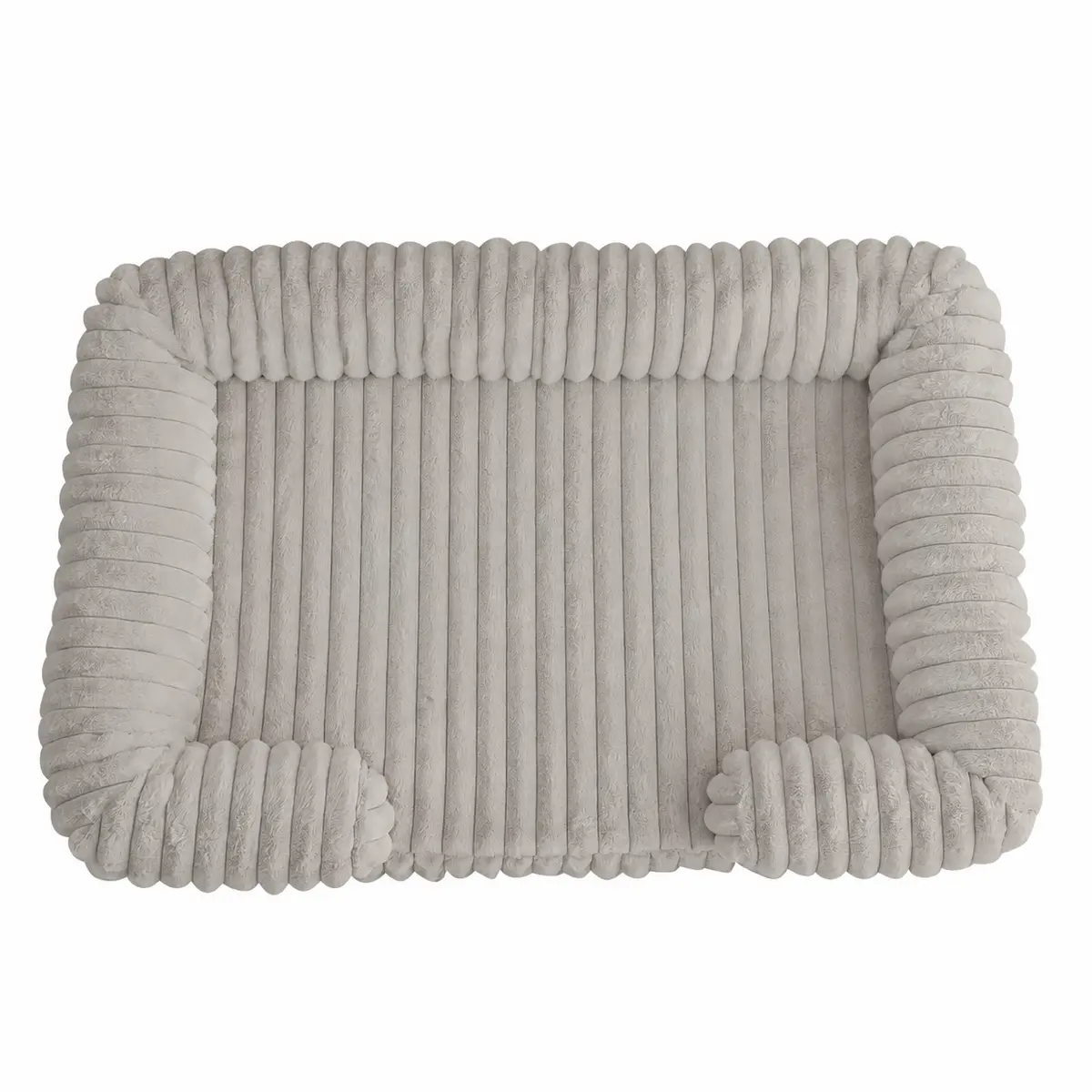
Plan for size, hair and drool: an extra-large crate, a large orthopedic bed, a vehicle ramp, a fenced yard, towels and drool rags, and a cool spot with a cooling mat in summer. Expect to vacuum often.
For care, keep a slicker brush, an undercoat rake, a comb, a nail grinder, ear cleaner and a dog toothbrush, plus a sturdy harness and leash. Ask your vet about joint, heart and bloat care early.
This page is general information, not veterinary advice, and it cannot replace an examination by the vet who knows your pet.
Common questions
How long do Newfoundlands live?
VCA gives a lifespan of 8 to 10 years, which is typical of giant breeds. Joint and heart screening of the parents and knowing the signs of bloat both matter.
Do Newfoundlands drool a lot?
Yes. The AKC says to expect a lot of drool and to keep a drool rag handy, and VCA says the same. Many owners keep towels by the door and the water bowl.
How big do Newfoundlands get?
The AKC lists an average male at about 28 inches and 130 to 150 pounds, and an average female at about 26 inches and 100 to 120 pounds.
Are Newfoundlands good with kids?
The AKC says the breed has a special fondness for children, and VCA calls it patient with them. Its size still means children and dog should always be supervised.
Sources we checked
This guide is general information, not veterinary advice. If your pet is unwell or injured, contact your veterinarian.