






Buying guides
Best Dog Bed for Senior Dogs With Arthritis: How to Choose
The best bed for a senior or arthritic dog has thick, supportive orthopedic foam that does not flatten under the hips, a low or recessed entry the dog can step onto rather than climb, and a waterproof liner under a washable cover. Size it so your dog can stretch out fully, and put it somewhere warm, quiet and on a non-slip floor.
By Matt GarnettUpdated November 14, 20263 min read3 sources
Why older dogs need a different bed
Joint disease is common in older dogs. VCA Animal Hospitals reports that osteoarthritis affects about 80% of dogs over eight, and recommends soft, padded bedding as part of managing it at home. The AKC notes that arthritis and hip dysplasia make a supportive bed important for easing nighttime and daytime discomfort.
Signs a dog's bed is no longer enough include stiffness on rising, circling for a long time before lying down, choosing hard floors or the sofa instead, and slowness on stairs. Those signs also mean it is time for a vet visit, because pain can be treated and a bed is only one part of care.
What matters most: support and access
Support means the foam holds your dog's weight without letting the hips and shoulders sink through to the floor. Solid orthopedic or memory foam does this better than loose fiber fill, which clumps and flattens. A practical test: press firmly with your palm in the middle; if you feel the floor, the bed is too thin for a heavy dog.
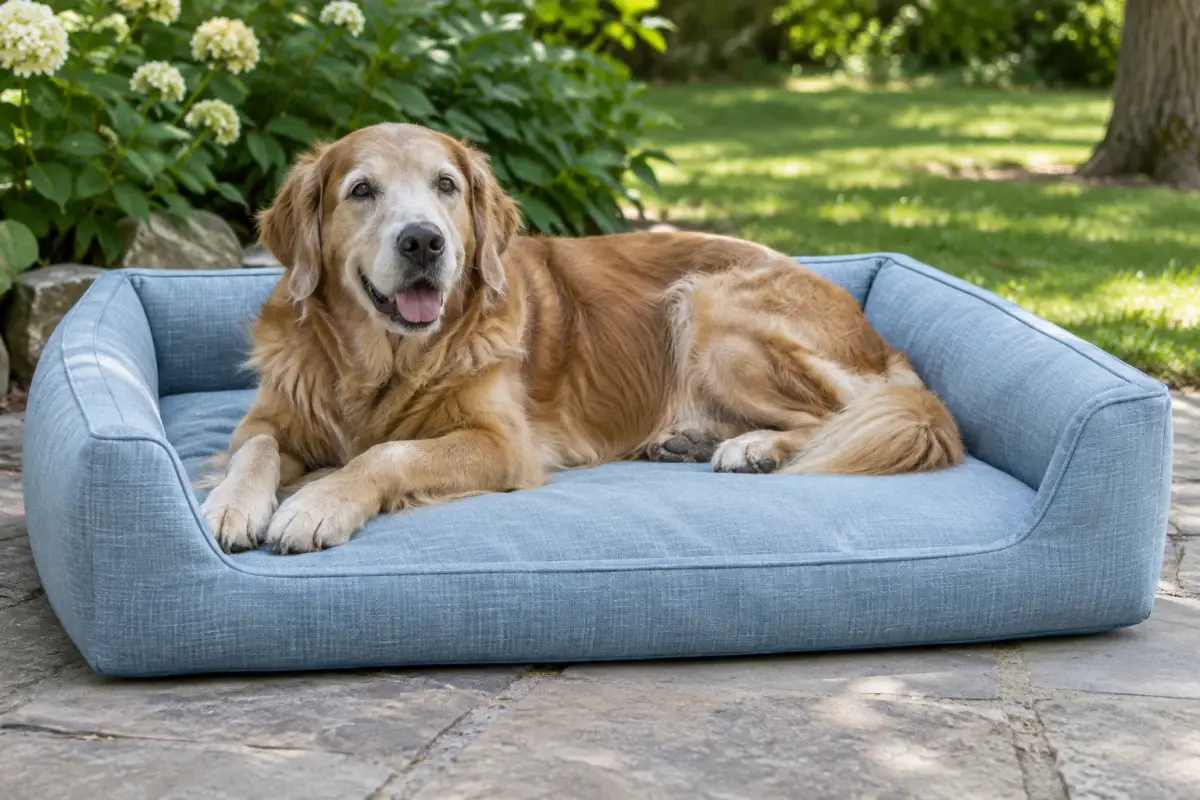
Access matters as much. VCA notes that a recessed orthopedic bed is ideal for mobility-compromised dogs because they do not have to climb onto it. A low, flat mattress or a bed with one low side lets a stiff dog step on. High bolsters help dogs that like to rest their head, as long as one side stays low.
Bed types compared
Flat orthopedic mattresses are the easiest to get on and off and suit large and stiff dogs. Bolster beds with an orthopedic base add a headrest for dogs that like to lean. Elevated cot-style beds keep dogs cool and off cold floors, and the AKC says they support joints, but some seniors find stepping up onto them awkward.
Heated or self-warming beds can comfort stiff joints in cold weather; choose a low-voltage design with a chew-protected cord and supervise dogs that chew. Fluffy donut beds look cozy but often lack the support an arthritic dog needs.
Incontinence, cleaning and placement
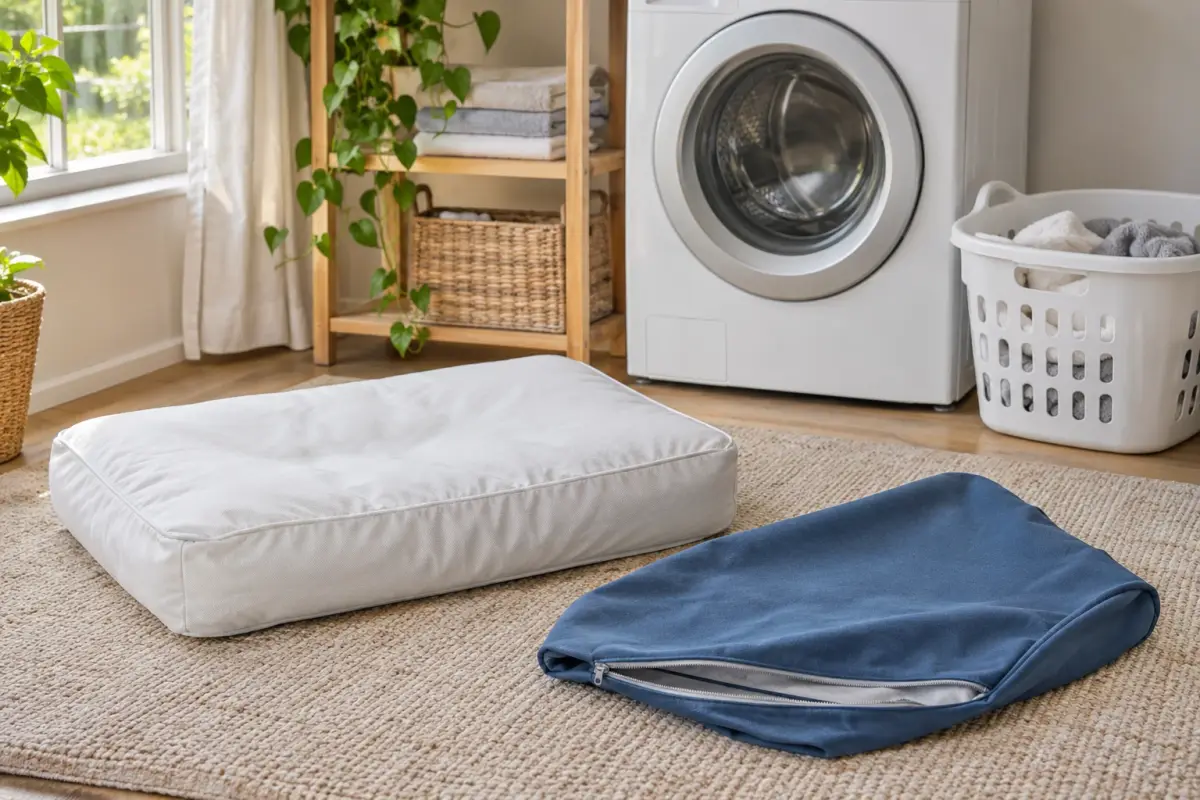
Older dogs have more accidents. The AKC and VCA both stress a machine-washable cover, and a waterproof inner liner protects the foam, which is the expensive part and hard to clean. Buy a spare cover so the bed is never out of use on wash day.
Put the bed where your dog already likes to rest, away from drafts, and on carpet or a non-slip rug. VCA notes that hard floors are difficult for mobility-limited dogs to walk on securely, so a rug path from the bed to water and the door helps. Avoid locations that require stairs.
Sizing and when to replace
Measure your dog lying stretched out on its side, nose to tail, and add about 8 to 12 inches; older dogs often sleep stretched rather than curled. Wider is better than narrower, because a stiff dog cannot squeeze into a small space comfortably.
Replace foam when it stays dented, feels thin in the middle or your dog starts avoiding the bed. A bed is comfort, not treatment. Weight control, gentle exercise and veterinary pain management do the heavy lifting for arthritis, so involve your vet if your dog's mobility is changing.
This page is general information, not veterinary advice, and it cannot replace an examination by the vet who knows your pet.
Bed access shapes for individual assessment
| Shape | Physical arrangement | Measure before choosing |
|---|---|---|
| Flat mattress | An open padded surface | Entry height and actual base thickness |
| Bolster | Raised sides around a center | Open entry and space inside the rim |
| Elevated cot | Fabric resting surface above the floor | Frame height and sleeping area |
| Donut | A soft center within a raised circular rim | Inner space and rim height |
Common questions
What type of bed is best for a senior dog?
A thick orthopedic or memory foam bed with a low entry, a waterproof liner and a washable cover, large enough to stretch out on. Recessed designs are easiest for stiff dogs.
Are orthopedic beds good for dogs with arthritis?
Supportive bedding is one of the home changes VCA recommends for arthritic dogs. It improves comfort but does not treat arthritis, so pair it with your vet's care plan.
What is the best bed for a dog with hip dysplasia?
Firm, thick orthopedic foam that keeps the hips off the floor, with a low side to step on. Your vet can advise on exercise, weight and pain control alongside it.
Should an older dog have a raised bed?
Cot-style beds keep dogs cool and off cold floors, but stepping up can be hard for stiff dogs. Many seniors manage better with a low, thick mattress.
Sources we checked
This guide is general information, not veterinary advice. If your pet is unwell or injured, contact your veterinarian.


