Breeds
Irish Wolfhound: Temperament, Size, Lifespan & Care
An Irish Wolfhound is a gentle, dignified, affectionate giant, built along Greyhound lines and capable of great speed. Wolfhounds are calm indoors, bark little and are devoted to their families, but they are enormous, slow to mature and short-lived, and they need secure fencing and careful puppy care. Here is what to expect on size, lifespan, health, exercise and daily life with one.
By Matt GarnettUpdated November 14, 20264 min read3 sources
Irish Wolfhound temperament and personality
The AKC describes the Irish Wolfhound as amiable and rates it five out of five for affection with family, four out of five with other dogs and one out of five for barking. Most are quiet, gentle companions that enjoy being close to their people.
The AKC also rates them five out of five as watchdogs, though their deterrent is usually size rather than aggression. Openness to strangers is three out of five, so many are calm and reserved with visitors.
How big do Irish Wolfhounds get?
The AKC lists a minimum height of 32 inches for males and 30 inches for females, with minimum weights of about 120 and 105 pounds. The AKC notes a male might stand nearly three feet at the shoulder and weigh up to 180 pounds, with females smaller.
The rough, hard coat comes in many colors, including white, gray, brindle, red and black. A Wolfhound needs room to turn around, a big car, a large-dog bed and furniture you do not mind sharing.
Irish Wolfhound lifespan and common health issues
The AKC gives an Irish Wolfhound lifespan of 6 to 8 years, among the shortest of any breed. Like other large, deep-chested dogs, Wolfhounds can suffer bloat, and the AKC urges owners to learn the signs; VCA lists restlessness, drooling, unproductive retching and a swollen belly. That is an emergency.
The AKC says responsible breeders screen for conditions including pneumonia, heart disease and certain cancers, and recommends hip, elbow, cardiac and eye evaluations and serum bile acid testing. VCA notes that osteosarcoma, a bone cancer, affects large-breed dogs more commonly than small breeds. Ask breeders for parent results, and see your vet promptly about a persistent limp, cough or tiredness.
Exercise needs
The AKC says Wolfhounds need exercise throughout their lives. Because they keep a strong instinct to hunt and chase, they should only be loose in securely fenced areas and always walked on a leash.
Adults can become couch potatoes if allowed, but regular long walks or play sessions keep them fit. Puppies are different: the AKC says they take 18 months or more to mature and should have age-appropriate free play, not with adult dogs, and no forced exercise.
Grooming and shedding
The AKC describes a double coat with a harsh, wiry outer coat over a soft undercoat. Wolfhounds shed throughout the year but not excessively, and a thorough brushing about once a week keeps them tidy. Unlike many double-coated breeds, the AKC says they do not blow their coat.
Shedding is three out of five on the AKC scale. Trim nails regularly, check the ears, brush the teeth and wipe the beard after meals. Check the coat for burrs and tangles after walks through long grass, and dry the coat well after rain, since a damp undercoat can irritate the skin.
Training an Irish Wolfhound
The AKC recommends early socialization and puppy classes using positive training. Wolfhound puppies can be very destructive and may injure themselves if left alone for long periods, so supervision and a safe space matter.
Teach leash manners, a polite greeting and a settle while the puppy is still small enough to manage. Sighthounds are sensitive, so gentle, reward-based training works best, and recall should be practiced only in fenced areas.
Are Irish Wolfhounds good with kids and other pets?
The AKC rates the Wolfhound three out of five with young children. Many are gentle with children, but a giant dog can knock over a toddler by accident, so supervise and teach calm behavior. Whatever the breed, never leave a dog and a young child alone together, and always give the dog a quiet place to retreat.
With other dogs the AKC rating is four out of five. The chase instinct means small pets and cats need careful introductions, and some Wolfhounds will chase small animals outdoors.
What an Irish Wolfhound needs at home
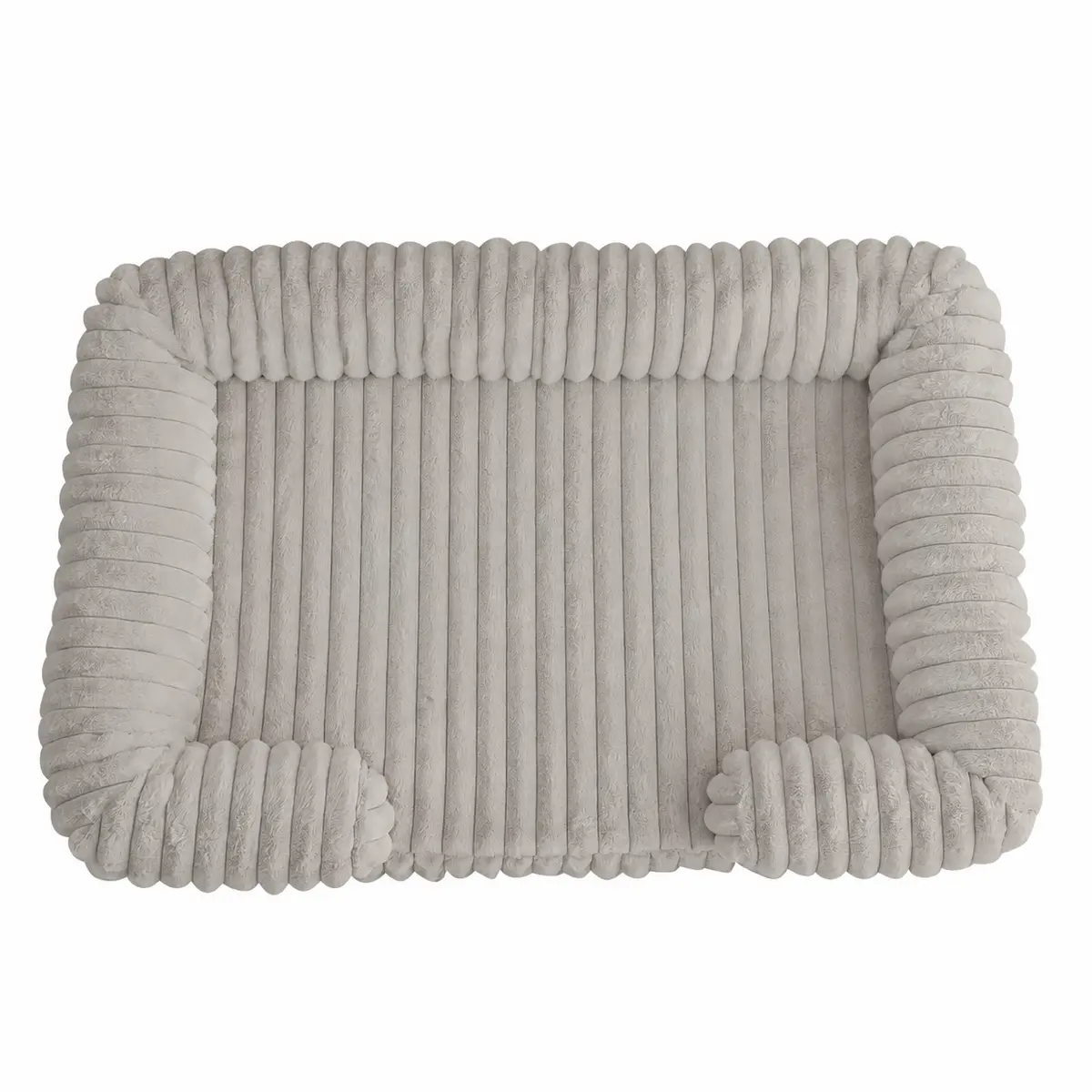
Plan for giant sizes: a secure, tall fence, an extra-large orthopedic bed, heavy or raised bowls, a strong harness and leash, a slicker brush and comb, heavy-duty nail clippers and plenty of floor space.
A car ramp helps an older dog into the car. Book a vet visit soon after bringing your Wolfhound home and ask about safe growth, bloat signs and heart checks.
This page is general information, not veterinary advice, and it cannot replace an examination by the vet who knows your pet.
Common questions
How long do Irish Wolfhounds live?
The AKC lists a lifespan of 6 to 8 years. Careful puppy growth, a lean weight, knowing the signs of bloat and regular vet checks help a Wolfhound live as long as possible.
How big does an Irish Wolfhound get?
The AKC minimums are 32 inches and about 120 pounds for males and 30 inches and about 105 pounds for females, and a male can weigh up to 180 pounds.
Are Irish Wolfhounds good family dogs?
Often, yes. They are gentle, quiet and affectionate, but their size, short life and need for space and fencing make them best for prepared families.
Do Irish Wolfhounds shed?
Yes, steadily through the year but not excessively, according to the AKC. A thorough brushing about once a week keeps the wiry coat in good condition.
Sources we checked
This guide is general information, not veterinary advice. If your pet is unwell or injured, contact your veterinarian.