Food safety
Can Puppies Eat Scrambled Eggs? Plain and Fully Cooked
Yes, a weaned puppy can have a little plain, fully cooked scrambled egg if it fits the diet agreed with your veterinarian. The AKC specifically permits small amounts of cooked egg for puppies, introduced gradually. That does not make a full human breakfast appropriate or replace complete puppy food. Prepare the egg separately without added fat or seasoning, and stop if the puppy develops a reaction.
By Matt GarnettUpdated November 13, 20264 min read3 sources
Start with the puppy’s growth diet
VCA explains that puppies have nutritional needs associated with growth, including a high energy demand relative to a small stomach. Choose a complete food intended for that life stage with your veterinarian. An egg may supply nutrients, but that alone does not establish the balance a growing puppy needs.
Keep the regular diet as the foundation rather than building meals around a few appealing ingredients. If a puppy cannot eat the intended food, ask the clinic why before replacing it with scrambled eggs. Very young puppies that are not weaned need their own veterinary feeding advice, not an adult breakfast adapted to a smaller dish.
Cook the egg completely
The AKC advises cooking eggs before sharing them with dogs and includes scrambled eggs as an acceptable preparation when fully cooked and plain. Make sure the portion for the puppy is cooked through. Do not use the raw mixture left in a bowl or a partly cooked serving as a shortcut.
The ASPCA warns that raw eggs can carry harmful bacteria. This is a separate issue from whether the puppy likes the texture or the egg seems fresh. Handle the raw ingredients hygienically and clean the utensils and preparation area before dealing with the cooked portion and the puppy’s food bowl.
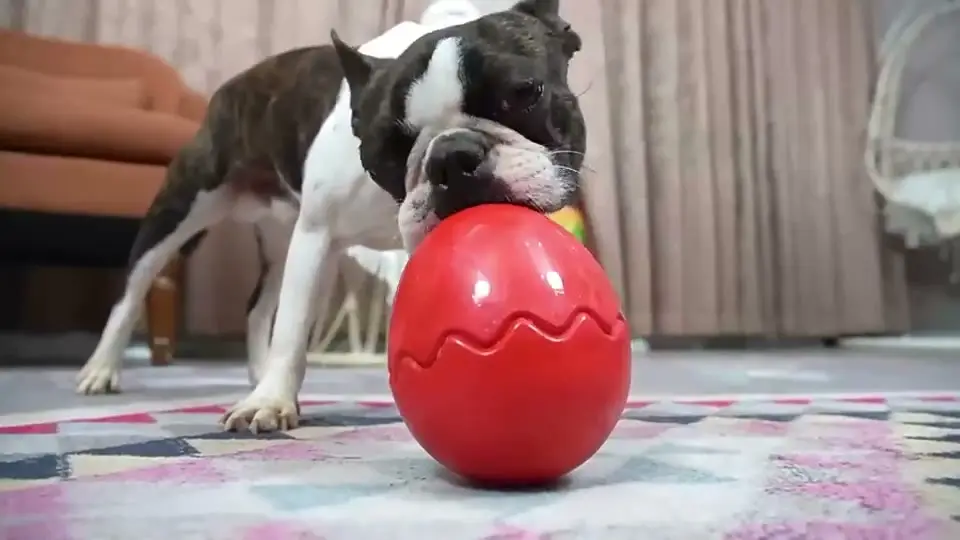
If you like to share small snacks, a lick mat or a treat ball makes a little go further and slows a fast eater down.
Leave breakfast additions out of the pan
The AKC’s egg guidance says to leave out oil, butter, salt, seasoning, and other additions. Prepare the puppy’s portion separately rather than scooping it from a finished breakfast mixture. A dish described as scrambled eggs can otherwise contain several ingredients that were never part of the plain-egg recommendation.
Do not assume that picking out visible pieces restores a mixed recipe to plain egg. If you do not know the ingredients, choose a known reward instead. The important preparation step is deciding what goes into the pan before cooking, rather than trying to reconstruct the recipe once the puppy has eaten it.
Keep the extra small and individual
The AKC says puppy egg portions should be particularly limited and introduced gradually. It does not provide a single amount that is suitable for every puppy. Ask your veterinarian how optional extras fit your puppy’s size, growth stage, health, and the complete food already being eaten.
Count training rewards and other snacks in that conversation too. A tiny taste from each family member can become a substantial unplanned extra for a small puppy. Agree on who gives rewards and what has already been offered, instead of judging each handout as though it were the only food outside the regular meals.
Watch for a reaction rather than testing repeatedly
The AKC describes vomiting, diarrhea, itching, hives, swelling, coughing, and breathing difficulty among possible egg-reaction signs. Stop the egg and contact your veterinarian if a change appears after eating. Breathing difficulty, marked swelling, collapse, or severe distress requires urgent care rather than watching at home.
Record the timing and all ingredients, including anything else the puppy ate that day. A reaction cannot be diagnosed from one symptom or one food name. Do not keep offering egg to prove whether it was responsible; provide the history to the veterinarian and follow their advice about the next steps.
Do not use eggs to manage illness on your own
If the puppy has diarrhea, vomiting, poor appetite, or abnormal growth, ask the veterinarian before changing the diet. A familiar soft food is not a diagnosis or a treatment plan. Explain what the puppy normally eats, what has changed, and whether the egg was offered before or after the symptoms began.
This page is general information, not veterinary advice, and it cannot replace an examination by the vet who knows your pet.
Common questions
Can a puppy have the scrambled eggs from my plate?
Only consider egg that was prepared plain and fully cooked. Human breakfast eggs may contain added fat, salt, or other ingredients. Prepare a separate portion rather than guessing what is in the dish.
Can scrambled eggs replace puppy food?
No. A growing puppy needs a complete diet appropriate for its life stage. Eggs do not establish that nutritional balance, and a puppy refusing normal food should be discussed with the veterinarian.
How much scrambled egg can a puppy have?
The AKC advises particularly limited amounts for puppies, introduced gradually. Ask your veterinarian about your puppy’s needs rather than adapting an adult dog’s portion or using a full egg as a default.
What if my puppy vomits after eating scrambled egg?
Stop offering it and contact your veterinarian with the recipe, timing, and other recent foods. Persistent illness or severe signs need prompt assessment; breathing difficulty, collapse, or marked swelling is an emergency.
Sources we checked
This guide is general information, not veterinary advice. If your pet is unwell or injured, contact your veterinarian.