Care & how-to
What Is a Lick Mat for Dogs and How Does It Work?
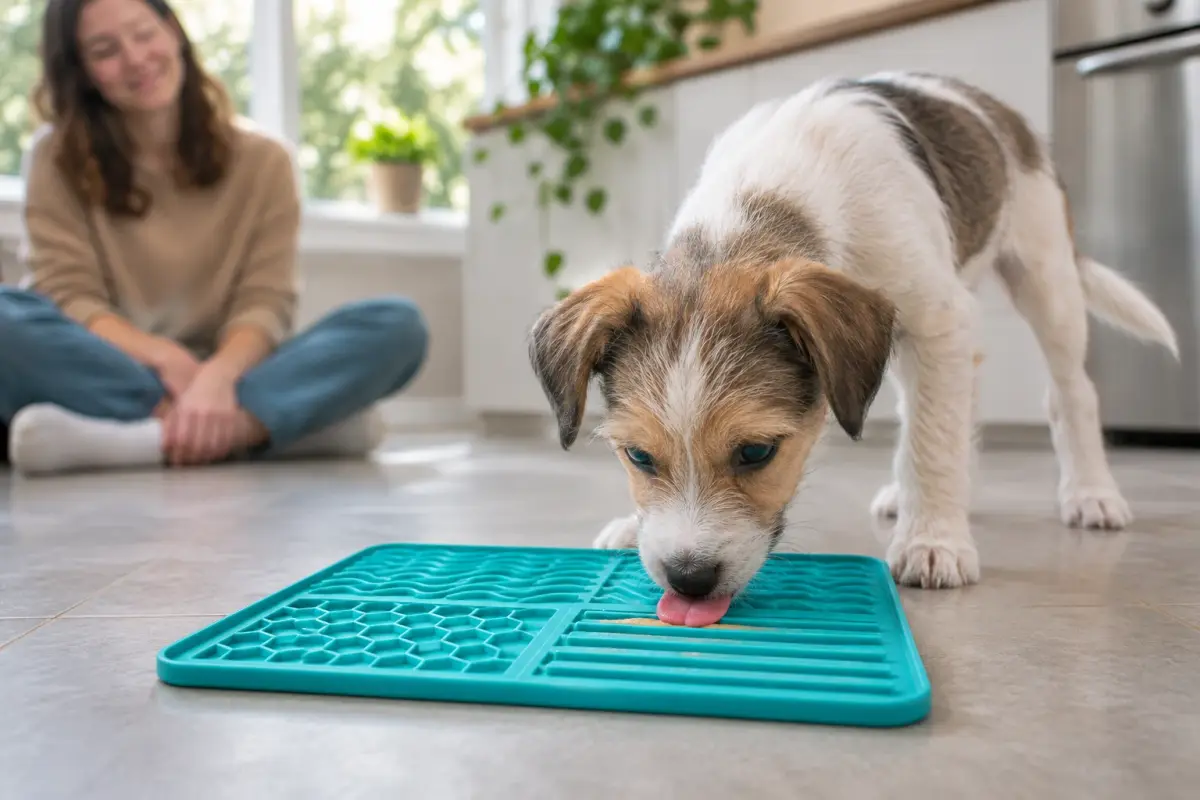
A lick mat is a flat, textured mat, usually silicone or rubber, with grooves and ridges. You spread soft food over it and your dog licks it off, which turns a few seconds of eating into several minutes of slow, focused work. Used with supervision, it can be a simple way to occupy a dog, slow down a fast eater and make unpleasant moments easier.
By Matt GarnettUpdated November 14, 20264 min read3 sources
How a lick mat works
The American Kennel Club describes lick mats as flat, textured mats with grooves and ridges, made from rubber or silicone. Some have suction cups, divided sections, non-slip bases, lids or spreaders. You press a soft food into the texture and the dog has to lick, work its tongue into the ridges and keep going to clear it.
That effort is the whole idea. Food that would vanish from a bowl in seconds lasts far longer when it is pressed into a pattern, and licking is a calm, repetitive activity. A lick mat is not a chew toy and it is not meant to be eaten, so think of it as a feeding surface, not a plaything. If you are comparing styles, our lick mats collection shows the main designs, and the guide to choosing a lick mat explains what to look at.
What dogs and owners use them for
The AKC lists several uses. A mat can serve as a distraction during things a dog dislikes, such as bath time or a mouthy puppy moment. A suction-cup mat can be attached to a tub wall or sink during grooming so the dog has something to focus on. Treats on a mat can also help build positive feelings about a crate.
Some owners use frozen broth on a mat for calmer moments such as fireworks or thunderstorms, and the AKC mentions this as one option. A lick mat is a distraction and an enrichment tool rather than a treatment for any anxiety problem, so a dog that is truly distressed still needs a plan from your vet or a qualified trainer.
Slower eating and dental claims
Some mats double as slow feeders. The AKC notes that slower eating may lower the risk of bloat, and its separate guidance on eating speed explains that gulping food means swallowing extra air, which can contribute to a swollen stomach. Bloat in its true form, called GDV, is a medical emergency, so a dog with a hard, swollen belly, retching or distress needs a vet immediately.
The ridges can scrape off some residue from the tongue, but the AKC is clear that a mat does not replace tooth brushing. If your dog mostly needs to slow down, a dedicated bowl may suit better. See our slow feeder dog bowls for that style, or a silicone slow feeder lick mat if you want both functions in one surface.
What to spread on it
Choose soft, safe foods and spread them thinly. The AKC suggests plain, unsweetened yogurt, honey in moderation, peanut butter without xylitol, or low-sodium broth frozen onto the mat. Fatty and sweet foods are fine in moderation, but they add calories, so count them in your dog's day.
Read the label on any peanut butter or spread every time. Xylitol is a sweetener found in gum, candy, baked goods and toothpaste, and the ASPCA says it can cause low blood sugar and liver damage in dogs. If your dog eats anything containing it, call your veterinarian or ASPCA Animal Poison Control at (888) 426-4435 right away; a consultation fee may apply. Dairy can also upset some dogs, since the ASPCA notes that pets have little lactase, so start with a small amount of yogurt.
Safety and cleaning
Always supervise. The AKC says lick mats are not made to be eaten, and there is no such thing as a leave-it-and-forget-it dog toy. Take the mat away if your dog begins to chew or tear it, and discard any mat that is cracked, punctured or has jagged ridges.
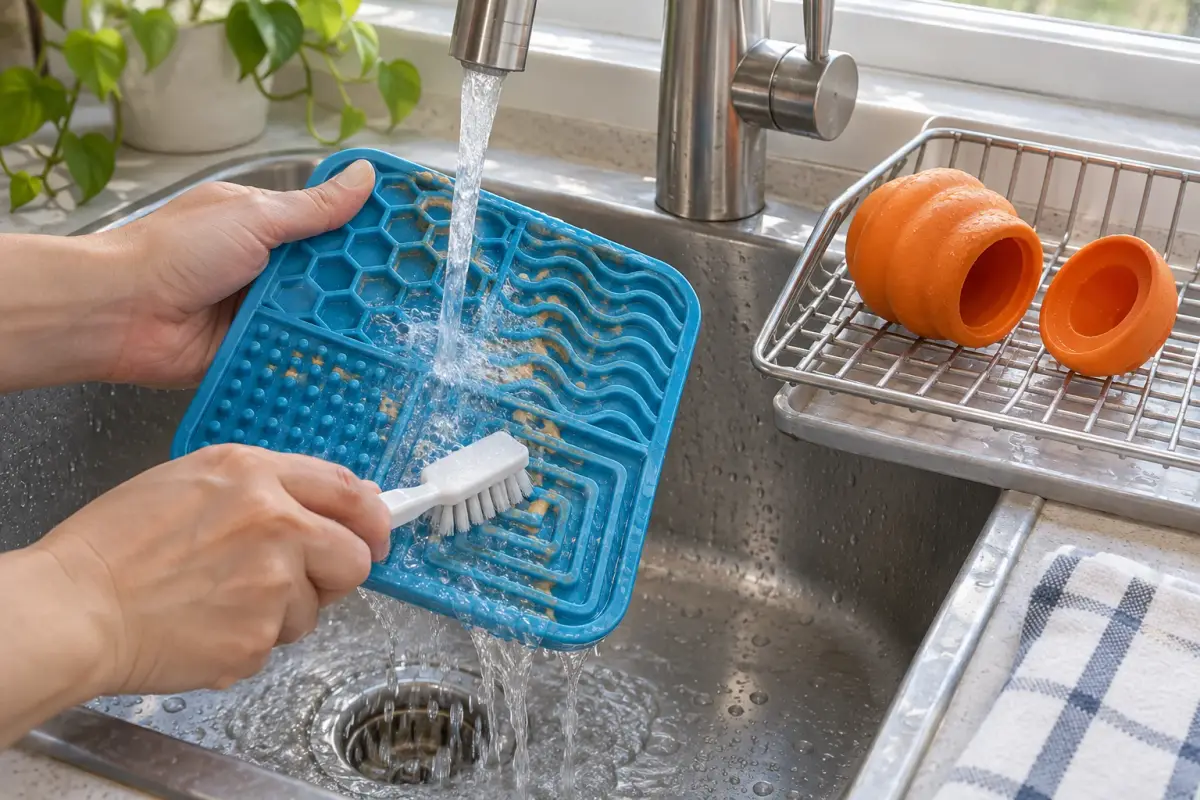
Look for food-grade material, because non-food-grade mats can release dyes or chemicals into the food. Wash after every use with warm soapy water to prevent mold and bacteria. Boiling may damage some materials, and only some silicone mats are dishwasher safe, so follow the maker's instructions. Our square suction lick mat and round silicone lick mat are examples of the two common shapes, and both are covered in the lick mats collection. This page is general information, not veterinary advice, and it cannot replace an examination by the vet who knows your pet.
Common questions
Is a lick mat good for dogs?
For most healthy dogs it is a low-risk way to slow eating and add mental work, as long as you supervise, use safe foods and clean the mat after each use. It does not replace exercise or training.
How long should a dog use a lick mat?
There is no set time. Let your dog lick until the food is gone, then remove the mat. Stop the session and take it away if your dog starts chewing or tearing at it.
Can I put peanut butter on a lick mat?
Yes, if it contains no xylitol. Check the ingredient list every time and use only a thin layer, because peanut butter is rich and adds calories to the day.
Can a lick mat replace brushing my dog's teeth?
No. The ridges may scrape some residue from the tongue, but the American Kennel Club says a lick mat does not replace tooth brushing, so ask your vet about a proper dental routine.
Sources we checked
This guide is general information, not veterinary advice. If your pet is unwell or injured, contact your veterinarian.