Buying guides
Best Lick Mat for Dogs: How to Choose One That Is Safe and Lasts
The best lick mat is made of food-grade silicone or natural rubber, has textures deep enough to slow your dog down, sticks to the floor or wall so it is not carried off, and is easy to clean after every use. The AKC warns that non-food-grade mats can leach dyes and chemicals into food. Lick mats are not chew toys, so for a chewer, supervision or a sturdier design matters most.
By Matt GarnettUpdated November 10, 20263 min read2 sources
What a lick mat is for
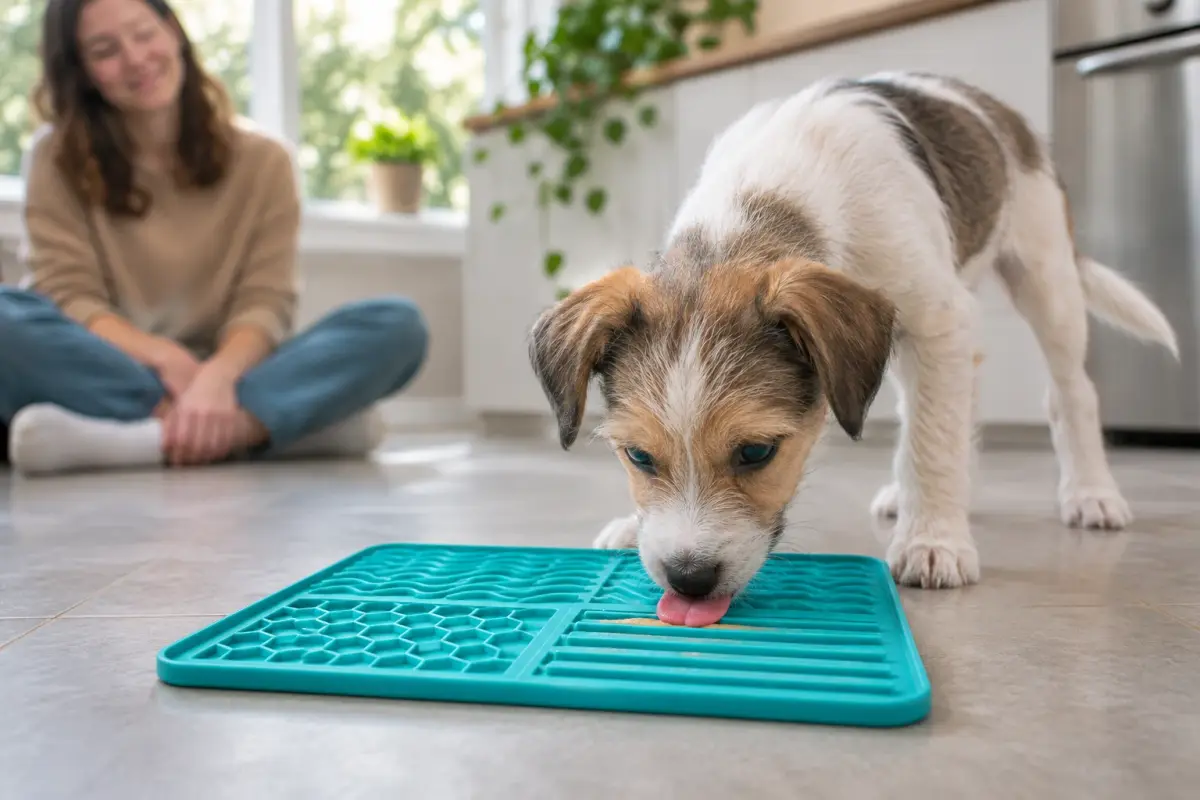
A lick mat is a flat mat with grooves, ridges and bumps that you spread with soft food. Your dog licks it clean slowly. The AKC describes lick mats as tools to soothe, entertain and enrich dogs, and notes licking is a calming activity for many.
Owners use them during baths, nail trims, thunderstorms and fireworks, in a crate, or simply to slow down a fast eater. Some mats double as slow feeders, which the AKC says can help reduce the likelihood of bloat by stopping dogs gobbling food in seconds.
What matters most: material and safety
Choose food-grade silicone or natural rubber. The AKC advises checking a mat is food-grade, since non-food-grade mats can leach dyes and chemicals. Silicone is flexible and often dishwasher-safe; natural rubber is firmer and tougher but should be hand-washed with soap and warm water.
Size and thickness matter for safety: a larger, thicker mat is harder to chew into pieces. Avoid thin mats with small, tearable edges for dogs that like to chew.
Types compared
Flat floor mats are the classic design, sometimes divided into quarters with different textures, which the AKC notes lets you use a different treat in each section. Suction-cup mats stick to a tub or tile wall, ideal for bath time and grooming. Lick bowls have raised sides and suit messier foods.
Combination slow feeder and lick mats have deeper grooves for kibble and wet food. Heavy rubber designs and those that sit inside a protective holder suit dogs that try to chew the edges.
What to put on it
Spread wet dog food, plain unsweetened yogurt, mashed banana or pumpkin, or soaked kibble thinly into the grooves. The AKC suggests freezing low-sodium broth on the mat for a few hours, which makes it last longer and helps on hot days.
Count what you spread as part of your dog's daily food; our lick mat recipes have more ideas. Never use anything containing xylitol, grapes, raisins, onion, garlic or chocolate, all of which are toxic to dogs; check peanut butter labels for xylitol.
Best type for each dog
For bath time and grooming, a suction-cup mat on the tub wall. For a teething puppy, the AKC suggests a lick mat with wet food as a calmer alternative to shredding toys; supervise closely. For an anxious dog, a frozen mat during storms or fireworks gives a long, calming activity.
For a chewer, a thick natural rubber mat or one in a holder, used only while you watch. For a small dog, a small mat with fine textures; for a large dog, a larger, heavier mat that cannot be picked up easily.
Cleaning, safety and lifespan
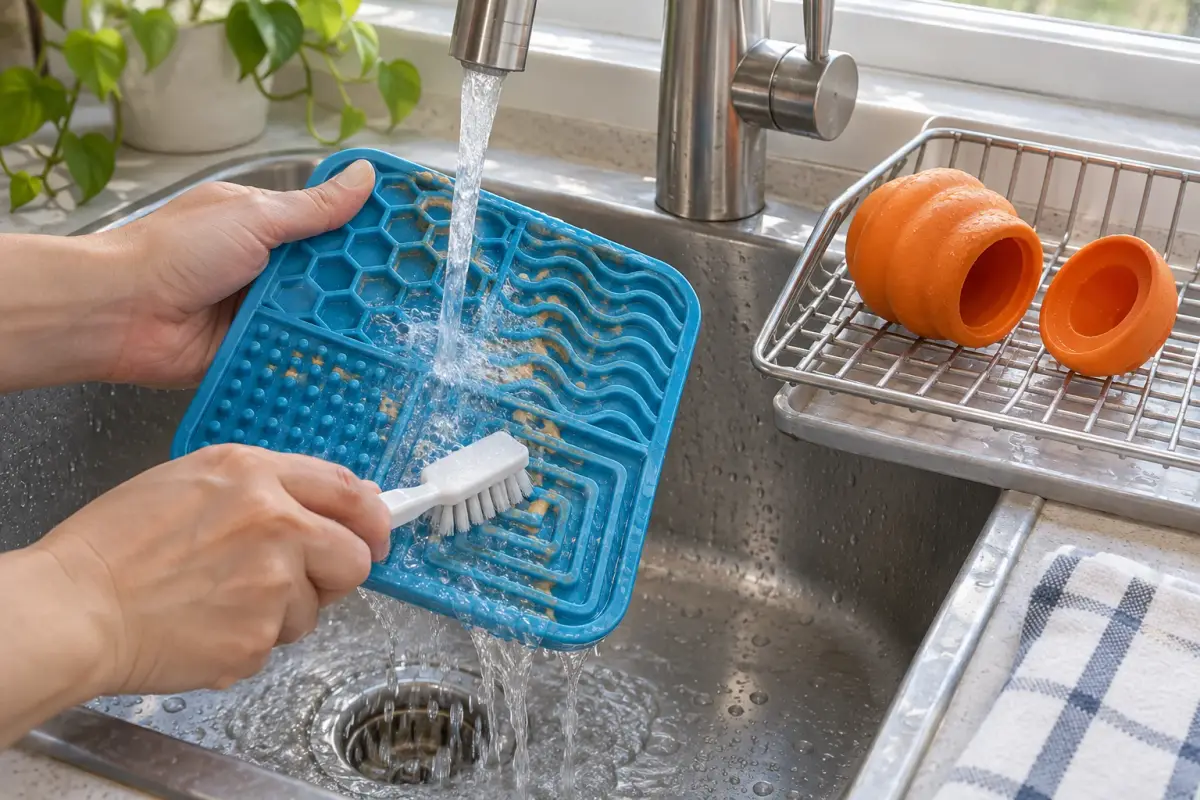
Clean your lick mat after every use, even if it looks clean, as the AKC recommends, to prevent mold and bacteria. Check the product description before boiling, since heat can warp some materials.
The AKC says there is no leave-it-and-forget-it dog toy: watch your dog and step in if it tries to eat or destroy the mat, and replace mats that show eroding material, punctures or jagged ridges. If a piece is swallowed and your dog vomits, strains or stops eating, call your vet.
This page is general information, not veterinary advice, and it cannot replace an examination by the vet who knows your pet.
Lick-surface shapes and mounting
| Format | Physical difference | Inspect on the exact item |
|---|---|---|
| Flat mat | An open textured sheet | Texture depth and edge condition |
| Suction-mounted | A textured sheet with suction fittings | Actual suction cups and permitted surface |
| Lick bowl | A textured surface inside raised sides | Rim height and cleaning access |
| Combination feeder | Deeper channels or food spaces | Channel size and complete cleaning access |
| Holder design | A mat sits in a separate support | Whether holder and mat are included |
Common questions
Are lick mats good for dogs?
For most dogs, yes. The AKC describes them as tools to soothe, entertain and enrich dogs, and some slow fast eaters. Use a food-grade mat, supervise, and clean it after each use.
What is the best lick mat material?
Food-grade silicone or natural rubber. Silicone is flexible and often dishwasher-safe; natural rubber is tougher for dogs that might chew. Avoid mats that are not labeled food-grade.
Can I freeze a lick mat?
Yes, most silicone and rubber mats can be frozen. The AKC suggests freezing low-sodium broth on the mat for a few hours to make it last longer and help on hot days.
What if my dog chews the lick mat?
Take it away and supervise more closely next time, or choose a thicker rubber mat or one in a holder. Replace any mat with tears or missing pieces.
Sources we checked
This guide is general information, not veterinary advice. If your pet is unwell or injured, contact your veterinarian.