Food safety
Can Puppies Eat Peanut Butter? Yes, If It Has No Xylitol
Yes, puppies can eat a little peanut butter, but only if the label shows no xylitol. Xylitol, a sweetener sometimes used in sugar-free peanut butter, is highly toxic to dogs, and a puppy's small body leaves little margin. Choose plain, unsalted peanut butter, give only a small smear as a treat, and check with your vet first if your puppy is very young or on a special diet.
By Matt GarnettUpdated November 14, 20265 min read2 sources
Why plain peanut butter is usually fine
Peanut butter is a popular training reward because puppies love it and it sticks to a spoon or toy. The AKC says unsalted or dog-specific peanut butter is the safest choice, and that in moderation it can supply protein, healthy fats, B vitamins, vitamin E and niacin. Plain peanut butter has few ingredients, which makes it easier to check than most human snacks.
It is still a treat, not a meal. It is high in fat, and the AKC cautions that too much peanut butter can lead to obesity and pancreatitis. A growing puppy needs a balanced puppy diet for nearly all of its calories, so treat peanut butter as an occasional extra for training, pill time or a quiet crate.
The xylitol warning
Xylitol is the one ingredient that turns peanut butter from a treat into an emergency. The ASPCA lists sugar-free foods, including peanut butter, among products that can contain it. In dogs it causes a sudden release of insulin, which can drop blood sugar, and larger doses can damage the liver. The AKC says signs include weakness, collapse, staggering, lack of coordination and seizures, and that low blood sugar can develop within about 10 to 60 minutes.
If you think your puppy has eaten anything with xylitol, call your vet or an emergency clinic right away, even if your puppy seems fine. You can also call ASPCA Animal Poison Control at (888) 426-4435 or Pet Poison Helpline at (855) 764-7661. A fee may apply. Bring the jar, because the label helps the team act quickly. Do not wait for signs, and do not try to make your puppy vomit unless a vet tells you to.
How to read the label
Turn the jar around and read the ingredient list, not just the front. You want a short list: peanuts, and perhaps a little salt or none at all. Skip any jar that lists xylitol, and be cautious with products described as sugar-free, reduced sugar or keto, which are the ones most likely to use sweeteners. Ingredient lists can change, so check every jar, even a brand you have bought before.
Choose unsalted where you can, since the AKC notes that high sodium can be a problem. Peanut butter made for dogs or a plain homemade version avoids added sugar and other extras. Keep human sugar-free products, such as gum and baked goods, well away from your puppy, and store them out of reach, because xylitol turns up in many items around the house.
How much peanut butter a puppy can have
Keep portions tiny. For a very small puppy, a pea-sized dab is plenty. For a medium puppy, a thin smear across a spoon or a scrape the size of a thumbnail works. For a large-breed puppy, no more than a small teaspoon-sized dab at a time. These are plain-language guides, not a feeding plan, and they assume peanut butter is an occasional reward rather than a daily habit.
The AKC suggests keeping treats to no more than 10 percent of the daily diet, which is a useful limit for every treat you give. Count the peanut butter within that share and use less on days with lots of training. If your puppy has a medical condition, food sensitivity or is still weaning, ask your vet before offering it.
Ways to serve it
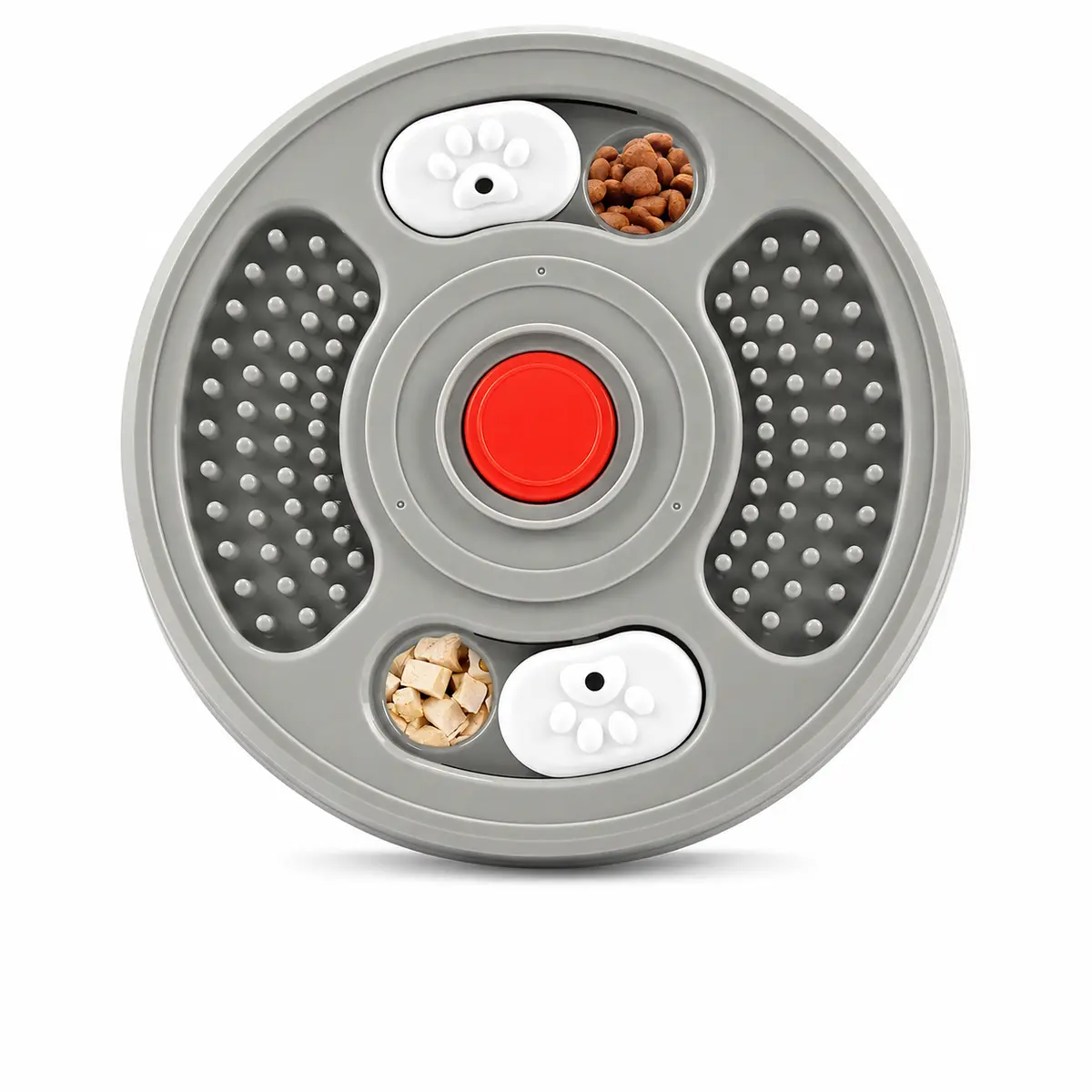
Peanut butter works best when it takes a while to lick off. The AKC describes spreading it inside hollow toys and treat toys, or offering a little on a spoon or finger as a reward. A thin layer on a silicone lick mat keeps a puppy busy and can calm a restless evening. A round silicone slow feeder lick mat works the same way, and you can see more options in our lick mats for puppies.
Use a very thin layer and wash the mat or toy after each use so old peanut butter does not go rancid. Supervise your puppy the first few times, and never leave a puppy alone with anything small enough to chew off and swallow. If you are using peanut butter to hide a pill, ask your vet whether that medicine can be given with food.
Allergies and signs to watch
Most puppies handle plain peanut butter well, but any new food can upset a small stomach. Offer a very small taste the first time and watch for vomiting, diarrhea, itching, swelling around the face or a puppy that seems unwell. Stop feeding it if any of these appear, and call your vet if they do not settle quickly.
Call your vet the same day for repeated vomiting, a swollen belly, signs of pain or a puppy that will not eat. Treat weakness, staggering, collapse, a seizure or trouble breathing as an emergency and go straight to a vet. If your puppy has had a large amount of peanut butter in one go, a call to your vet is also sensible, because the fat can upset the stomach.
What to give instead, and the bottom line
If you would rather skip peanut butter, a few pieces of your puppy's regular puppy food make a perfectly good training reward, and a chilled, safe chew toy suits a teething puppy. Our puppy teething toys cover chews made for sore gums. Ask your vet before introducing any new treat or fresh food.
The short version is this: plain, unsalted, xylitol-free peanut butter, in tiny amounts, as an occasional treat. Read every label, keep it a small part of the day's food and stay alert for signs of trouble. This page is general information, not veterinary advice, and it cannot replace an examination by the vet who knows your pet.
Common questions
Can puppies eat peanut butter every day?
It is better as an occasional treat. Peanut butter is high in fat, and the AKC warns that too much can lead to obesity and pancreatitis. Keep all treats within about 10 percent of the day's food.
What peanut butter is safe for puppies?
Plain, unsalted peanut butter with a short ingredient list and no xylitol is the safest choice. Peanut butter made for dogs is another option. Check the label on every jar, since recipes can change.
How much peanut butter can a puppy have?
Only a tiny amount: a pea-sized dab for a very small puppy, up to a small teaspoon-sized dab for a large-breed puppy, and not daily. Ask your vet if your puppy has health concerns.
What happens if my puppy eats peanut butter with xylitol?
Call your vet or an emergency clinic immediately, even if your puppy seems fine. Xylitol can cause a rapid drop in blood sugar and liver damage. ASPCA Animal Poison Control is (888) 426-4435.
Can puppies eat peanut butter on a lick mat?
Yes, if the peanut butter is xylitol-free. Spread it thinly, supervise your puppy, and wash the mat after each use so leftover peanut butter does not turn rancid.
Sources we checked
This guide is general information, not veterinary advice. If your pet is unwell or injured, contact your veterinarian.