Food safety
Can Puppies Eat Eggs? Yes, Fully Cooked and in Small Bits
Yes. Once a puppy is weaned and eating solid food, small amounts of plain, fully cooked egg are safe, the American Kennel Club says, with smaller portions than an adult dog and a gradual start. Scrambled or hard-boiled egg, cooked with no butter, oil, milk or salt, is the way to serve it. Raw egg is not suitable for puppies because of the bacteria risk. Mash it fine for a small mouth and keep it within the puppy's small treat allowance.
By Matt GarnettUpdated November 13, 20264 min read2 sources
When a puppy can start having egg
VCA notes that puppies are typically weaned off their mother's milk at about eight weeks. A puppy that has just come home is also adjusting to a new food and a new routine, so wait until your puppy has eaten its puppy food well for a week or two, with normal stools, before adding egg.
Offer egg on its own the first time, not alongside another new food. If the puppy's stool stays normal for a day, egg can join the small rotation of treats. If it does not, leave egg out and try again later with less.
Why a puppy needs smaller portions
Egg is rich in protein and fat, and the yolk is calorie-dense. The AKC says puppies can have small amounts of cooked egg, with even smaller portions than adult dogs, and that too many eggs can cause weight gain. In a puppy, a little goes a long way.
A growing puppy also needs its puppy food for balanced growth, and VCA notes that large-breed puppies in particular grow best on carefully controlled calories. Egg is a treat that has to fit around that, not an addition on top of it.
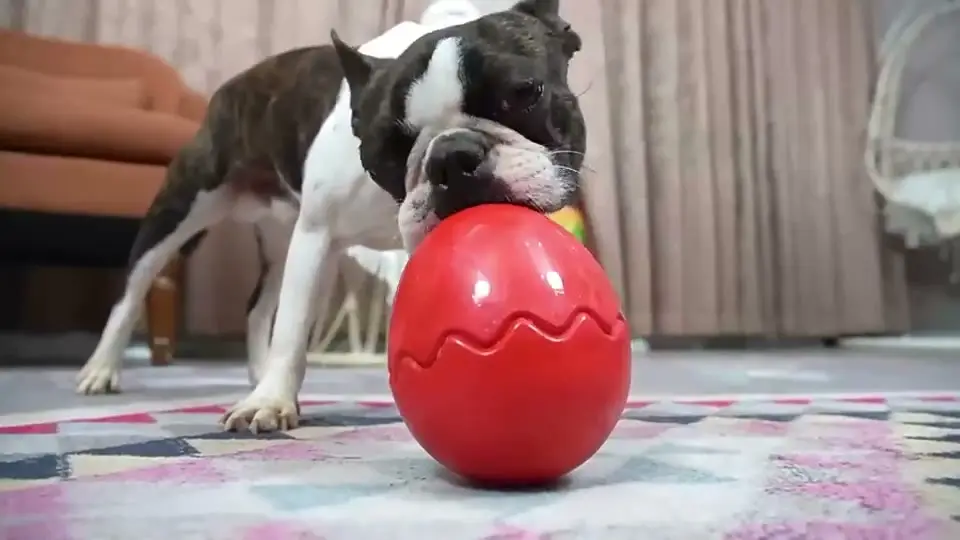
If you like to share small snacks, a lick mat or a treat ball makes a little go further and slows a fast eater down.
How to cook and prepare egg for a puppy
Cook the egg completely, with no runny yolk. Scramble it in a dry nonstick pan with nothing added, or hard-boil it and peel off every piece of shell. The AKC advises serving eggs plain, without oil, butter, salt or seasonings.
Let it cool fully, then mash it with a fork. For a puppy under about 10 lb, the egg should be in crumbs no bigger than a grain of rice, because a slippery piece of white is easy to inhale. Larger puppies can have pea-size pieces.
Why raw egg and shells are not for puppies
The AKC says most veterinarians recommend against raw eggs because of salmonella, which can cause fever, vomiting, diarrhea and lethargy, and because raw egg white contains avidin, which can block biotin absorption. A puppy's immune system is still developing, which makes bacterial illness harder on them.
The AKC also warns that eggshells can have sharp edges that injure the throat or organs. A complete puppy food already supplies the calcium a puppy needs, so shells add risk without benefit.
How much egg for a puppy
VCA says treats count toward a puppy's calories and should stay at 10 percent or less of the day's total. As a starting point: toy and small-breed puppies, about a teaspoon of mashed cooked egg; medium-breed puppies, up to a tablespoon; large-breed puppies, up to two tablespoons, which is roughly a quarter of an egg.
Offer egg a couple of times a week, not daily, and mix it into a meal or use the crumbs as training rewards. Ask your vet how big your puppy's treat allowance is if you are unsure.
Signs egg disagreed with your puppy, and when to call a vet
Mild upset usually shows within a day as a soft stool or a little gas. Stop the egg and feed only the puppy food. The AKC lists vomiting, diarrhea, itching, hives, swelling and coughing or breathing trouble as possible signs of an egg allergy, which is uncommon.
Call your vet the same day if diarrhea continues, your puppy vomits more than once, seems tired or stops eating, because puppies dehydrate quickly. Facial swelling, spreading hives or any trouble breathing means get seen right away.
Other first treats for puppies
Other gentle options include a fingertip of plain canned pumpkin, a blueberry cut in half, or tiny pieces of plain cooked chicken. Soft puppy training treats are made small for exactly this job.
Whatever you choose, introduce one new food at a time and keep treats within the 10 percent allowance, so your puppy still gets the complete nutrition of its puppy food.
This page is general information, not veterinary advice, and it cannot replace an examination by the vet who knows your pet.
Common questions
Can 8-week-old puppies eat eggs?
It is best to wait until your puppy has settled on puppy food for a week or two. Then a small amount of fully cooked, mashed egg with nothing added is fine.
Can puppies eat raw eggs?
No. The AKC says most vets recommend against raw eggs because of salmonella and because raw egg white can interfere with biotin. Cook egg fully for puppies.
Can puppies eat egg yolk?
Yes, cooked yolk is fine in small amounts. It carries most of the egg's fat and calories, so keep portions smaller than for an adult dog.
How often can a puppy eat eggs?
A couple of times a week is plenty. Too much egg can cause weight gain and loose stool, and treats should stay within 10 percent of a puppy's daily calories.
Can puppies eat eggshells?
It is best not to. The AKC warns shells can have sharp edges that injure the throat or gut, and puppy food already supplies the calcium a puppy needs.
Sources we checked
This guide is general information, not veterinary advice. If your pet is unwell or injured, contact your veterinarian.