






Training & behavior
Recall Training: How to Teach Your Dog to Come When Called
Recall training teaches your dog to come straight to you when called, and it is built on one rule: coming to you must always be the best thing that can happen. Start indoors at short distances, reward every recall generously, add distance and distractions slowly, and practice outdoors on a long line before you ever trust your dog off leash. Never call your dog to scold it, and never chase it.
By Matt GarnettUpdated November 14, 20263 min read2 sources
Why recall matters, and why it fails
A reliable recall can keep your dog out of traffic, away from wildlife and out of trouble with other dogs. It is also the cue that most often breaks down, usually because the dog has learned that 'come' means the fun ends: the leash goes on, the park visit is over, or it gets a bath.
Recall also fails when it is asked for too soon in too exciting a place. A dog that comes every time in the kitchen may ignore you completely when a squirrel runs past, simply because it has not practiced at that level yet.
Step 1: Build the foundations
Teach your dog that its name means 'look at me'. Say the name once, and the moment your dog looks, mark with 'yes' and reward. Then play a collar-grab game: gently touch or hold the collar, reward, and let go. This stops your dog from dodging you at the end of a recall.
Choose a recall word you have not used much, such as 'come' or 'here', or a whistle, and keep it special. Use your happiest voice, and keep top rewards, such as chicken, cheese or a favorite toy, just for recall.
Step 2: Practice indoors and close
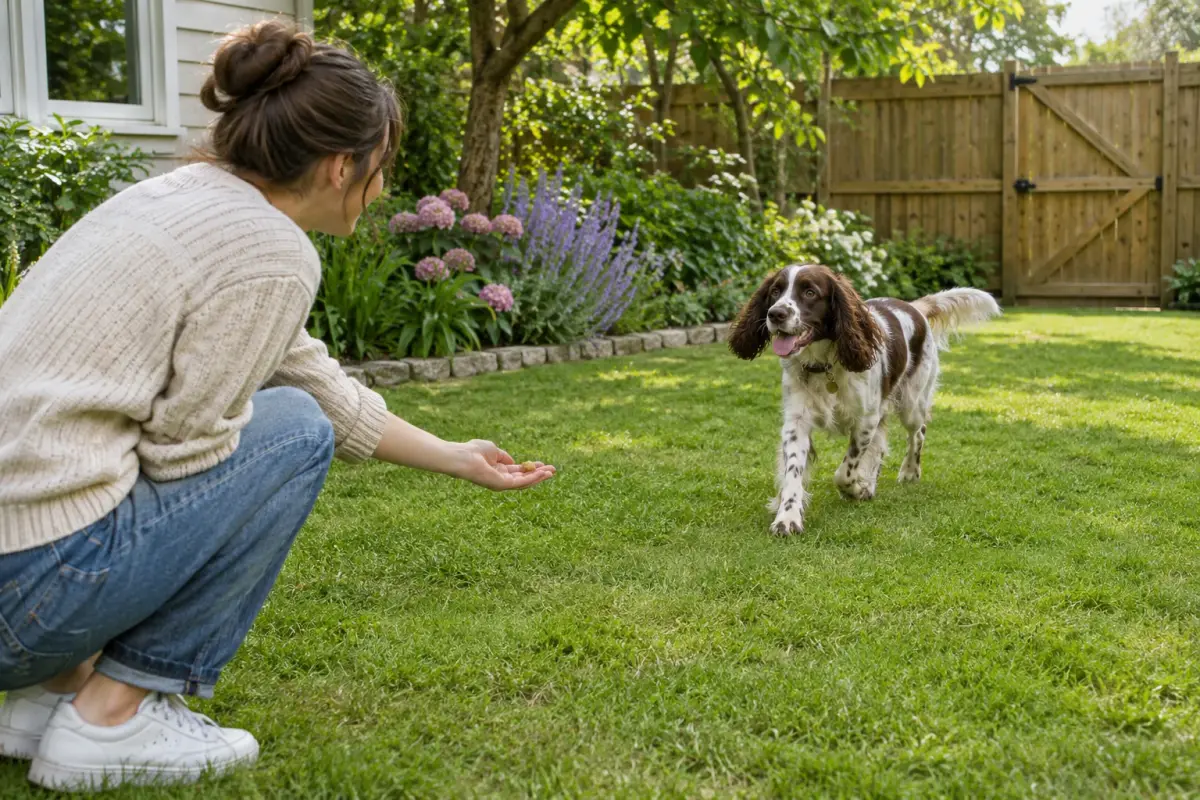
Stand a few feet from your dog in a quiet room, say its name and your recall word, and encourage it toward you, backing away or crouching to make coming irresistible. When it reaches you, mark, reward and praise, then often let it go back to what it was doing.
Repeat in different rooms, then play recall ping-pong with a family member, calling your dog back and forth between you. Add a sit when it arrives, plus an occasional collar touch, so your dog learns to come right in rather than flying past.
Step 3: Add distance and distractions on a long line
Move to the yard, then quiet outdoor places, with your dog on a 20- to 30-foot long line attached to a harness. Call when your dog is not too distracted, and reward lavishly. The line, such as a reflective long training lead, means your dog cannot learn that ignoring you leads to fun elsewhere.
Increase difficulty in small steps: a little more distance, then mild distractions such as a toy on the ground, then other people at a distance, then calm dogs. If your dog does not respond, you have gone too far too fast, so make it easier.
Recall mistakes to avoid
Do not call your dog and then scold it, even if it took ages to arrive; it will learn that coming is risky. Do not repeat the cue over and over, which teaches your dog that the first few calls are optional. Do not chase your dog; run the other way and it will usually follow.
Call your dog for good things often, not only at the end of play. Practice a few recalls during each walk, reward and release it to play again. Avoid calling when you know your dog will not come; go and get it instead.
Before you let your dog off leash
Only go off leash in safe, legal, enclosed areas once your dog comes reliably on the long line around real distractions. Check local leash laws, and keep ID tags and microchip details current. Some dogs, especially hounds and other breeds with a strong chase drive, may never be safe off leash in open areas.
If your dog suddenly stops responding, consider whether it can hear you; hearing loss in older dogs is common, and your vet can check.
This page is general information, not veterinary advice, and it cannot replace an examination by the vet who knows your pet.
Common questions
How long does recall training take?
Basic indoor recall can be learned in days, but a reliable recall around distractions usually takes months of regular practice. Keep training it throughout your dog's life.
What is the best reward for recall training?
Whatever your dog values most, often soft, smelly food like chicken or cheese, or a favorite toy. Use better rewards in harder places and keep them special for recall.
Should I use a whistle for recall?
A whistle can work well because it sounds the same every time and carries far. Train it just like a verbal cue, pairing the whistle with great rewards.
Why does my dog run away when I call?
It may have learned that coming ends the fun, or that it might be scolded. Make recalls always rewarding, practice on a long line, and avoid chasing your dog.
Sources we checked
This guide is general information, not veterinary advice. If your pet is unwell or injured, contact your veterinarian.


