Care & how-to
Puppy Sleep Schedule: A Sample Day for a New Puppy
Young puppies sleep a lot, around 16 to 20 hours a day, in many short naps between bursts of play. A good puppy schedule alternates potty break, meal or play, a short training session and a nap, all day long, with three meals at set times and a calm bedtime routine. Consistency matters more than exact clock times, and the routine, with a few puppy essentials in place, teaches house training at the same time.
By Matt GarnettUpdated November 13, 20264 min read3 sources
How much do puppies sleep?
The AKC gives 16 to 18 hours a day for young puppies in one article and 18 to 20 in another; either way, a puppy awake for most of the day is unusual. Sleep supports growth, brain development and the immune system, and a puppy may nap roughly every hour for 30 minutes to two hours at a time.
Plenty of sleep also prevents trouble. Overtired puppies get wild, nippy and harder to train, much like toddlers. If your puppy suddenly starts biting everything in sight late in the day, a nap is often the fix rather than more play.
A sample puppy schedule
Adjust the clock to suit your household, but keep the order. 6:30 a.m.: out to potty, then a little play. 7:00: breakfast, pick up the bowl after about 15 minutes, potty break. 7:30: short play or training, then a nap in the crate or puppy playpen. Mid-morning: potty on waking, play and a few minutes of training, potty again, nap.
Noon: potty, lunch, potty, play, nap. Mid-afternoon: potty, play or a short walk in the yard, nap. 5:00 p.m.: dinner, potty, a chew in the crate. Evening: family time, gentle play, a short walk, then a final potty break. 10:00 p.m.: bedtime in the crate. Overnight: one quiet potty trip if your puppy wakes and whines.
Meals and potty breaks
Most puppies do best on three meals a day, at the same times every day. Predictable meals mean predictable bathroom trips, since many puppies poop within half an hour of eating. Take your puppy out after every meal, drink, nap and play session, and at least every two to four hours regardless.
A common rule of thumb is that a puppy can hold its bladder for about an hour per month of age, so a 2 month old needs a break every couple of hours while awake. Leave fresh water out during the day and talk to your vet about how much to restrict it in the evening; removing water an hour or two before bed is a common approach for a healthy puppy.
Naps: where and how
Give your puppy a quiet, dim place to sleep, such as a crate or pen with a washable blanket or washable crate pad, away from household traffic. After play or a walk, guide them there with a teething chew toy and let them settle. Try not to cuddle your puppy to sleep every time, so they learn to drift off on their own.
Children should know that a sleeping puppy is left alone. Waking a puppy repeatedly cuts into rest it needs and can make it grumpy about being touched while asleep, which is a habit worth preventing early.
A bedtime routine that helps puppies sleep through
An hour or two before bed, offer the last meal well ahead of time, have a calm play session, and finish with a final potty break just before lights out. Keep the crate in or near your bedroom for the first weeks so your puppy can hear and smell you, and a hand near the crate door can reassure them.
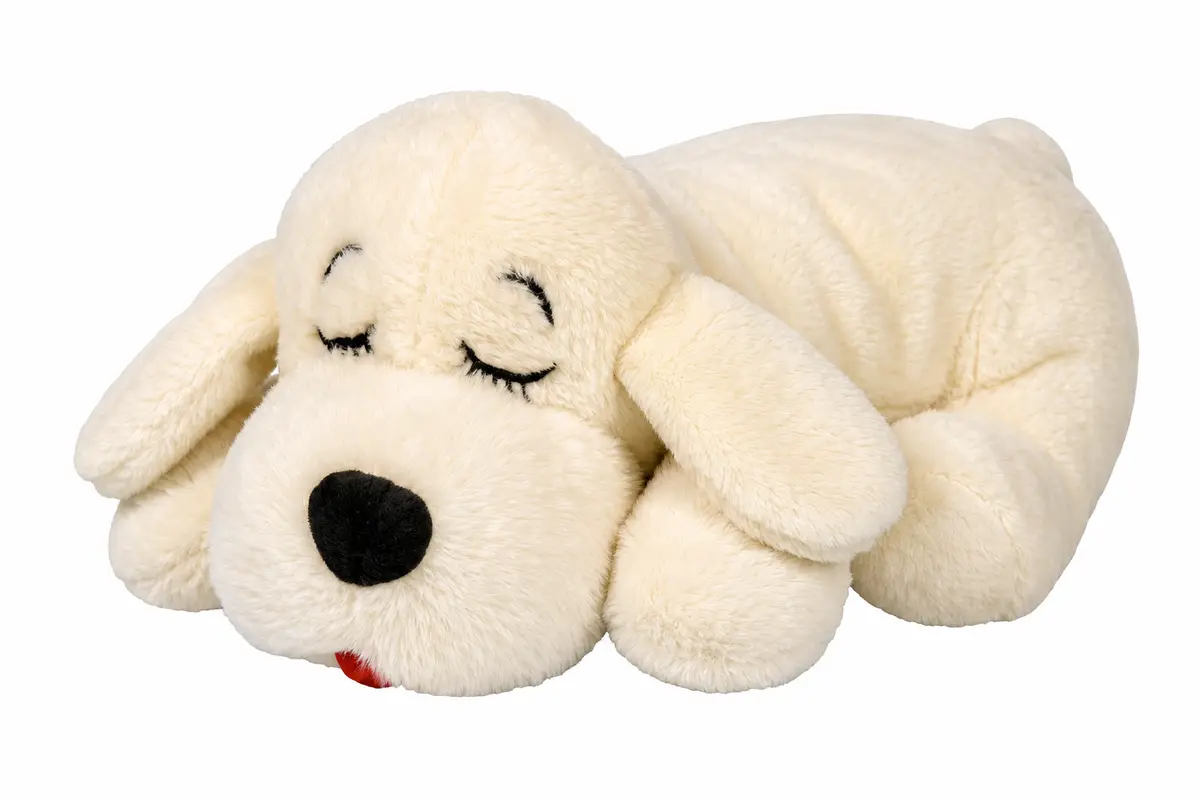
If your puppy wakes and whines overnight, take them out on a leash, wait quietly, praise when they go, and go straight back to bed with no play or chat. Night potty trips usually stop between about 4 and 5 months. Some crying in the first few nights is normal while your puppy adjusts to sleeping without littermates, and some owners put a heartbeat comfort toy in the crate for those first nights.
Adjusting the routine as your puppy grows
Around 4 to 6 months, potty breaks can stretch further apart, naps become fewer and longer, and many puppies move from three meals to two, a change to discuss with your vet based on breed size. Exercise can grow gradually, but avoid long runs and repeated jumping while bones are still growing. Our guide to puppy essentials covers the gear worth having through this stage, and the full range is in puppy essentials.
If your puppy seems unusually sleepy, hard to wake, uninterested in food, or is vomiting or has diarrhea, call your vet; illness in young puppies can move quickly. The same goes for a puppy who cannot settle at all and seems uncomfortable.
This page is general information, not veterinary advice, and it cannot replace an examination by the vet who knows your pet.
Common questions
Is it normal for my puppy to sleep all day?
Yes. Puppies commonly sleep 16 to 20 hours a day. Worry only if your puppy is hard to wake, floppy, not eating, or has vomiting or diarrhea, and call your vet if so.
When do puppies sleep through the night?
Many puppies can sleep through the night without a potty trip by about 4 to 5 months of age. Younger puppies often need one quiet break overnight.
Should I wake my puppy to pee at night?
Some owners set an alarm for one break in the first weeks to prevent accidents. Others wait for the puppy to stir. Either works if you keep the trip short and quiet.
What time should a puppy go to bed?
Any time that suits your household, as long as it is the same every night. Pair it with a last potty break and a calm wind-down so your puppy learns the routine.
Sources we checked
This guide is general information, not veterinary advice. If your pet is unwell or injured, contact your veterinarian.