Buying guides
Best Puppy Food: What to Look for on the Label
The best puppy food is a complete and balanced diet whose AAFCO statement covers growth, matched to your puppy's adult size. If your puppy will weigh 70 pounds or more as an adult, the label must say it suits growth of large-size dogs. Beyond that, choose a maker that can answer basic questions about who formulates and tests its food.
By Matt GarnettUpdated November 9, 20264 min read3 sources
What matters most: the AAFCO statement
Every food sold as a main diet in the US should carry a nutritional adequacy statement from the Association of American Feed Control Officials. VCA Animal Hospitals advises looking for wording that the food provides complete and balanced nutrition for growth or for all life stages, and says a food without that statement should not be a puppy's main diet. Adult maintenance food is not enough for a growing puppy.
The statement also says how adequacy was established: by feeding trials or by formulating to meet the nutrient profile. Both are legitimate. The WSAVA Global Nutrition Committee notes that foods labeled for intermittent or supplemental feeding should make up only a small part of the diet, around 10% or less, so treats and toppers cannot replace the main food.
Large-breed and small-breed puppies
Size changes the answer more than anything else. VCA notes that puppies expected to exceed about 70 pounds as adults grow fast enough that too much calcium or too many calories can raise the risk of bone and joint problems, so large-breed growth foods keep calcium within a tighter range. Look for an AAFCO statement that includes growth of large-size dogs, and avoid one that says except for growth of large-size dogs.
Small and toy puppies have the opposite challenge: tiny stomachs and fast metabolisms. They need calorie-dense food in small, frequent meals, and very small breeds can be prone to low blood sugar if they go too long without eating. A kibble size they can actually crunch matters for them more than for a Labrador puppy.
Wet, dry, fresh or raw: the main formats compared
Dry food is the most economical, stores easily and works well in puzzle feeders and in a puppy slow feeder bowl, such as a silicone puzzle feeder bowl. Canned food has more moisture and is often more appealing to picky eaters, at a higher cost per calorie. Refrigerated fresh foods can be complete and balanced too; judge them by the same AAFCO statement rather than by the word fresh, which is a marketing term.
Raw diets carry a higher risk of harmful bacteria for puppies and the people handling them, and home-made diets are hard to balance for growth. VCA does not recommend home-cooked diets for puppies unless a veterinary nutritionist designs them. Mixing formats is fine as long as the total stays balanced and your puppy stays at a lean body condition.
Questions to ask a puppy food maker

WSAVA suggests that owners and vets ask any manufacturer a few questions: whether it employs a qualified nutritionist, meaning a PhD in animal nutrition or a board-certified veterinary nutritionist; who formulates the recipes; what quality control it runs on ingredients and finished food; and whether it conducts or publishes nutrition research. A maker that cannot or will not answer is telling you something.
Ingredient lists, buzzwords such as holistic or premium, and grain-free claims say little about whether a food supports growth. If you are weighing a boutique or exotic-ingredient diet, ask your vet first, because diet questions are where an individual examination counts most.
How much, how often and when to switch
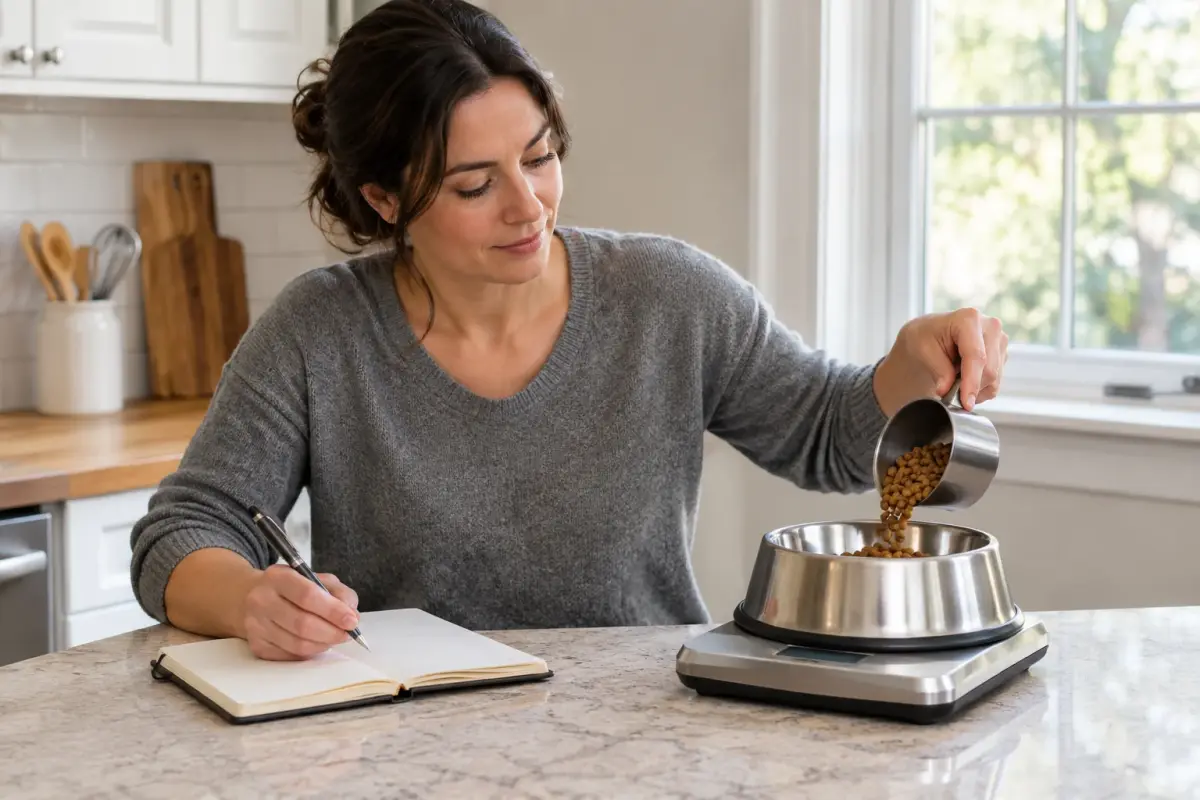
The AKC timeline suggests four meals a day from 6 to 12 weeks, three from about 3 to 6 months, and two from 6 to 12 months. The amount on the bag is a starting point; adjust so you can feel your puppy's ribs easily under a thin layer of fat. Count training treats as part of the day's food. A treat pouch, such as a training snack bag, makes it easier to portion them out on walks, and a slow-eating feeder bowl suits a puppy that gulps its meals.
Most puppies move to adult food around their first birthday. The AKC suggests about 7 to 9 months for small breeds, 12 to 14 months for larger dogs, and VCA notes large and giant breeds may stay on growth food until around 18 to 24 months. Change foods over about a week, mixing in more of the new food each day, and ask your vet before switching early. While you plan the first weeks, browse our puppy essentials and slow feeder bowls for puppies for feeding gear.
This page is general information, not veterinary advice, and it cannot replace an examination by the vet who knows your pet.
Common questions
What is the best food for a puppy?
The best puppy food is complete and balanced for growth under AAFCO standards, suited to your puppy's expected adult size, and fed in amounts that keep your puppy lean. Your vet can help match a food to your individual puppy.
Do large breed puppies need special food?
Yes. Puppies expected to weigh about 70 pounds or more as adults should eat food labeled for growth of large-size dogs, which limits calcium and calories to support steadier bone growth.
Is grain-free food better for puppies?
Grain-free is not a nutritional standard and does not make a food better for growth. If you are considering a grain-free or exotic-ingredient diet, discuss it with your vet before you switch.
How many times a day should a puppy eat?
The AKC suggests four meals a day until about 12 weeks, three until around 6 months, then two meals a day. Small breeds may need frequent small meals for longer.
Sources we checked
This guide is general information, not veterinary advice. If your pet is unwell or injured, contact your veterinarian.