






Training & behavior
Puppy Crying in the Crate: How to Help, Day and Night
A puppy crying in its crate is usually lonely, needs to potty, or was given too much crate time too soon. For the first nights, keep the crate beside your bed, take your puppy out right before sleep, and answer a real potty need with a quick, boring trip outside. For protest crying, wait for a moment of quiet before you open the door.
By Matt GarnettUpdated November 14, 20264 min read3 sources
Why puppies cry in the crate
A new puppy has just left its mother and littermates, so the first nights alone in a puppy crate are a big change. Crying is how it calls the group back. Other common reasons are a full bladder, hunger, being too warm or cold, boredom after a long stretch, or simply not having learned yet that the crate is safe. The AKC notes that whining within minutes of going in usually points to stress, while whining after a settled nap more often means boredom, hunger or a potty need.
Timing tells you a lot. Crying that starts the second the door shuts means the crate training has moved faster than your puppy is ready for. Crying that starts two or three hours into the night is often a bladder. Crying that only happens when you leave the room, but not when you sit beside it, is about being alone, and that needs gradual practice rather than more hours in the crate.
Set up the first night so there is less to cry about
Put the crate right beside your bed so your puppy can hear and smell you. A towel or blanket that smells of the litter, if the breeder can give you one, helps. Tire your puppy out with gentle play and a short training game in the evening, offer the last meal two to three hours before bed, and take it outside to potty immediately before putting it in the crate.
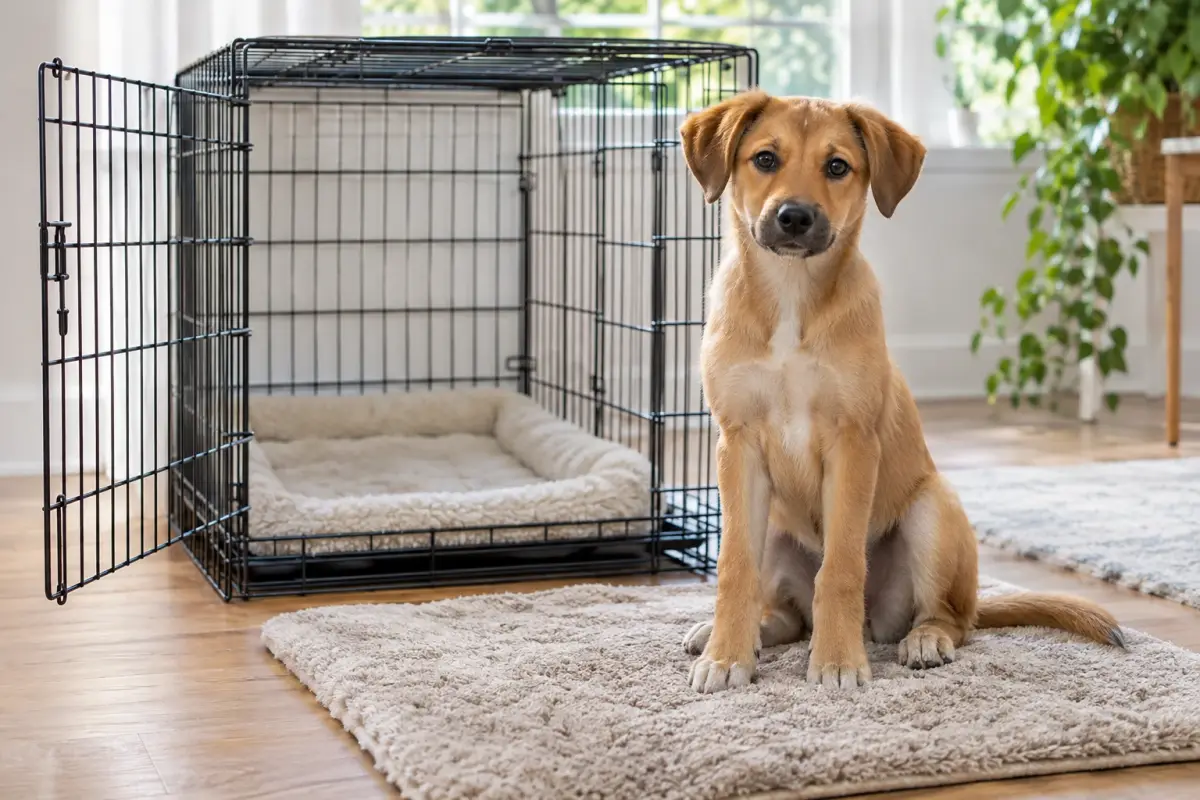
Give a safe chew toy, add a soft crate bed or padded crate mat if your puppy does not chew bedding, and keep the room calm and dim. Some puppies settle faster with a light sheet over part of a wire crate, leaving the front open for airflow. If your puppy cries, a quiet word or your fingers near the door is often enough at first. Over the next week you can move the crate a little farther from the bed, or to its permanent spot, a few feet at a time.
Potty breaks at night: how to handle them
Young puppies often cannot hold it all night. VCA Animal Hospitals notes that many puppies sleep through by around three to four months, so expect one or two nighttime trips before that. When your puppy wakes and cries after a few hours, carry or lead it straight to its potty spot, say your potty cue, praise quietly when it goes, and return it to the crate.
Keep these trips dull: no play, no treats beyond a small reward for going, and minimal talking. You want your puppy to learn that night is for sleeping and that going out at 3 a.m. is a business trip. Some owners set an alarm for one planned break so the puppy never has to cry to ask. Push that alarm back by 30 minutes every few nights as your puppy grows.
Protest crying: wait for quiet
If you are confident your puppy does not need to potty and is not hurt, the general rule is to avoid letting it out mid-cry. Opening the door teaches that crying works, and your puppy will cry longer next time. Wait for a pause of a few seconds, then open the door calmly or reward the quiet. Short, frequent daytime practice sessions build the calm behavior you want at night.
Do not shout, bang on the crate or use punishment. That raises your puppy's stress and makes the crate a worse place. Instead, go back to the easier steps by day: meals in the crate, stuffed chews, the door closed for only a minute or two while you sit nearby. A puppy that loves its crate by day usually cries far less at night. If you are still choosing one, our puppy crate buying guide covers how to pick, and you can browse puppy crates directly.
When crying is a sign of something bigger
Ordinary protest fades over days. Watch instead for crying that grows more frantic, with drooling, panting, chewing at the bars, trying to dig or squeeze out, injuring its mouth or paws, or soiling the crate in panic. Those signs suggest real distress or early separation anxiety. The AKC advises stopping crate training in that case and getting help from a professional trainer or behavior consultant.
Also call your vet if a puppy that was settling suddenly cries more, strains or has accidents, has diarrhea, seems sore when picked up, or stops eating. Discomfort from a tummy upset, a urinary problem or an injury can look like a training setback. A quick check rules out a medical cause before you change your plan.
This page is general information, not veterinary advice, and it cannot replace an examination by the vet who knows your pet.
Common questions
How long will a puppy cry in the crate on the first night?
It varies, but many puppies cry on and off for the first night or two and improve quickly with a bedside crate and a pre-bed potty trip. Steady crying for hours suggests you should go back a step.
Should I ignore my puppy crying in the crate at night?
Not completely. Take a crying puppy out if it may need to potty, then return it calmly. For crying that is plainly protest, wait for a few seconds of quiet before responding so silence is what gets rewarded.
Should I cover my puppy's crate at night?
A light cover over the top and sides can help some puppies settle by blocking light and movement. Leave the front open for airflow, make sure the crate cannot overheat, and remove the cover if your puppy chews it.
Is it OK to put a crying puppy in bed with me?
It may stop the crying that night, but it can make crate nights harder later and is a fall risk for small puppies. A crate right beside the bed gives comfort without changing the long-term plan.
Sources we checked
This guide is general information, not veterinary advice. If your pet is unwell or injured, contact your veterinarian.


