Care & how-to
How to Tire Out a Puppy (or a Dog) the Right Way
The best way to tire out a puppy is a mix of short bursts of play, sniffing, food puzzles and quick training sessions, followed by a nap. Mental work tires puppies as much as running, and it is gentler on growing joints. The AKC cites a guide of about five minutes of walking per month of age, once or twice a day, with free play in a safe space. Adult dogs need more, but the same mix works.
By Matt GarnettUpdated November 9, 20264 min read3 sources
How much exercise a puppy needs
The AKC cites researchers who suggest about five minutes of walking multiplied by the puppy's age in months, once or twice a day. So a three-month-old puppy might do two walks of about fifteen minutes. Leash training sessions should be kept to five or ten minutes, and the AKC describes free running in a safe, fenced space as the best exercise for a puppy.
Breed and size matter too. Active breeds need more than easygoing ones. The AKC warns that too much sustained vigorous exercise before maturity, especially on hard surfaces, may lead to joint problems later, so build up gradually and let your puppy set the pace.
Physical games that tire a puppy safely
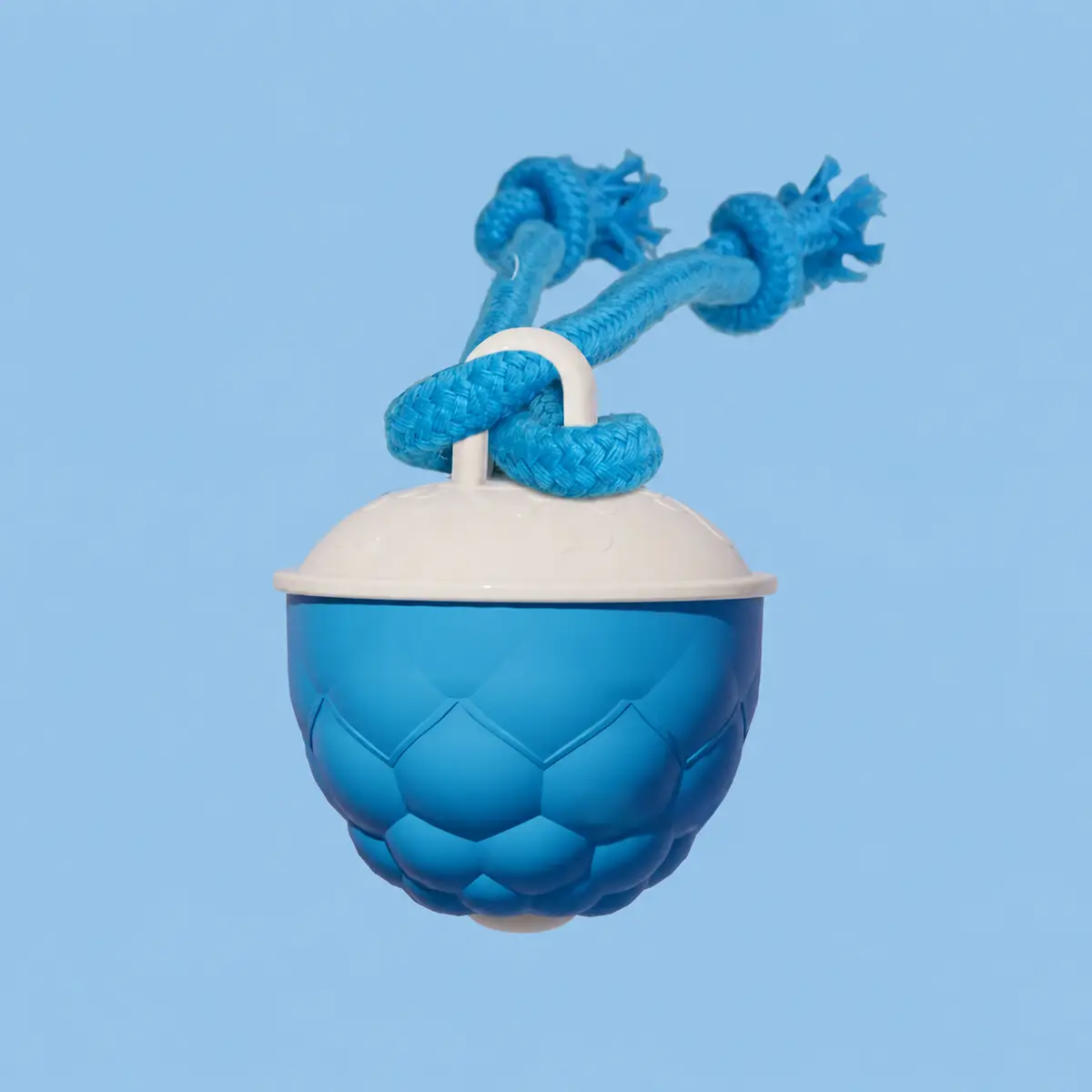
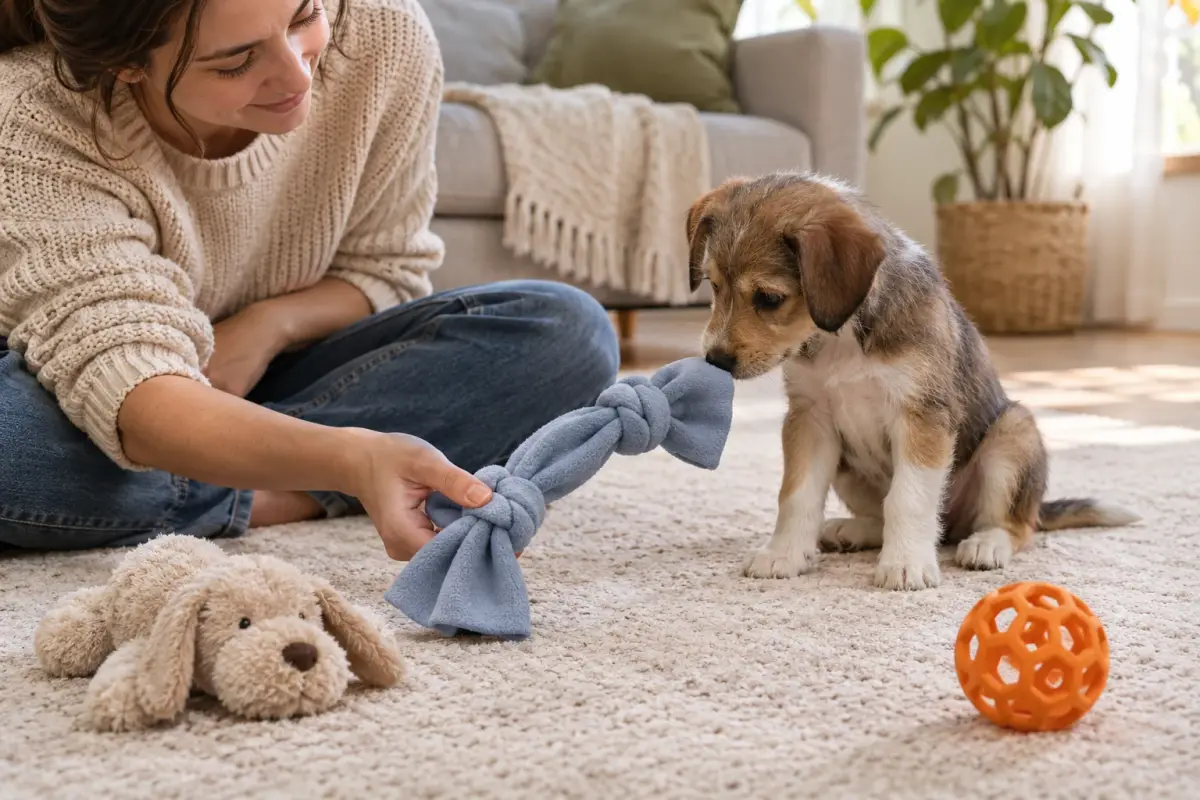
Free play in a fenced yard, gentle fetch at your puppy's own pace, tug with a soft toy, hide-and-seek and a flirt pole dragged along the ground are all on the AKC's list. Walking on different surfaces, such as grass, sand and soft gravel, builds confidence and coordination at the same time. For the fetch-and-tug part, an interactive dog toy such as a ball on a rope or a chew ball on braided rope gives your puppy something to carry and pull.
A sniffari is a favorite: toss a handful of kibble across the yard and let your puppy hunt for every piece. Avoid repeated jumping, such as catching a ball thrown straight up, and long runs or jogs, which the AKC says should wait until a puppy is mature, around 12 to 18 months for large breeds.
Brain games that tire a puppy fast
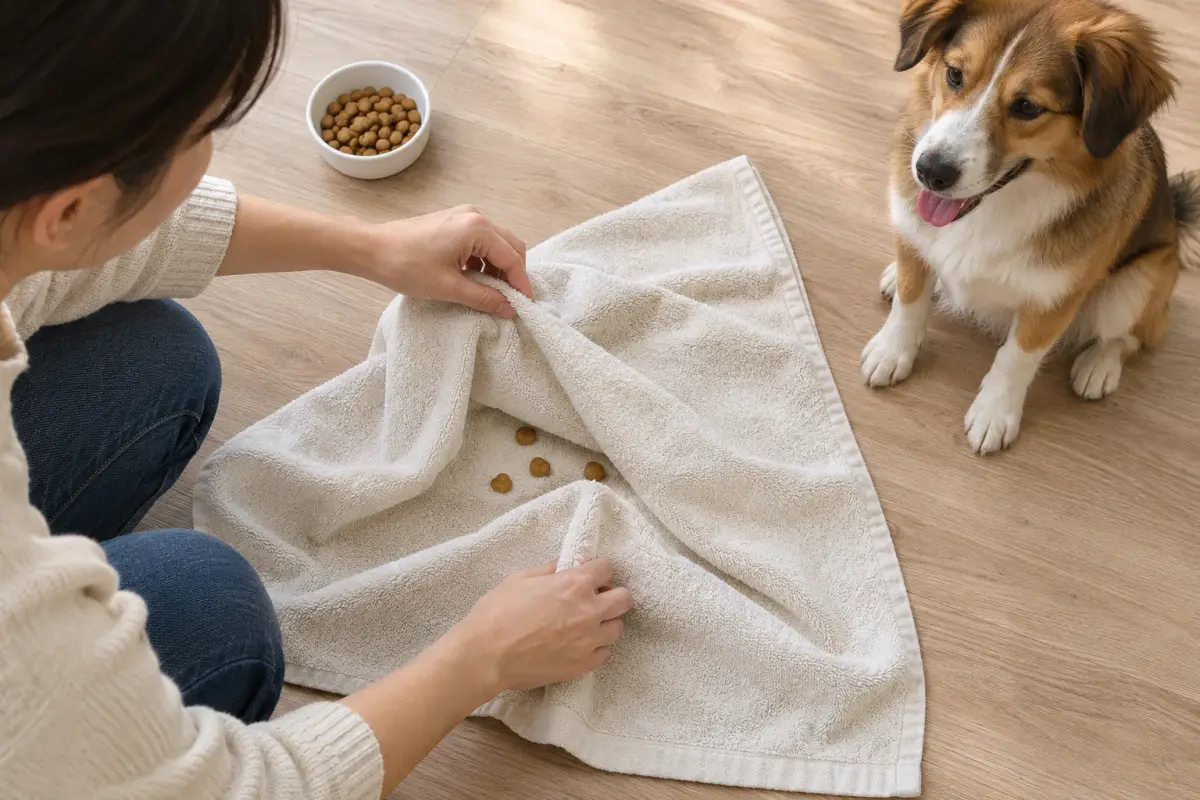
Mental exercise can be just as tiring as physical activity, the AKC notes. Try a scavenger box made from an egg carton, a rolled dish towel or crumpled paper with treats hidden inside. Food puzzles and snuffle mats turn mealtimes into a job. A frozen stuffed toy with soaked puppy kibble is great for quiet time.
Short training sessions are some of the best tiring tools of all. Teach sit, down, come, touch and a name game in two- to five-minute bursts with treats. Ending each session while your puppy is still keen keeps training fun, and the brainwork often leads straight into a nap.
Why rest matters as much as exercise
Puppies need far more sleep than adult dogs, and an overtired puppy often gets bitey, wild and harder to settle, not calmer. Many owners respond by adding exercise, which makes things worse. Build naps into the day: play, a bathroom break, then quiet time in a crate or pen with a chew.
The AKC notes puppies often flop down to nap after bursts of activity and know when they need to rest. On walks, a puppy who sits down or struggles to keep up has had enough, and a small one can be carried home.
Tiring out an adult dog
Adult dogs can handle longer walks, runs, hikes and harder games, depending on breed, age and health. The AKC recommends talking to your breeder or vet about how much exercise your dog needs. Combine physical exercise with brain work: a sniff walk, a puzzle feeder and a training session usually tire a dog more than a long run alone.
Dog sports such as agility, scent work, dock diving and treibball give energetic adults a real job. On hot days, swap long walks for scent games and frozen toys indoors.
When to check with your vet
Ask your vet how much exercise is safe for your puppy's breed and size, especially for large and giant breeds. Call your vet if your puppy limps, seems stiff after play, tires unusually quickly or pants heavily with little exercise, because those can point to joint, heart or breathing problems.
This page is general information, not veterinary advice, and it cannot replace an examination by the vet who knows your pet.
Common questions
How do you tire out a puppy without walking?
Use indoor games: sniffing for scattered kibble, food puzzles, a frozen stuffed toy, hide-and-seek, gentle tug and short training sessions. Mental work tires puppies quickly and is easy on joints.
How long should I play with my puppy?
Short sessions of five to fifteen minutes, several times a day, followed by rest. Watch for your puppy slowing down, sitting or getting overexcited, which are cues to stop for a nap.
Why is my puppy still hyper after exercise?
Often because it is overtired, not under-exercised. Puppies need lots of sleep. Try a calm activity such as a chew or lick mat, then quiet time in a crate or pen to help them settle.
Sources we checked
This guide is general information, not veterinary advice. If your pet is unwell or injured, contact your veterinarian.