






Training & behavior
How to Teach a Dog to Stay
To teach a dog to stay, ask for a sit or down, say "stay," wait one second, then reward and release with a word like "free." Build duration first, then distance, then distractions, one at a time. Practice on a dog leash when you move to new places, and keep every session short and rewarding.
By Matt GarnettUpdated November 13, 20264 min read2 sources
What a stay means and where to start
A stay cue means please do not move until I invite you to move. VCA Hospitals suggests starting once your dog clearly understands sit, down or stand, because the stay is built on top of one of those positions. If sit is not solid yet, start with how to teach a dog to sit.
Pick the position to suit the job. A sit-stay works for short waits, such as before going through a door. A down-stay suits longer waits, and a stand-stay helps for grooming and vet exams.
Step 1: Teach the release word first
The AKC recommends teaching the release word before the stay itself. Choose a word that means you are done, such as free or release. Avoid okay if you say it often in normal conversation, because you may release your dog by accident.
Ask for a sit or down, wait one second, then give a treat and say the release word. Encourage your dog to get up and praise the movement. Repeat until your dog understands that the word, and nothing else, ends the stay.
Step 2: Build duration
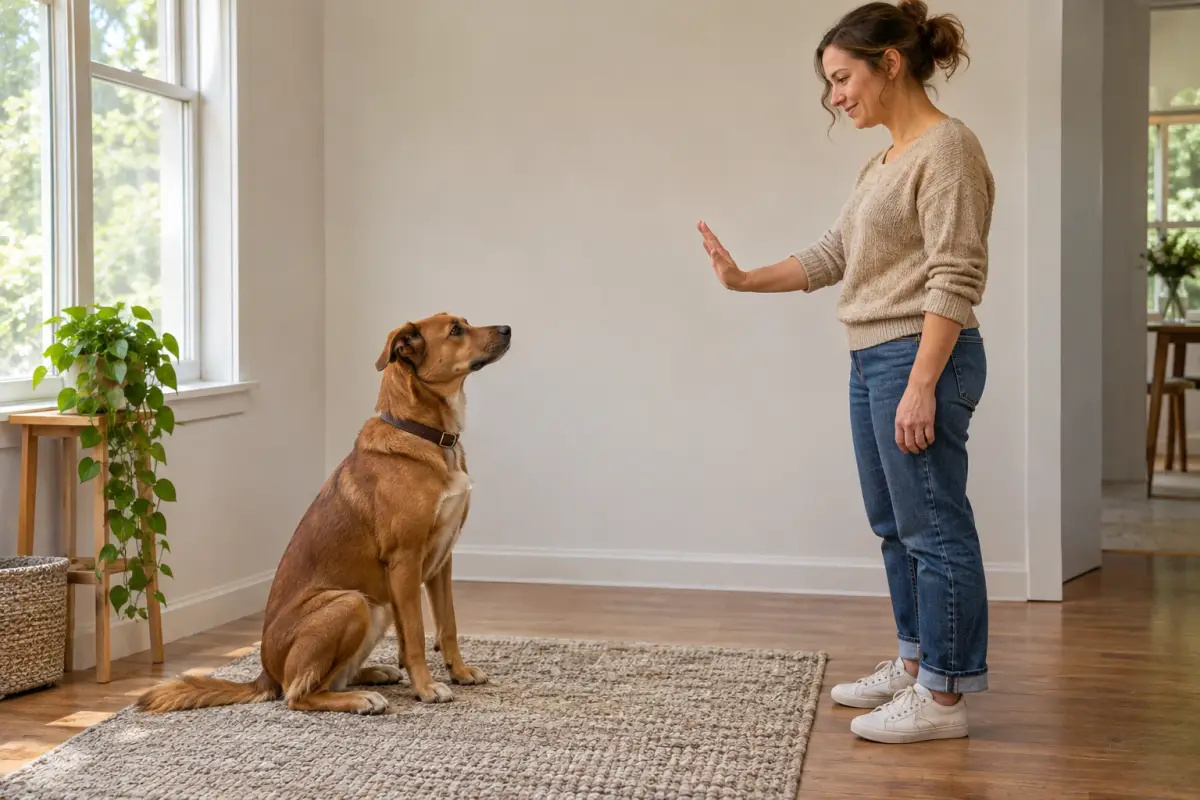
Ask for the sit or down, hold your hand out flat like a stop sign and say stay. Wait a second or two, treat, then release. Gradually wait a few seconds longer each time. At 10 seconds or more, you can treat several times during the stay, repeating the cue and hand signal before each treat.
Reward the stay, not the release. If the release is the only moment your dog gets food, it becomes more exciting than staying. If you use a clicker, click during the stay before the treat, never on the release.
Step 3: Add distance and distractions
Add distance only after your dog can hold the stay for a while. Ask for the stay, take one step back, immediately return and treat, then release. Next, take two steps back, and build until you can walk to the edge of the room. Always return to your dog before releasing, because releasing from far away teaches that a certain distance means the stay is over.
Add distractions only after your dog can stay at least 30 seconds. Start with something small like clapping and work up to something big like tossing a ball. When you add a new challenge, lower your expectations elsewhere: if your dog can stay 2 minutes alone, ask for only a few seconds with a distraction present.
Practicing in new places
Cues can take many months to become reliable, so keep rewarding correct stays until they are. VCA Hospitals advises using a leash and harness in new areas, which keeps a puppy safe while the stay is still being learned. A flat, comfortable lead such as a braided nylon dog lead with a padded handle is the sort of everyday lead that suits training walks, and our dog harnesses are worth a look for dogs that pull.
If a distraction is too strong, move farther away from it. If you cannot, take a short break and try a lower-level distraction. Major distractions can take weeks or months to work through.
Common mistakes and what to do if your dog breaks the stay
The AKC lists the usual mistakes: asking for too much too soon, letting your dog release itself, rewarding the release rather than the stay, releasing from a distance, using a common word like okay by accident, and punishing a broken stay. Do not punish. Chances are the request was too big, so go back a few steps and make it easier.
Watch your own body language too. If you step backward, your dog may follow you and break position. If your dog seems distressed, distracted or overexcited, stop using the cue for now. If a dog cannot settle at all, panics when you move away, or the stay problems come with other behavior changes, talk to your vet about whether a certified trainer or a behavior specialist could help. For gear, see our dog leashes and the guide to choosing a dog leash.
This page is general information, not veterinary advice, and it cannot replace an examination by the vet who knows your pet.
Common questions
How long does it take to teach a dog to stay?
It varies by dog. Cues can take many months to become reliable, so keep rewarding correct stays and add duration, distance and distractions slowly rather than rushing.
What should I use as a release word?
Pick a word that you do not use in everyday speech, such as free or release. The AKC suggests avoiding okay if you say it often, since you might release your dog by accident.
Why does my dog keep breaking the stay?
Usually the request is too hard. Go back a few steps, shorten the time or distance, and reward the stay itself. Never punish a broken stay, and check you are not moving backward in a way that invites your dog to follow.
Can I teach stay to a puppy?
Yes, once the puppy understands sit, down or stand. Start with one or two seconds, use a leash and harness in new areas, and expect it to take time to become reliable.
Sources we checked
This guide is general information, not veterinary advice. If your pet is unwell or injured, contact your veterinarian.


