






Training & behavior
How to Teach a Dog to Sit
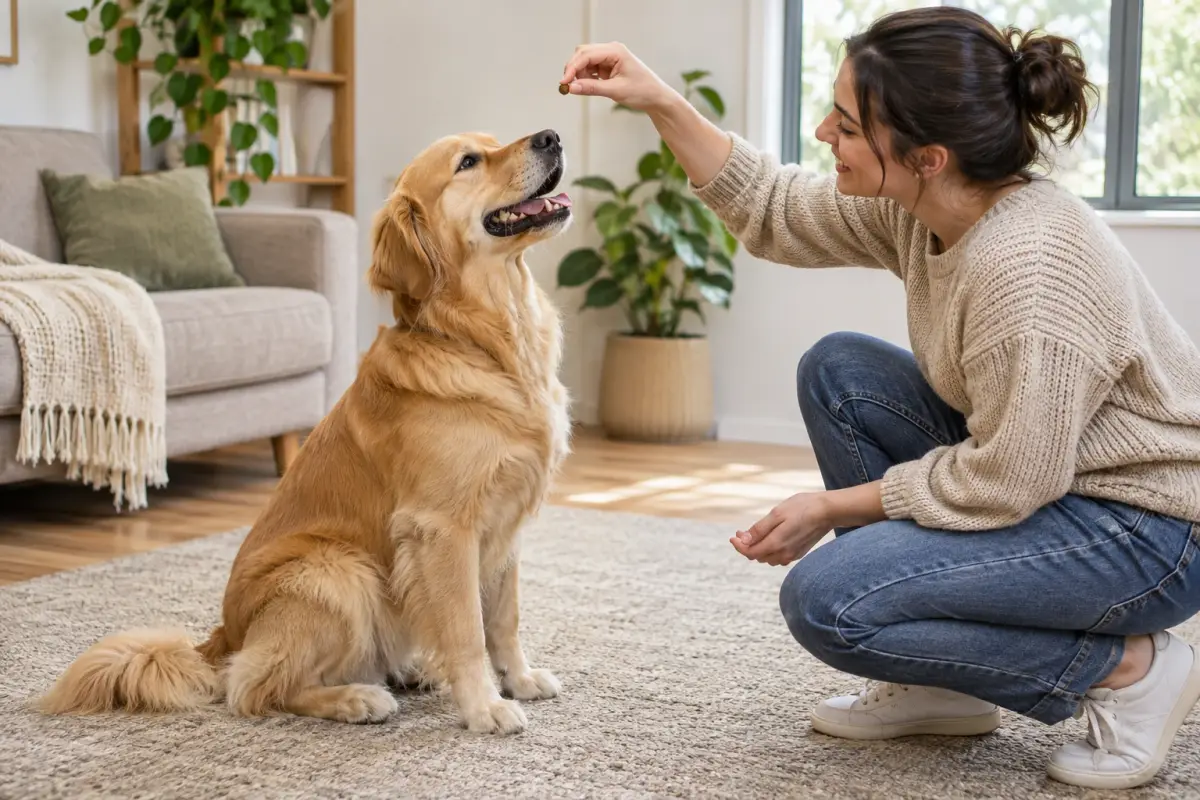
To teach a dog to sit, hold a small treat at their nose and slowly raise it up and back over their head; as their head lifts, their rear lowers. The instant they sit, say "yes" and give the treat. After a few repetitions, add the word "sit" just before you move your hand, then fade the lure. Most dogs pick it up within a few short sessions.
By Matt GarnettUpdated November 14, 20264 min read3 sources
Why sit is the first cue to teach
Sit is easy for most dogs to learn and it is incredibly useful. A dog who sits cannot jump on visitors, dash through a doorway or grab food off the counter at the same moment. Many trainers use it as a simple "please" before meals, leash clipping and play, which builds impulse control from puppyhood onward.
It also teaches you and your dog how training works: you give a cue, your dog does something, and a marker plus a reward tells them they got it right. Once that pattern clicks with sit, down, stay and recall come much more easily.
Method 1: Luring a sit
Step 1: Kneel or stand in front of your dog in a quiet room with a few pea-sized treats. Step 2: Hold one treat right at your dog's nose and slowly move it up and slightly back over their head. Step 3: As their nose follows the treat up, their bottom will go down. The moment it touches the floor, say "yes" (or click) and give the treat.
If your dog jumps up, the treat is too high; keep it close to the nose. If they back up, practice with their rear near a wall or in a corner. Never push down on your dog's hips to force a sit; it can be uncomfortable and teaches your dog to resist rather than think.
Method 2: Capturing a sit
Some dogs learn best when they figure it out themselves. Hold a treat and simply wait, saying nothing. Most dogs will try a few things and then sit. The instant they do, mark with "yes" and give the treat, then take a step so they stand up, and wait again.
After several repetitions your dog will start sitting quickly and on purpose to make the treat appear. At that point, begin saying "sit" just as they start to lower their rear. Capturing works especially well for clicker-trained dogs and for dogs who get overexcited by a treat waved at their face.
Adding the word and fading the food
Once your dog is sitting reliably for the lure, start saying "sit" just before you move your hand. Next, do the same hand movement with no treat in it, and reward from your other hand or a pouch after the sit. Over time, make the hand signal smaller until a slight upward gesture or the word alone is enough.
Then make the rewards less predictable. Instead of a treat every time, alternate treats with praise, a game or the thing your dog wants, such as going out the door. Keep using treats whenever you are practicing something harder, like a new place or a bigger distraction.
Proofing: getting a sit anywhere
Dogs do not generalize well; a dog who sits perfectly in the kitchen may look blank in the yard. Practice in different rooms, then the yard, then on walks, at the park entrance and with visitors. Each time the setting gets harder, make the ask easier and the reward better for a few sessions.
Build duration and distance gradually. Ask for a sit, wait one second before marking, then two, then five. Take one step back, return and reward. Add one challenge at a time, not three at once, and end each session on a success.
Troubleshooting, and when to check with your vet
If your dog sits slowly, tries to stand back up or seems confused, go back to easier steps and shorter sessions of 5 to 10 minutes. Train when your dog is a little hungry and not right after a big walk or meal. Avoid repeating "sit, sit, sit"; say it once, then help with the lure if needed.
A dog who sits awkwardly with legs splayed to one side, who suddenly avoids sitting, or who yelps or seems stiff getting up may be uncomfortable. Hip, knee and back problems can show up this way, especially in large breeds and older dogs, so mention it to your vet.
This page is general information, not veterinary advice, and it cannot replace an examination by the vet who knows your pet.
Common questions
How long does it take to teach a dog to sit?
Many dogs start sitting for a lure within a session or two. Getting a reliable sit on one word, anywhere and with distractions, usually takes a few weeks of short daily practice.
At what age can a puppy learn to sit?
Puppies can learn to sit as soon as they come home, often at about 8 weeks. Keep sessions very short and use tiny, soft treats so your puppy stays interested.
Can older dogs learn to sit?
Yes. Dogs of any age can learn new cues with patient, reward-based training. For seniors or dogs with sore joints, ask your vet whether a stand or down is more comfortable.
Should I push my dog's bottom down to teach sit?
No. Pushing can be uncomfortable or painful, especially for young or arthritic dogs, and makes many dogs resist. Luring or capturing teaches the same thing without force.
Sources we checked
This guide is general information, not veterinary advice. If your pet is unwell or injured, contact your veterinarian.