Care & how-to
How to Reduce Dog Shedding
You cannot stop a healthy dog from shedding, because losing old hair is how the coat renews itself. You can greatly reduce the hair in your home: brush with the right tool several times a week, more during spring and fall, use an undercoat rake or deshedding tool on double coats, bathe with a gentle dog shampoo, feed a complete diet, and never shave a double coat.
By Matt GarnettUpdated November 9, 20264 min read3 sources
Step 1: understand your dog's shedding pattern
Most dogs shed some hair all year, with heavier periods in spring, when they drop the winter undercoat, and fall, when they make room for it to regrow. The AKC explains that these seasonal sheds are triggered mainly by changes in daylight and temperature and can last from a few weeks to a couple of months. Dogs that live mostly indoors often shed more evenly year-round.
Breeds with thick double coats, such as German Shepherds, Huskies, Labradors, Golden Retrievers and Corgis, shed the most, while curly and wiry coats shed little. Knowing which type you have tells you which tools to use, such as those in our deshedding tools range, and when to step up brushing.
Step 2: brush with the right tool
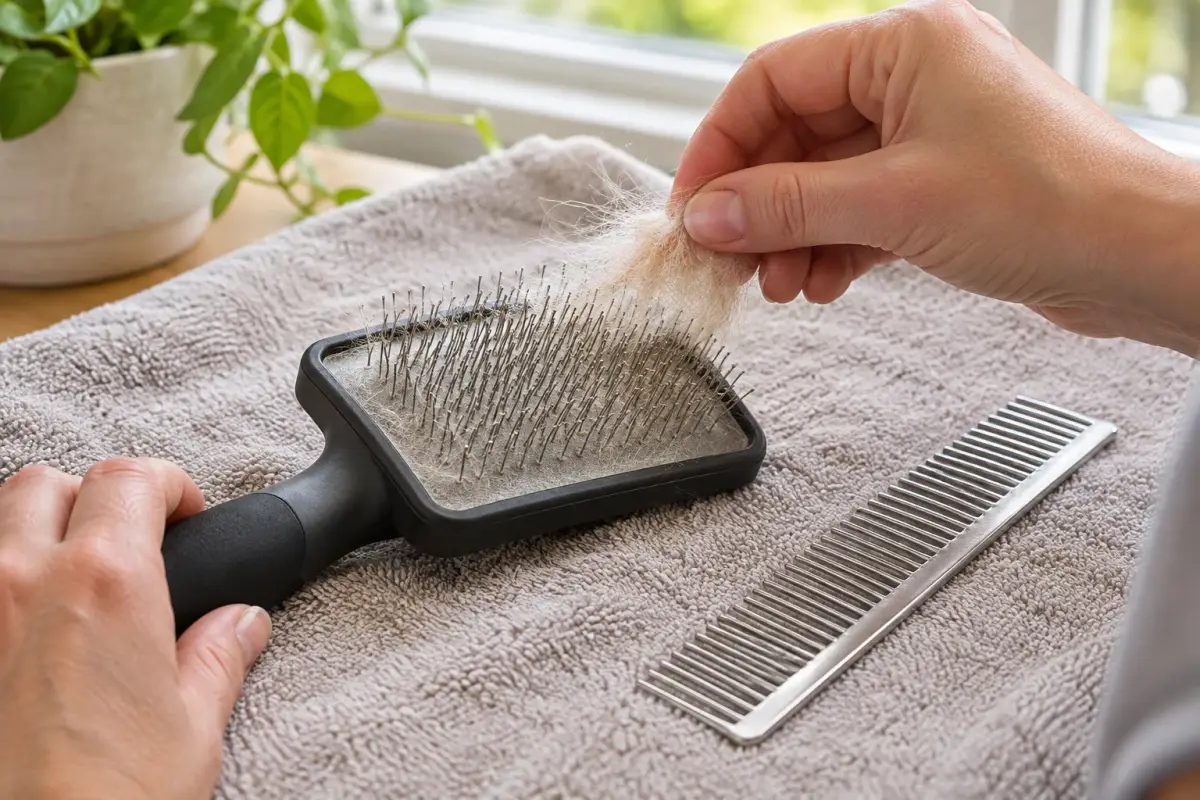
Regular brushing removes loose hair before it lands on your floor. For short, smooth coats, the AKC recommends a natural-bristle brush, rubber curry brush or grooming mitt; brush against the hair first to loosen dead hair, then with it to lift it away. For medium, long and double coats, a slicker brush reaches into the undercoat, and a wide-toothed metal comb finds tangles.
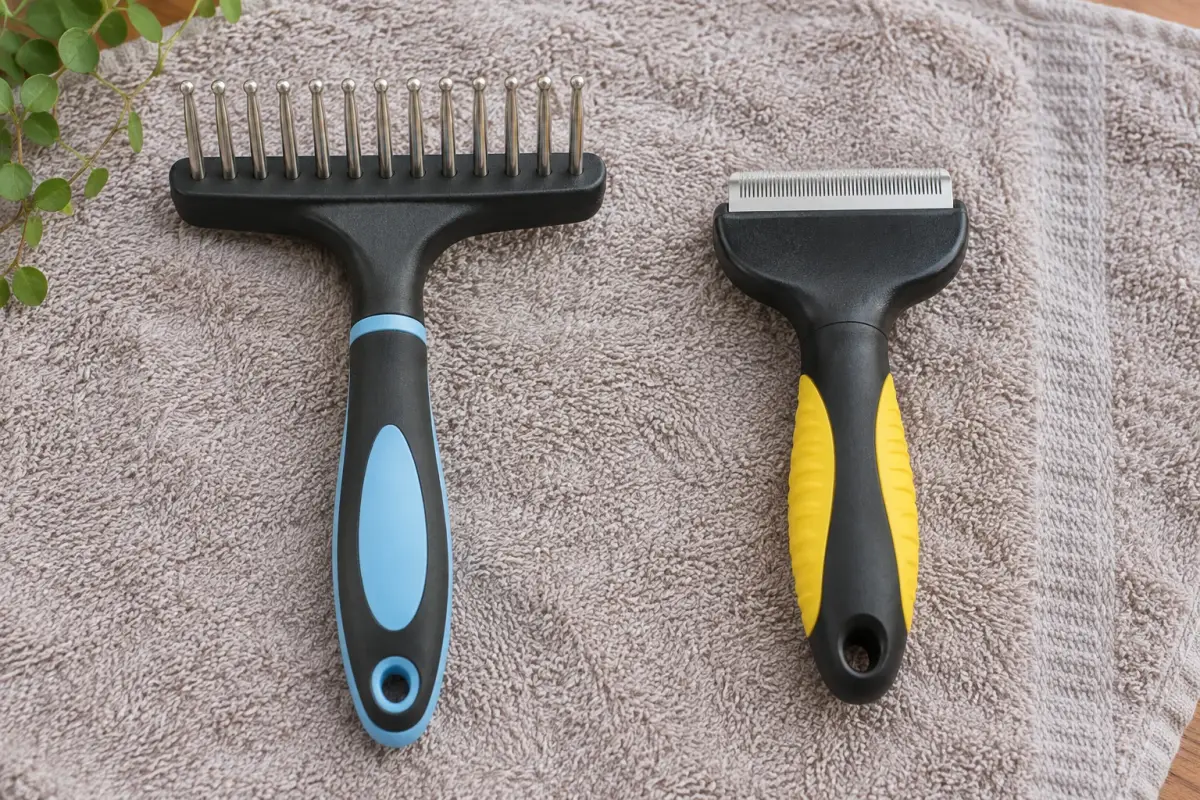
During heavy shedding, add an undercoat rake or a blade-style deshedding tool, such as a handheld deshedding comb, for double-coated dogs. Use light pressure and work in the direction of hair growth, then lift away. Brush outdoors when you can, since a lot of hair comes out at once. Our guide to the best deshedding tools compares the options.
Step 3: brush often enough
How often depends on the coat. The AKC suggests heavy shedders may need brushing several times a week, and daily during peak shedding, while light shedders still benefit from regular sessions. A five-minute daily brush during a coat blow removes far more hair than one long session a week, and it is easier on your dog.
Make brushing pleasant: short sessions, gentle strokes, a treat at the end. Check for burrs, mats behind the ears and under the legs, and any skin changes as you go.
Step 4: bathe sensibly
A bath, using a dog shower brush from our dog bath brushes with a gentle dog shampoo, followed by thorough drying and brushing, loosens and removes a lot of undercoat during a heavy shed. Shampoos marketed for shedding may help, though the AKC notes they improve coat condition rather than stopping shedding outright. A pet dryer on a cool setting blows out loose undercoat while you brush.
Do not bathe too often. Overbathing strips the natural oils that keep skin and coat healthy, which can make dryness and shedding worse. For most dogs, every four to eight weeks, plus extra baths during seasonal sheds, is plenty.
Step 5: feed well and do not shave
A complete and balanced diet supports a healthy coat, and breeders quoted by the AKC point to good-quality protein. Sudden diet changes are not a shedding cure, but a dull, dry, flaky coat on a poor diet often improves on a better one. Ask your vet before adding supplements such as fish oil; they can advise whether one suits your dog and how much.
Do not shave a double-coated dog to stop shedding. The AKC warns that shaving can leave the coat uneven as the undercoat regrows faster than the topcoat, and removes protection from sun and heat. It also does not stop shedding; the dog simply sheds shorter hairs.
Step 6 and 7: manage hair at home and know when to see a vet
Vacuum often, with a vacuum made for pet hair, and wash your dog's bedding weekly. Washable covers on furniture and a pet hair removal glove, rubber glove or lint roller for quick clean-ups help. An air purifier with a HEPA filter can reduce floating hair and dander for allergy sufferers.
Some shedding is not normal. The AKC says to consult your vet if you notice thinning fur, bald patches, irritated or red skin, scabs, constant scratching or a sudden increase in hair loss. Fleas, allergies, skin infections, hormonal conditions such as hypothyroidism, stress and pregnancy can all cause excessive shedding, and they need diagnosis rather than more brushing.
This page is general information, not veterinary advice, and it cannot replace an examination by the vet who knows your pet.
Common questions
What is the best way to deshed a dog?
For double-coated dogs, a bath and thorough drying followed by an undercoat rake or deshedding tool, then a slicker brush, removes the most loose hair. Repeat brushing every day or two during heavy shedding.
Is there a home remedy to stop dog shedding?
No home remedy stops normal shedding. Regular brushing, good nutrition and sensible bathing reduce it. Be cautious with internet remedies, especially essential oils, which can be harmful to dogs.
Can diet reduce dog shedding?
A complete, balanced diet supports healthy skin and coat, which can reduce excessive shedding caused by poor nutrition. It will not stop normal seasonal shedding. Ask your vet before adding supplements.
Sources we checked
This guide is general information, not veterinary advice. If your pet is unwell or injured, contact your veterinarian.