






Training & behavior
How to Stop a Dog From Chewing Everything
To stop a dog from chewing everything, make the wrong things unavailable and the right things irresistible: put shoes, cables and remotes out of reach, give a rotating supply of safe chew toys, swap any forbidden item for a toy and praise, supervise or confine your dog when you cannot watch, and add exercise and mental work. Chewing is normal; destructive chewing usually means teething, boredom or anxiety, and each has a fix.
By Matt GarnettUpdated November 14, 20263 min read2 sources
Why dogs chew
Chewing is a natural, healthy behavior. Puppies chew to explore and to ease sore gums while their adult teeth come in, and adult dogs chew to keep their jaws strong, clean their teeth and relieve mild stress or boredom. The aim is to direct chewing, not stop it.
Destructive chewing has a few common drivers: teething, which usually ends by around six months; boredom and too little exercise; separation anxiety, when damage happens only while the dog is alone, often near doors and windows; hunger on a restricted diet; and fabric sucking or chewing as a comfort habit.
Step 1: Dog-proof your home
Put tempting items out of reach: shoes, socks, children's toys, remote controls, phone cables, books and laundry. Keep trash cans lidded or behind cupboard doors. For things you cannot move, such as table legs or baseboards, use baby gates to limit access while you train.
Dog-proofing also protects your dog. Electrical cords, batteries, socks and small toys can cause burns, poisoning or intestinal blockages if swallowed. Call your vet straight away if your dog has swallowed something it should not have.
Step 2: Offer the right things to chew
Provide several chew toys of different textures, such as firm rubber toys you can stuff with food, durable nylon chews, rope toys and puppy teething toys, sized so they cannot be swallowed. Rotate them every few days so they stay new and interesting.
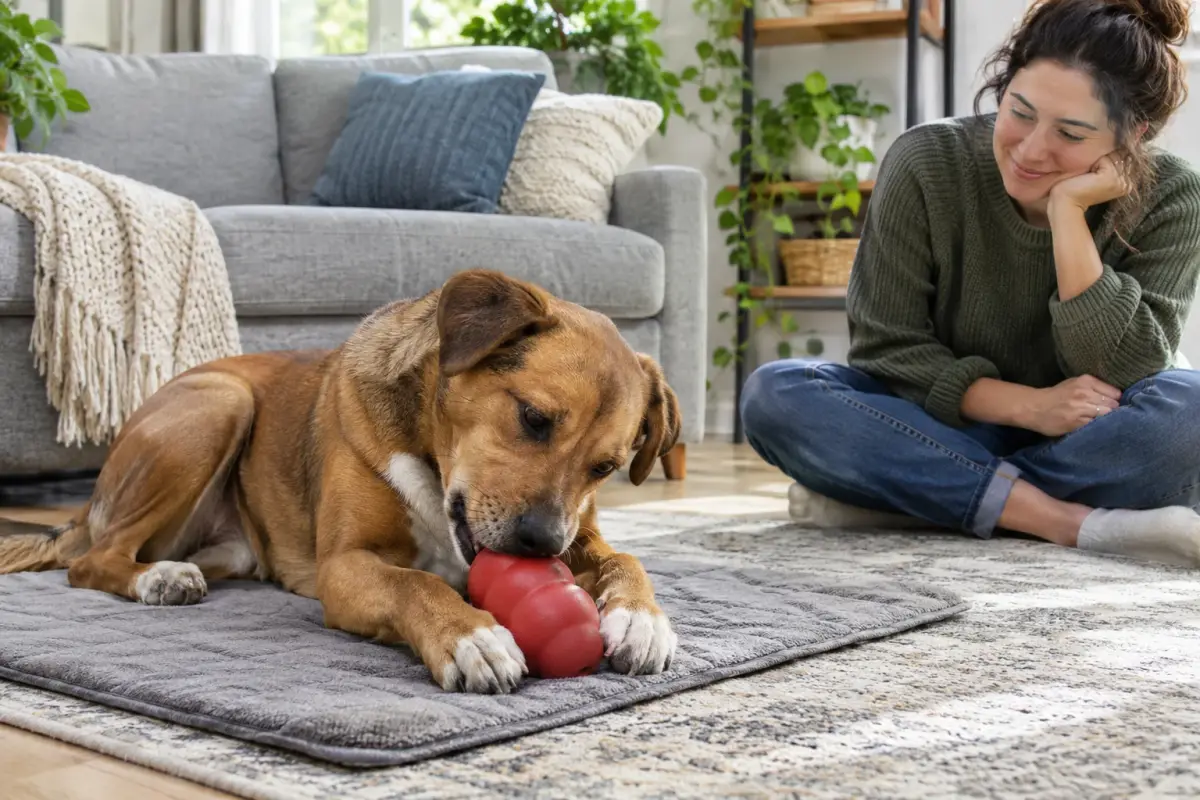
Choose chews suited to your dog's size and chewing strength, and supervise with anything that can break into pieces. Very hard items can fracture teeth. A rubber chew bone or a bear-shaped chew toy are examples of the kind to offer, always supervised. A stuffed, frozen food toy is one of the best tools for a teething puppy or a dog left alone briefly.
Step 3: Swap, praise and supervise
When you catch your dog chewing something it should not, calmly offer a chew toy, praise it as soon as it takes the toy, and remove the forbidden item. Do not chase your dog, which turns it into a game, and do not punish it after the fact; it will not connect a scolding with damage done earlier.
When you cannot supervise, confine your dog safely to a crate, pen or dog-proofed room with toys, for no longer than it can comfortably manage. A bitter-tasting deterrent spray can discourage chewing on specific items, but only alongside giving your dog plenty of things it is allowed to chew.
Exercise, enrichment and anxiety
A dog with energy to burn will find something to do. Daily walks with sniffing, play sessions, training, food puzzle toys and scatter feeding all reduce boredom chewing. Feed part of meals from chew toys for dogs that seem constantly hungry, and ask your vet if your dog is on a calorie-restricted diet.
If damage happens only when your dog is alone, especially at doors and window frames, and comes with barking, accidents or drooling, separation anxiety is likely. That needs gradual alone-time training rather than chewing fixes, and your vet can help if it is severe.
This page is general information, not veterinary advice, and it cannot replace an examination by the vet who knows your pet.
Common questions
At what age do puppies stop chewing everything?
Teething chewing usually eases by around six months, when adult teeth are in. Many young dogs keep chewing heavily until one to two years old, so keep providing safe chews.
Why does my dog chew things when I leave?
Chewing only when alone often points to boredom or separation anxiety. Provide a food toy at departures and exercise beforehand, and if it continues, read up on separation anxiety training.
Does bitter apple spray work on dogs?
Taste deterrents work for some dogs but not all. Test on a small area, reapply often, and always pair them with plenty of approved chews so your dog knows what it can chew.
What should I do if my dog swallowed something it chewed?
Call your vet right away, especially for socks, toys, bones, batteries, cords or anything sharp. Do not try to make your dog vomit unless your vet tells you to.
Sources we checked
This guide is general information, not veterinary advice. If your pet is unwell or injured, contact your veterinarian.


