Training & behavior
How to Get a Dog to Stop Barking
To get a dog to stop barking, first work out why it barks, because each type of barking has a different fix. Block the view for barking at passers-by, stop rewarding demand barking and reward quiet instead, teach a 'quiet' cue and a go-to-your-mat routine, and give your dog more exercise and enrichment. Barking is normal communication, so the aim is less barking, not none. Punishment usually makes it worse.
By Matt GarnettUpdated November 13, 20264 min read2 sources
Why dogs bark
Barking is how dogs communicate. Common types include territorial and alarm barking at people, animals or noises near the home; attention or demand barking for food, play or walks; greeting barking when visitors arrive; excitement or frustration barking when a dog cannot reach something it wants; boredom barking; and barking triggered by hearing other dogs.
Barking that happens only when your dog is alone may be separation anxiety, and repetitive barking at nothing with pacing or spinning can be compulsive. Both need a different approach, and a sudden increase in barking or howling is worth a vet check in case pain or illness is involved.
Barking at the window, the yard or passers-by
Reduce what your dog can see and hear. Apply frosted window film to the lower panes, close blinds, move furniture away from front windows, and use solid fencing or screening in the yard. A fan or white noise can mask outside sounds. Bring your dog indoors rather than leaving it outside to bark.
Then teach a better response. When your dog notices a passer-by, before it barks, mark and reward, or call it away to a mat or crate and reward it there. Over time the sight of someone walking by starts to predict a treat from you, rather than a reason to sound the alarm.
Teaching a 'quiet' cue
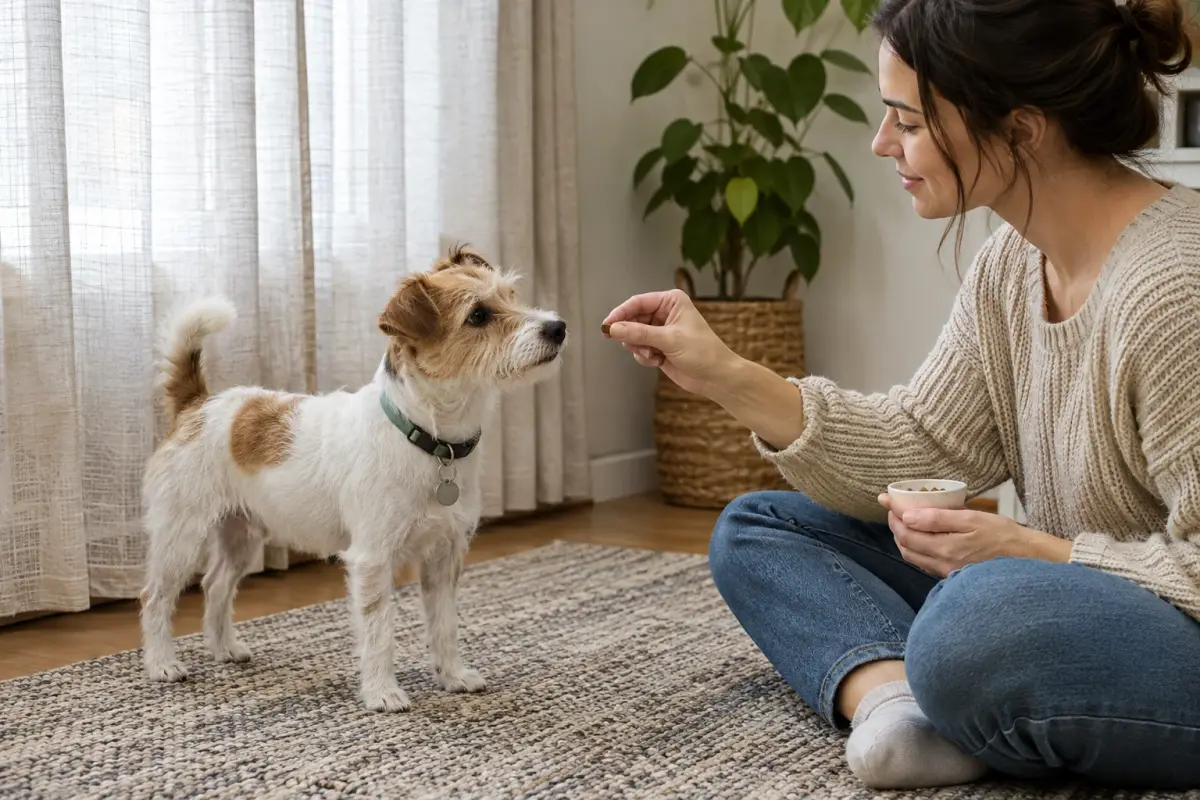
Wait for a bark or two, then hold a tasty treat in front of your dog's nose. Most dogs stop barking to sniff. As soon as it is quiet, say 'quiet', mark and give the treat. Repeat, gradually asking for a few more seconds of silence before the reward.
Practice at times when barking is mild before you need it in busy moments. Stay calm; shouting often sounds to a dog like you are joining in. Pair 'quiet' with a go-to-your-spot cue so your dog has something clear to do instead.
Demand barking and barking for attention
If your dog barks at you for food, play or attention and you respond, even by scolding, the barking is being rewarded. Instead, turn away or leave the room until your dog is quiet for a few seconds, then give attention or what it wanted.
Expect the barking to get worse briefly before it gets better, because your dog will try harder before it gives up. Teach polite alternatives, such as sitting, bringing a toy or lying on a mat, and reward those generously.
Barking at night and when you leave
For barking at night, check basic needs first: a last potty break, a comfortable bed, a fan or white noise to mask outside noise, and more exercise during the day. Some dogs bark less when they sleep in or near the bedroom. Senior dogs that bark at night may have cognitive changes and should see a vet.
If your dog barks only when left alone, record it to see if it also paces, drools or scratches at doors. That points to separation anxiety, which needs gradual alone-time training rather than barking fixes.
Meet the needs behind the barking
Many barky dogs are under-exercised or bored. Add daily walks with sniffing time, games, food puzzles, chew toys and short training sessions. Teach impulse control by asking for a sit or wait before things your dog wants, such as meals, walks or opening the door.
Avoid punishment-based tools and harsh corrections; they can increase fear and frustration, which fuels more barking. If barking does not improve, or is linked to fear or aggression, work with a certified trainer or behavior consultant, and see your vet to rule out medical causes.
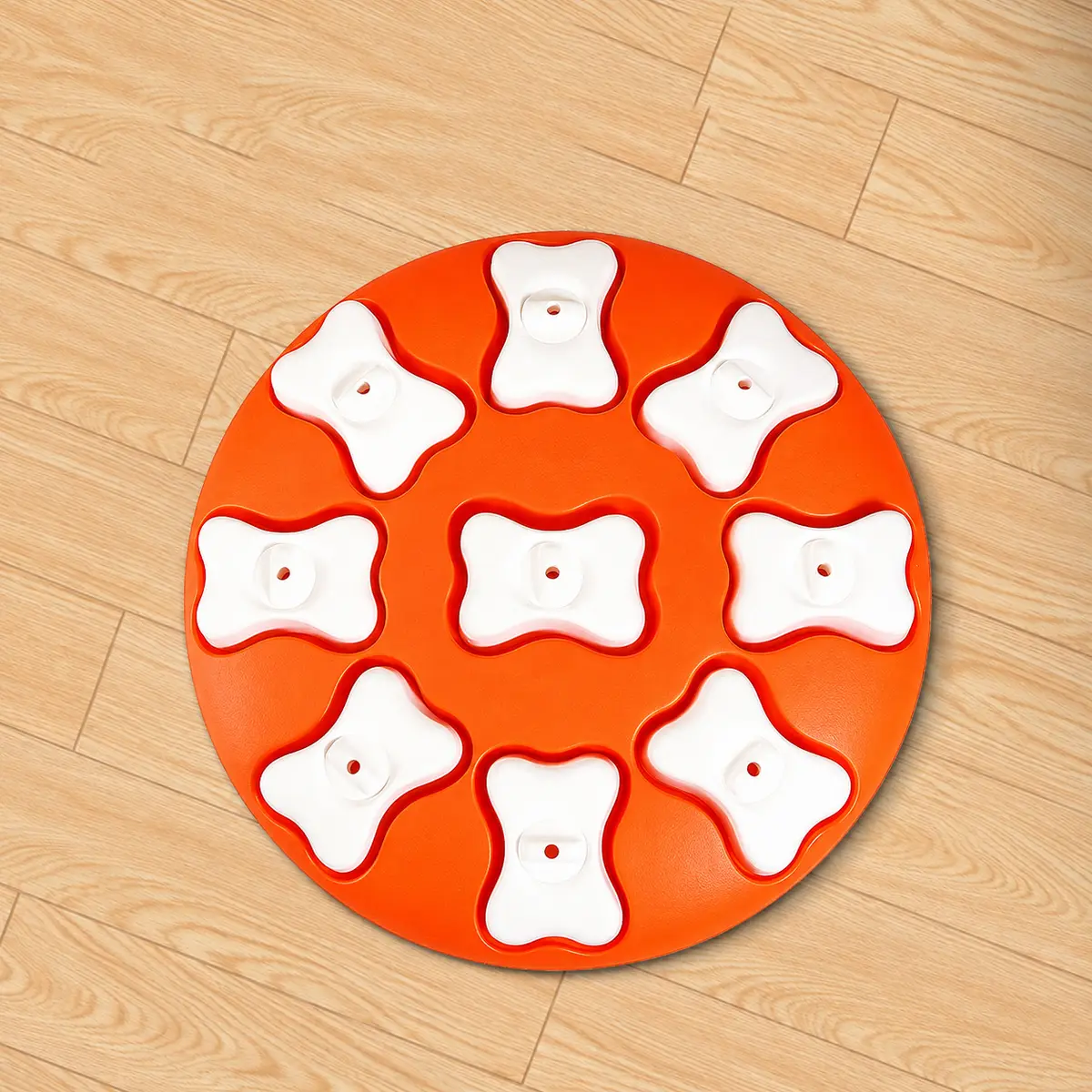
A hidden-food toy and snuffle feeding mat are enrichment formats to introduce on calm days, rather than using unfamiliar equipment during a barking episode.
For a wider choice of activities, our bored-dog toy guide compares options within dog puzzle toys.
This page is general information, not veterinary advice, and it cannot replace an examination by the vet who knows your pet.
Common questions
How do I stop my dog barking in seconds?
Interrupt with a cheerful call to come, then reward quiet, or toss treats on the floor to redirect. That stops a bout quickly, but lasting change comes from managing triggers and teaching quiet over time.
How do I stop a puppy from barking?
Meet its needs for sleep, play and potty breaks, avoid rewarding demand barking, reward quiet moments, and gently expose it to everyday sights and sounds. Most puppy barking eases with routine.
How can I stop my neighbor's dog from barking?
Speak to your neighbor calmly first, since they may not know it barks while they are out. Mask the sound with white noise. If it continues, check your local noise rules and mediation options.
Why does my dog bark at nothing?
Dogs hear and smell far more than we do, so it may be reacting to something you cannot detect. Repetitive barking at nothing with pacing or spinning should be discussed with your vet.
Sources we checked
This guide is general information, not veterinary advice. If your pet is unwell or injured, contact your veterinarian.