Buying guides
Best Mental Stimulation Toys for Dogs: Beating Boredom
The best toys for a bored dog make it use its nose, brain or jaws for a reward. Snuffle mats and scatter feeding use sniffing, which tires most dogs fastest. Puzzle feeders and treat balls use problem-solving. Stuffed, frozen rubber toys and lick mats give long, calm chewing and licking. Choose by your dog's strongest drive and chewing strength, and rotate toys so they stay new.
By Matt GarnettUpdated November 10, 20264 min read2 sources
What matters most: the right drive and the right difficulty
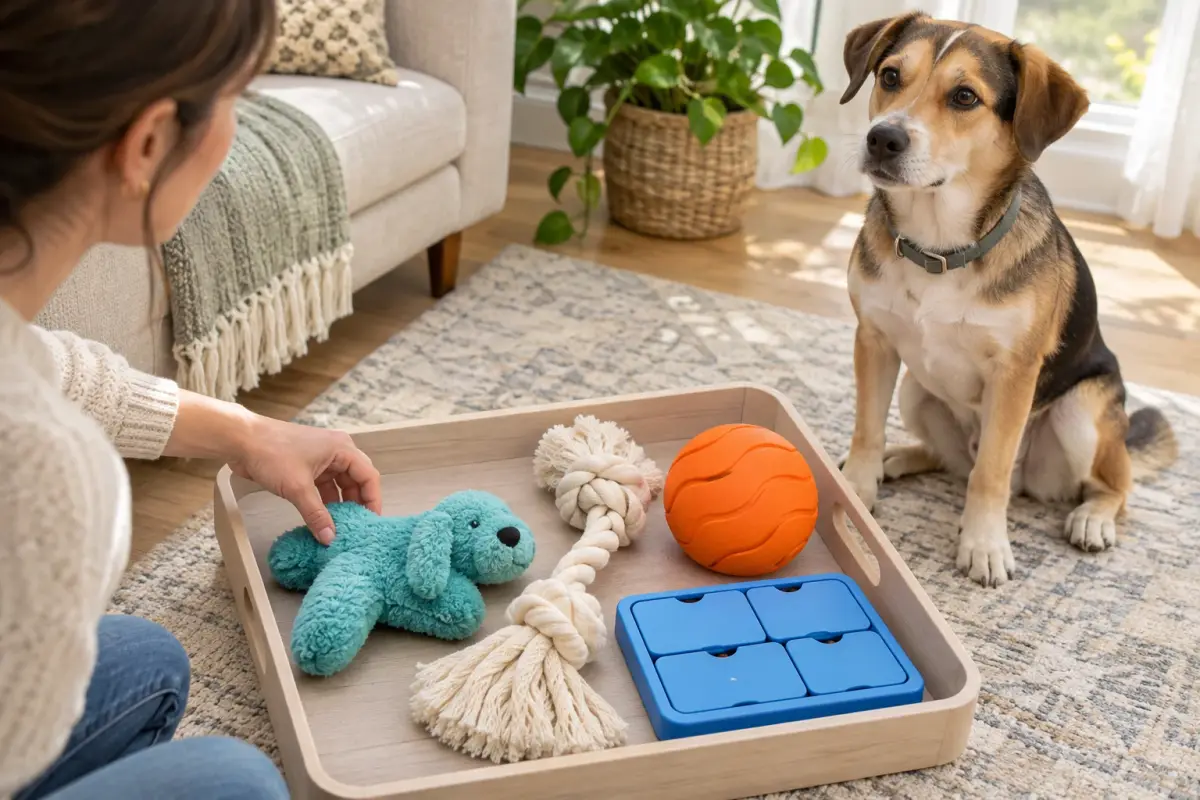
The AKC lists destructive chewing, excessive barking, digging, restlessness and attention-seeking as common signs of a bored dog, and stresses that dogs need mental stimulation as well as physical exercise. A toy helps when it gives a natural behavior a job, which is the idea behind our toys for bored dogs. Hounds and many terriers love to sniff, herding breeds love to solve and move things, and most dogs find chewing and licking soothing.
Difficulty is the second factor. A puzzle that is too hard ends in frustration or a chewed toy; one that is too easy is over in seconds. Start easy so your dog wins, then raise the challenge. Durability is the third: match the material to your dog's chewing strength, not the label on the box.
Sniffing, licking, chewing and puzzle toys compared
Snuffle mats hide kibble in fabric loops and flaps; the AKC recommends them for letting dogs use their brains and noses. Scatter feeding in the yard does the same for free. Lick mats spread soft food into grooves for slow licking, which many dogs find calming. Stuffable rubber toys filled with soft food and frozen give a long chewing session.
Treat balls and wobblers release kibble as your dog rolls them, combining movement with a reward. Board puzzles with sliding panels and flip lids suit dogs that enjoy working things out, and come in graded levels. The AKC notes a food toy can turn a two-minute meal into a half-hour game, which is often the simplest boredom fix of all.
Best type for each dog
For high-energy working breeds, pair a level-two or level-three puzzle, such as an interactive educational feeding toy, with sniffing games and active play, because toys alone will not replace exercise for a Border Collie or a Malinois. For scent hounds such as Beagles, snuffle mats and hide-and-seek with treats are ideal. For anxious dogs left briefly alone, a frozen stuffed rubber toy or lick mat gives a calm, absorbing job.
For seniors, sniffing and licking toys provide mental work without strain on joints. For puppies, choose soft rubber and easy puzzles in short sessions. For power chewers, solid natural rubber toys sized up are safest, and fabric mats or plastic puzzles should only be used with you watching.
What to avoid
Avoid leaving plastic puzzles and snuffle mats with a dog that chews, since swallowed fabric or plastic can block the gut. Avoid toys small enough to swallow and rubber toys with one hole that can trap a tongue by suction. Avoid making every meal hard work for a dog that gets frustrated; a mix of easy and harder sessions keeps it fun.
Remember that a toy does not fix a dog that gets too little exercise or company. If boredom behaviors continue despite more walks, play and enrichment, or if your dog shows signs of distress when left alone, such as howling, drooling or trying to escape, talk to your vet or a qualified trainer about separation-related problems. Our guides to dog boredom and mental stimulation for dogs go further on both.
How to choose size and introduce toys
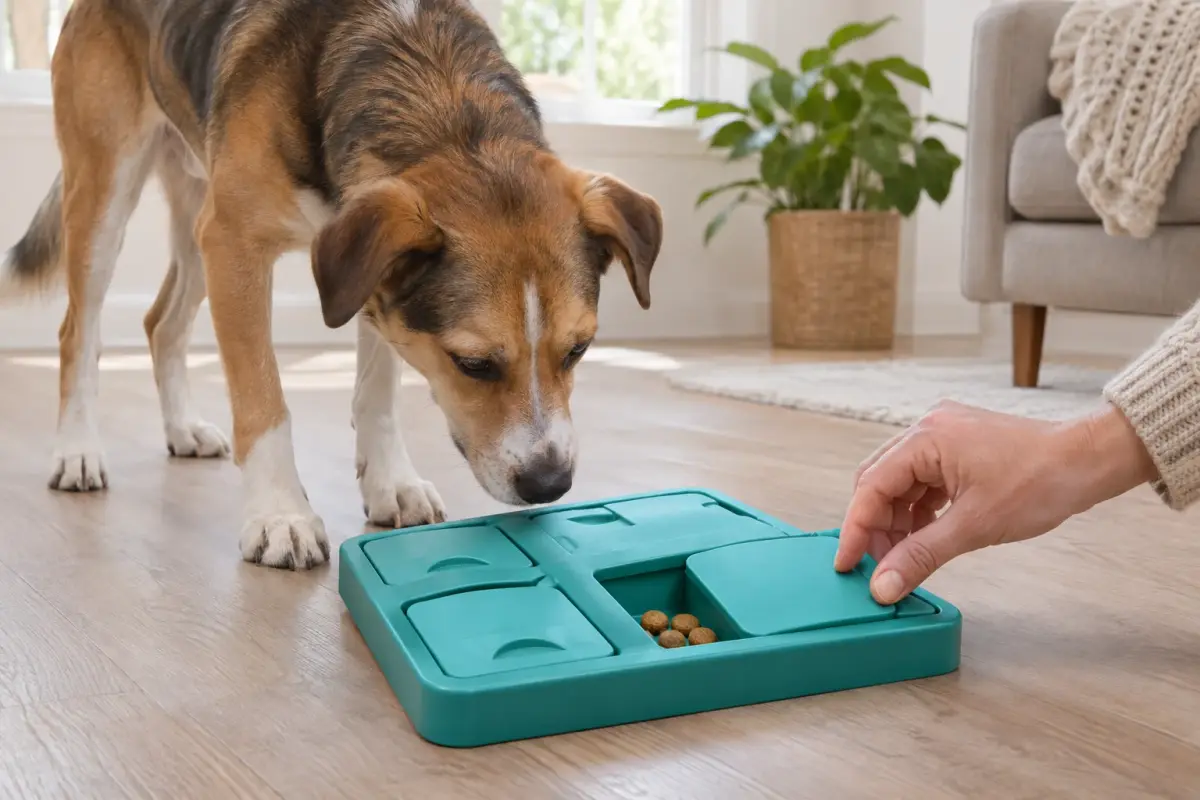
Choose rubber toys and balls larger than your dog's mouth can fully close around. For puzzles, check the level the maker gives and start at the bottom. Show your dog the game by letting it watch you hide a treat, then praise each success. Move up a level only once your dog solves the current one quickly and happily.
Count the treats and filling in your dog's daily food, and take that amount out of its meals. A practical routine is breakfast in a puzzle or snuffle mat, a frozen stuffed toy when you leave, and an evening sniff walk, which covers nose, brain and jaw in one day.
Rotation, cleaning and lifespan
Rotate toys every few days; the AKC notes even an old toy seems new and exciting when a dog has not seen it for a while. Keep two or three out and the rest stored. Put puzzles away after use so they remain special and are not chewed.
Wash food toys and lick mats after every use, since food residue grows bacteria; many rubber toys are dishwasher safe. Machine wash snuffle mats regularly. Replace any toy with cracks, missing pieces or loose parts. Well-made rubber toys last years; fabric and plastic toys last as long as your dog is gentle with them. When it is time to refresh the rotation, browse our toys for bored dogs.
Food-toy access and movement
| Format | Where food sits | How the task works |
|---|---|---|
| Snuffle mat | Within fabric folds | Searching through folds |
| Lick mat | On an open textured surface | Licking across grooves |
| Stuffable rubber | Inside a cavity | Access through the opening |
| Treat ball or wobbler | Within a moving body | Rolling or rocking releases food |
| Board puzzle | Under movable covers | Sliding or lifting parts |
Common questions
What are the best dog toys for boredom?
Snuffle mats, frozen stuffed rubber toys, lick mats, treat balls and graded puzzle feeders. Choose by whether your dog most loves sniffing, chewing or problem-solving, and rotate them.
Do puzzle toys tire dogs out?
Yes. Mental work tires dogs, and sniffing in particular is hard work. A twenty-minute puzzle or sniffing session can settle a dog, though it does not replace daily walks and play.
What is the best mental stimulation for a dog left alone?
A stuffed and frozen rubber toy or a lick mat is safest, since both are durable and absorbing. Avoid leaving fabric mats or plastic puzzles with a dog that chews.
How often should I give my dog puzzle toys?
Daily is fine. Many owners feed one meal a day through a puzzle or snuffle mat. Keep sessions short and successful, and count the food in your dog's daily ration.
Sources we checked
This guide is general information, not veterinary advice. If your pet is unwell or injured, contact your veterinarian.