






Care & how-to
Dog Boredom: Signs and How to Keep Your Dog Entertained
A bored dog usually tells you by chewing things, digging, barking, shredding, raiding the trash or following you around demanding attention. The fix is more of the right kind of activity: exercise, sniffing, food puzzles, training and company. For dogs left alone during the workday, a frozen stuffed toy, a rotated box of toys and a midday walker or daycare make the biggest difference. Rule out separation anxiety first if the trouble only happens when you leave.
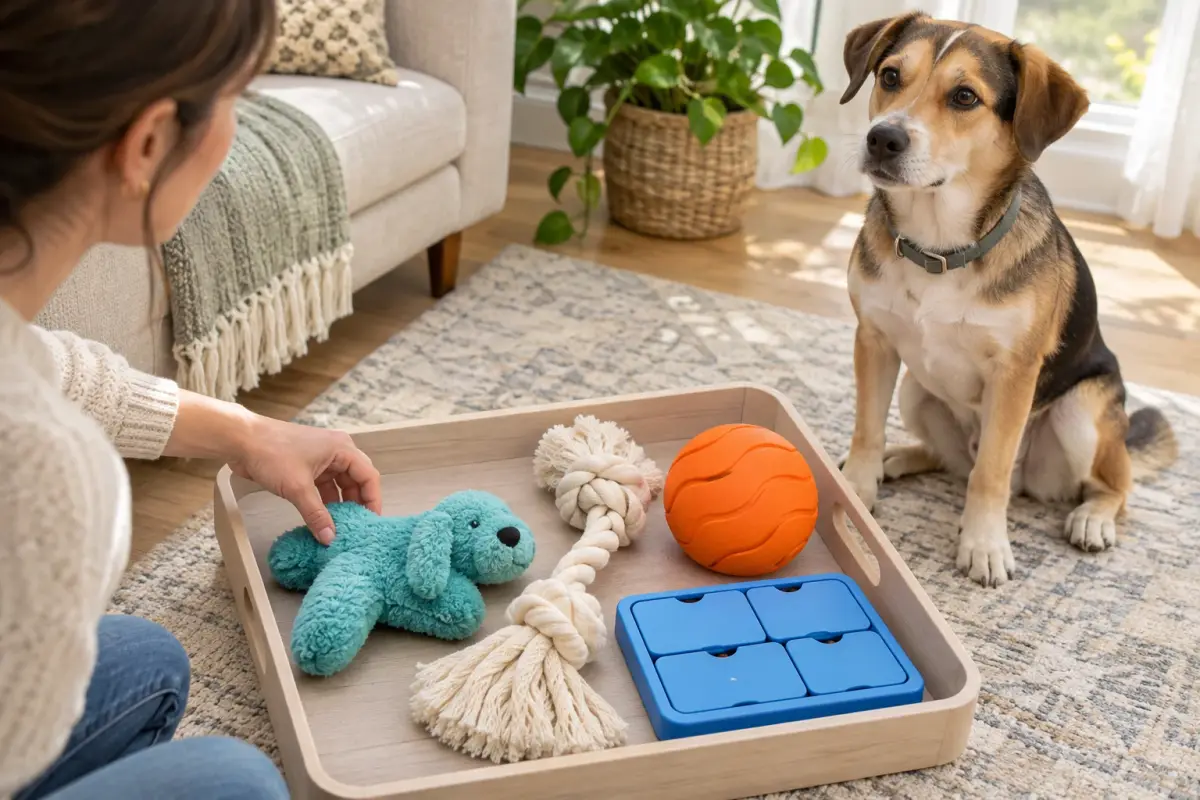
By Matt GarnettUpdated November 13, 20264 min read3 sources
Signs your dog is bored
The AKC lists chewing furniture or shoes, shredding pillows and unrolling toilet paper while alone, digging in the yard, tipping over trash cans, constant attention-seeking, restlessness, jumping on people and excessive barking as common signs of boredom. Many bored dogs also pace, whine or bring you toys over and over in the evening.
These behaviors tend to show up most when the dog has had a quiet day, after bad weather, or when routines change, such as a new job or a new baby. Young dogs and high-energy breeds, especially working, herding and sporting breeds, are the most likely to invent their own entertainment.
Boredom or separation anxiety?
The AKC warns that destruction combined with clinginess can point to separation anxiety rather than simple boredom. The ASPCA describes separation-related chewing as happening mainly or most intensely when the dog is alone, often with whining, barking or pacing. Damage near doors and windows, drooling, and frantic greetings are other clues.
A bored dog usually chews or digs whether or not you are home. An anxious dog is distressed by being left. They need different plans, and adding toys alone will not fix true separation anxiety. If you suspect it, talk to your vet or a qualified behavior professional about a structured plan.
How to keep your dog entertained at home
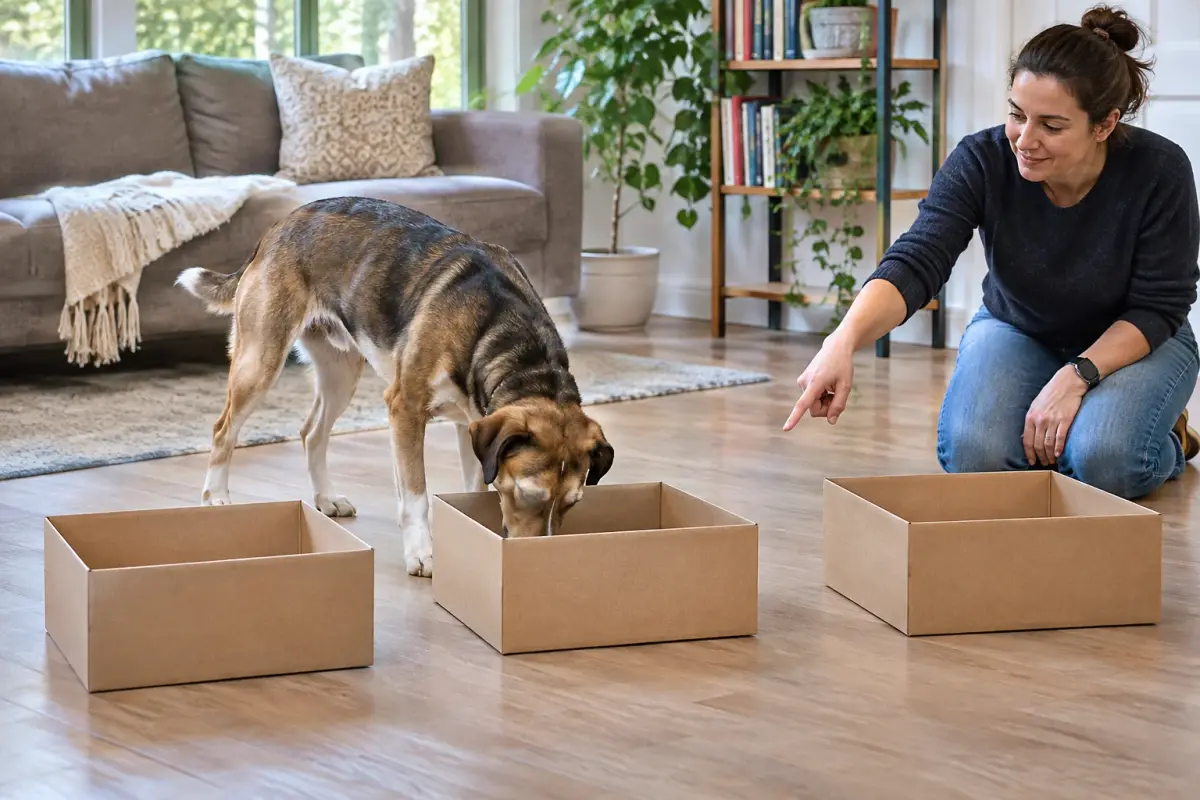
Start with exercise suited to your dog's age and breed, then add brain work. The AKC suggests hide-and-seek, tug, scent games with hidden treats, puzzle toys, snuffle mats and food-release toys. Sprinkling kibble for your dog to find, or using a slow feeder, turns every meal into an activity.
Short daily training sessions are one of the best boredom cures. Teach tricks, practice old cues in new rooms, or try a class such as Rally or agility. The AKC also suggests jobs that match a breed's instincts: a digging box for terriers, scent work for hounds, or treibball, which involves pushing big balls into a goal, for herding breeds.
A hidden-food toy and a snuffle feeding mat are different enrichment formats to inspect for your dog's play style; try new equipment with supervision.
How to keep your dog entertained while you are at work
Step 1: Give your dog a good walk with plenty of sniffing before you leave. Step 2: Hand over a frozen stuffed toy or a puzzle feeder filled with part of breakfast as you go out, so the departure predicts something good. Step 3: Leave two or three safe toys from a rotation box. Step 4: Close off rooms with temptations, such as shoes and laundry, as the ASPCA advises.
Step 5: For long days, arrange a midday dog walker, a pet sitter or daycare, which the AKC recommends for longer absences. Step 6: Make the evening count with a walk, a game and a short training session. If you crate your dog, the ASPCA suggests no more than about six hours at a time with appropriate toys.
How many toys should a dog have?
There is no magic number. What matters more is variety and rotation. Keep a handful of toys out, perhaps a chew, a soft toy, a ball and a puzzle, and store the rest. The ASPCA suggests rotating chew toys every couple of days, and the AKC notes that an old toy seems new when your dog has not seen it for a while.
Choose different types for different jobs: chew toys for settling, tug and fetch toys for play with you, and food puzzles for brain work. Check toys regularly and throw away anything that is falling apart, has exposed stuffing or has frayed rope. The AKC suggests putting toys away after playtime, which also makes them last longer.
Our guide to toys for bored dogs compares types across toys for bored dogs, so rotation can include different activities.
When to talk to your vet
If boredom behaviors appear suddenly in an adult dog, or your dog is licking, chewing or pacing in a way that seems compulsive, check with your vet. Pain, itching, hunger on a restricted diet and other health problems can look like boredom. The ASPCA also recommends asking your vet which chews are safe for your dog's teeth.
For persistent destruction, a certified trainer or veterinary behaviorist can help build a plan.
This page is general information, not veterinary advice, and it cannot replace an examination by the vet who knows your pet.
Common questions
What do you do with a bored dog?
Add a mix of exercise, sniffing, food puzzles, training and time with you. A sniff walk, a frozen stuffed toy and five minutes of trick training each day help most bored dogs quickly.
How do I keep my puppy busy?
Use short bursts of play, food puzzles, sniffing games and training, followed by naps. Puppies need lots of rest, so a busy ten minutes then a nap in a safe space works better than nonstop activity.
Can a dog be bored of its toys?
Yes. Dogs often lose interest in toys that are always out. Rotating a few at a time every couple of days keeps them interesting, and joining in the game makes any toy more exciting.
Sources we checked
This guide is general information, not veterinary advice. If your pet is unwell or injured, contact your veterinarian.


