Care & how-to
How to Groom Your Dog at Home
To groom your dog at home, work through a routine: brush the coat down to the skin with a tool suited to its coat, bathe only when needed with a dog shampoo, trim the nails, wipe the outer ears and eyes, and brush the teeth. Short, regular sessions with treats work better than an occasional marathon. Leave complex haircuts and severe mats to a professional groomer.
By Matt GarnettUpdated November 9, 20264 min read3 sources
Step 1: gather the right tools
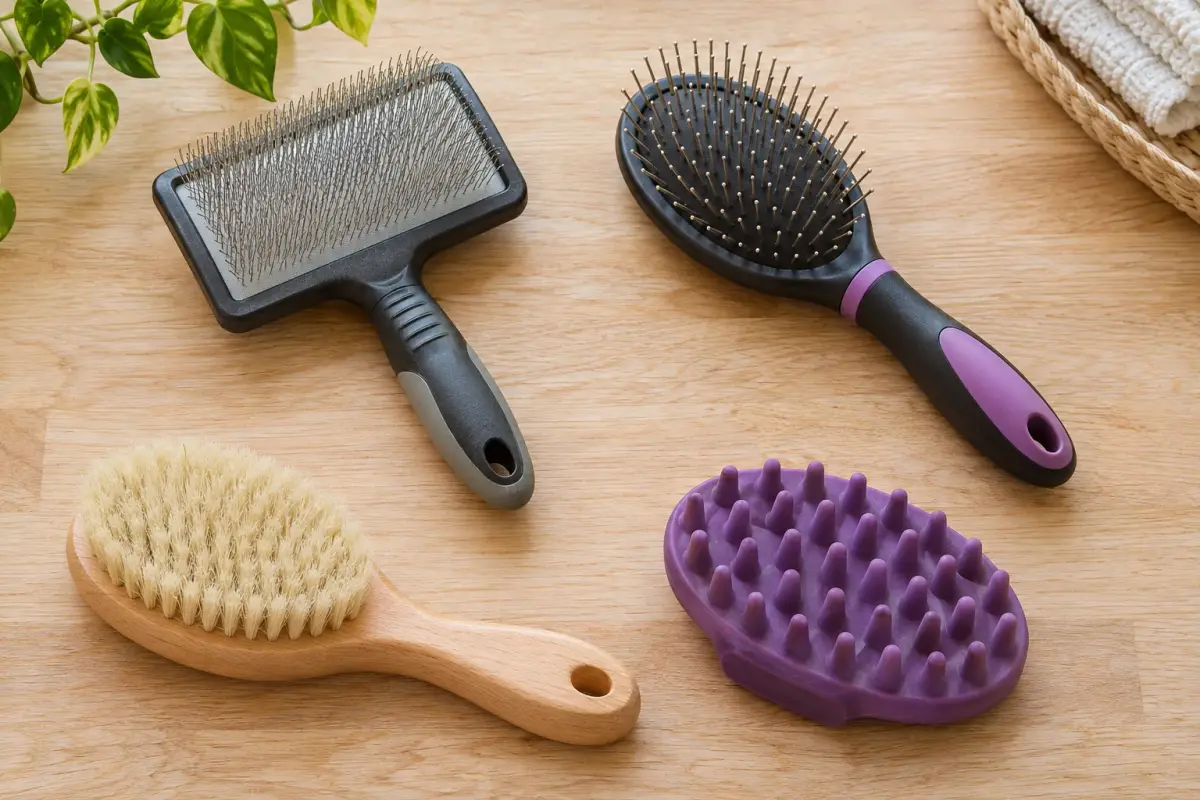
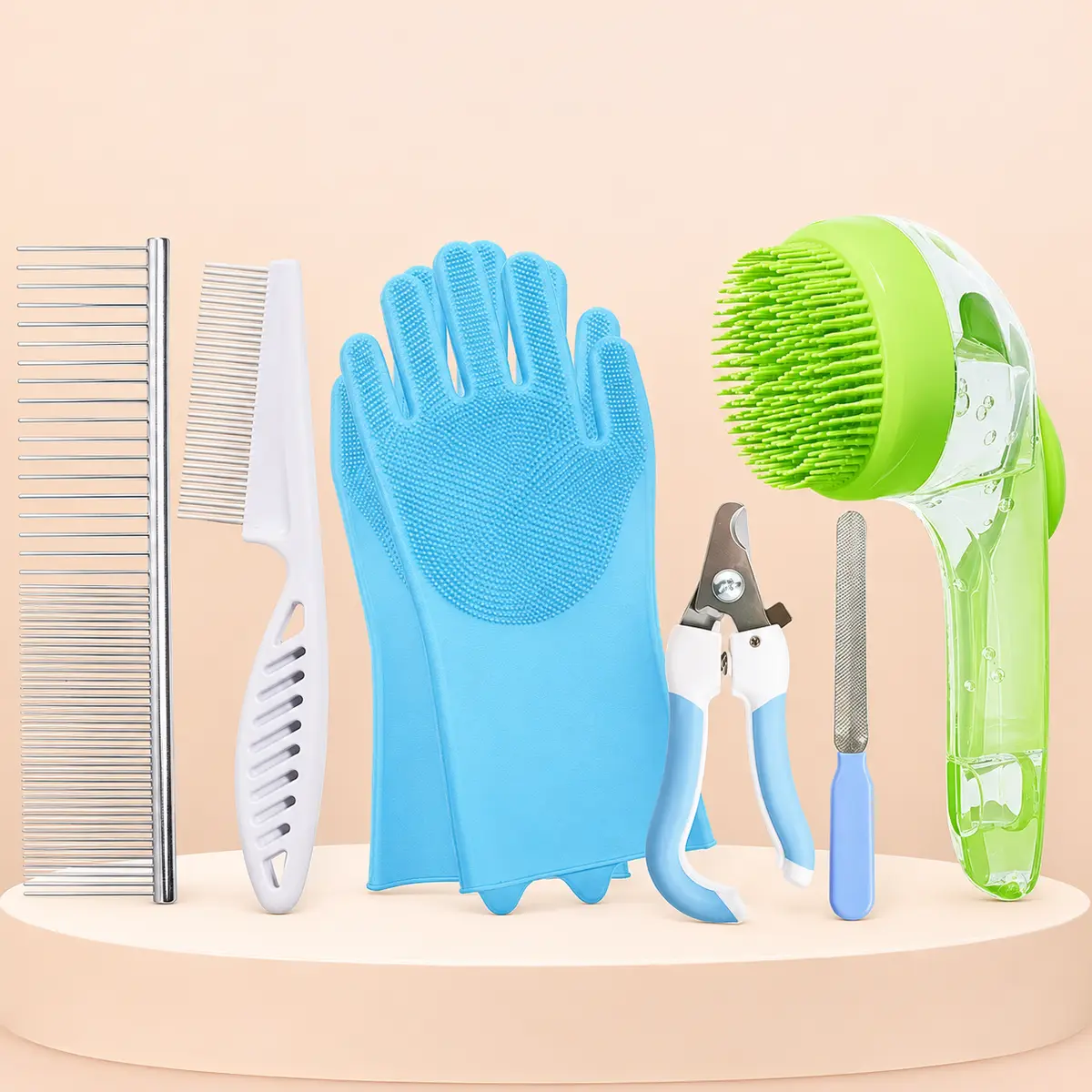
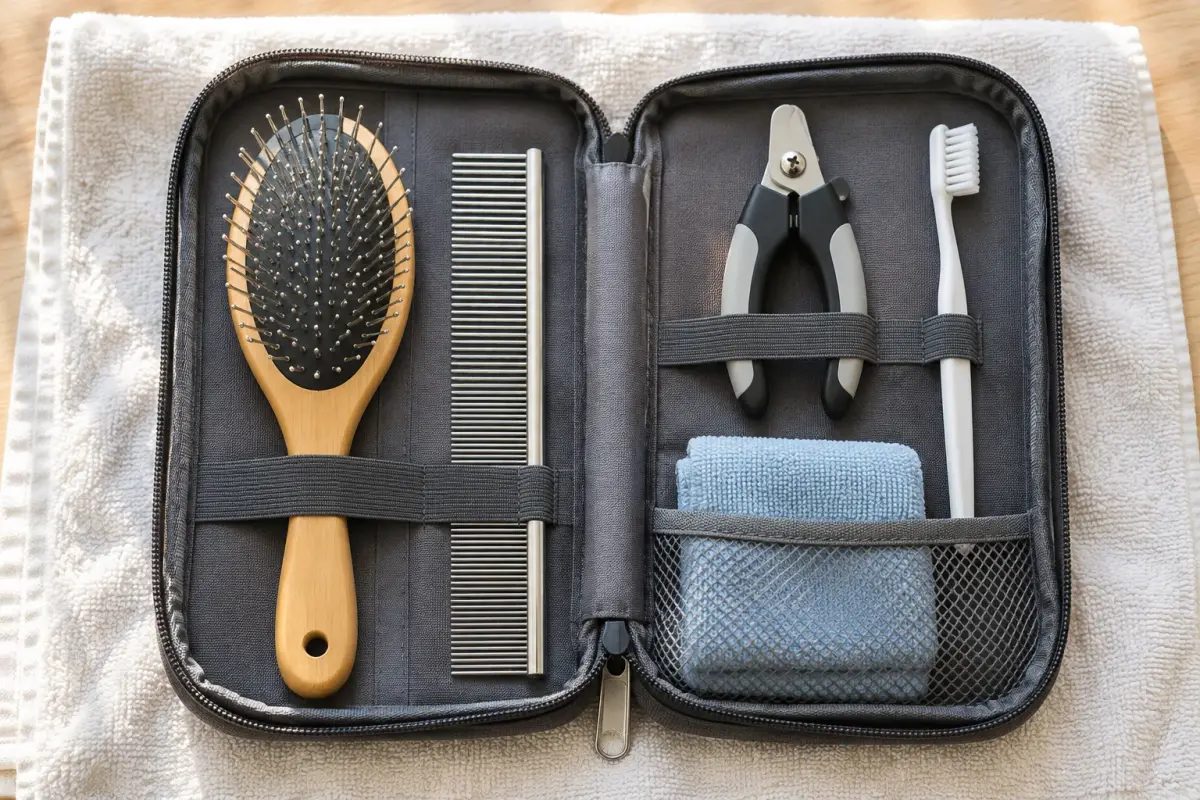
Tools depend on coat, and a dog grooming kit is an easy way to gather the basics. VCA Animal Hospitals suggests a slicker brush for curly, non-shedding coats like Poodles; a comb or stiff bristle brush for medium-length shedding coats like retrievers; a grooming glove or short-bristle brush for smooth coats like Boxers; and a long-toothed comb for long coats like Collies. Double-coated dogs also benefit from an undercoat rake. Add dog nail clippers or a grinder, styptic powder, dog shampoo, towels, a dog toothbrush and dog toothpaste.
Work on a non-slip surface: a rubber mat on the floor for big dogs, or a sturdy table with a mat for small ones. Never leave a dog alone on a table. Keep treats handy and plan sessions when your dog is calm, such as after a walk.
Step 2: brush the coat
The AKC says most dogs need a few brushing sessions a week, and long-coated breeds often need daily brushing. Work in sections, brushing down to the skin with gentle strokes, and finish with a comb to find tangles. Mats often form behind the ears, under the legs, on the chest and around the tail. Check for burrs, cuts, lumps and fleas as you go.
Remove small tangles gently with your fingers or a comb, holding the hair near the skin so you do not pull. VCA advises using clippers, never scissors, to cut out larger mats, because it is very easy to cut skin trapped in a mat. Severe matting needs a groomer or your vet. Always brush out tangles before a bath, since water tightens them.
Step 3: bathe only when needed
The AKC cautions that overbathing can dry out skin and coat. Bathe when your dog is dirty or smelly, using lukewarm water and a mild dog shampoo, starting at the neck and working back. Wash the face with a damp cloth. Rinse thoroughly, far longer than you lathered, then towel dry and use a dryer on a cool setting for thick coats, brushing as you go.
Avoid outdoor baths in cool weather. Make sure the coat is fully dry, especially dense undercoats, which can hold moisture against the skin.
Step 4: nails, ears and eyes
If nails click on the floor, they are too long. Trim just the tip, beyond the quick, every three to four weeks or so, and keep styptic powder nearby. Check paw pads for cracks or debris and trim long fur between the pads. The AKC suggests cleaning the ears about once a month or as needed, wiping only the visible outer ear with a damp cloth or a cotton ball lightly moistened with an ear cleaner your vet recommends, and never pushing anything into the ear canal.
For eyes, the AKC suggests wiping debris from the corners with a soft cloth dampened with warm water, without wiping across the eye. Red eyes, squinting, discharge or a bad-smelling ear are reasons to call your vet.
Step 5: teeth
Daily brushing is ideal, and a few times a week still helps, according to the AKC. Use a dog toothbrush or finger brush and dog toothpaste, never human toothpaste, which can contain xylitol and other ingredients that are unsafe for dogs. Start by rubbing your finger along the gums, then progress to the brush over several days.
Chews and treats do not replace brushing. Bad breath, red gums, broken teeth or tartar build-up need a vet check, since dental disease is common and painful.
Clippers, haircuts and when to call a pro
If your dog's coat needs clipping with dog grooming clippers, such as a Poodle, Schnauzer or doodle, ask a groomer for advice on blade length and technique before trying at home. Keep blades sharp and cool, clip with the lie of the coat on clean, dry, brushed hair, and go slowly around the face, ears, armpits and genitals. Never shave a double-coated breed such as a Husky or German Shepherd.
Book a professional groomer for complex cuts, hand-stripping, severe matting or a dog that is too stressed to handle. If your dog is in pain when handled, or you find lumps, sores, hair loss or skin changes, see your vet first.
This page is general information, not veterinary advice, and it cannot replace an examination by the vet who knows your pet.
Common questions
How often should I groom my dog at home?
Brush a few times a week, or daily for long coats, trim nails every three to four weeks, clean ears about monthly and brush teeth daily if you can. Baths are needed only every few weeks to months.
What do I need to groom my dog at home?
A brush and comb suited to your dog's coat, nail clippers or a grinder, styptic powder, dog shampoo, towels, an ear cleaner your vet recommends, and a dog toothbrush and toothpaste.
Should I bathe my dog before or after clipping?
Bathe and dry first. Clean, dry, brushed hair clips more evenly and is easier on the blades. Clip with the direction of hair growth and go slowly around sensitive areas.
Sources we checked
This guide is general information, not veterinary advice. If your pet is unwell or injured, contact your veterinarian.