






Care & how-to
How Long Can Chickens Go Without Water?
Not long. The Merck Veterinary Manual says going without water for more than 12 hours hurts egg production in laying hens and growth in young birds, and that beyond 36 hours deaths rise sharply. Treat "a few hours" as your limit, and less in hot weather. This page explains what the numbers mean, why heat and ice change them, and how to set up water so a flock never runs dry.
By Matt GarnettUpdated November 13, 20265 min read3 sources
The short answer: 12 hours hurts, 36 hours kills
Poultry veterinarians describe two thresholds. According to the Merck Veterinary Manual, water deprivation for more than 12 hours has an adverse effect on the growth of young poultry and on egg production in layers, and deprivation for more than 36 hours causes a marked increase in deaths among both young and mature birds. Those are measurements from poultry science, not a promise that a healthy hen is fine for a day and a half.
For a backyard keeper the useful reading is the first number. A flock that has been without water since the previous evening has already crossed the line where laying and growth suffer. If you come out in the morning and find an empty or frozen waterer, fix it first, before collecting eggs or topping up feed.
Why chickens cannot wait it out
Water and feed travel together. Utah State University Extension notes that water intake and feed intake are directly related, so a bird that cannot drink also stops eating, and inadequate water reduces egg production and growth. The Merck Veterinary Manual gives a general guide that birds drink roughly twice as much water as the weight of feed they eat, which is why even a small flock empties a container faster than most people expect.
An egg is mostly water, so a hen without a drink has little to build one with. Missing a day does not always mean the hen is in danger, but it means that day is a poor one for her body. Chicks are the most fragile of all, because they are small and have little reserve, so a brooder should never be left without a drinker they can reach.
How heat changes the clock
Hot weather shortens the margin. Utah State University Extension puts adult chicken water use at about 0.05 to 0.08 gallon per day in cool weather and 0.08 to 0.16 gallon per day in hot weather, so needs roughly double. The Merck Veterinary Manual adds that environmental temperature and humidity are among the factors that change how much a bird drinks, and that exact requirements cannot be given for every situation.
The practical result is that a drinker that lasts a day in April may be empty by lunchtime in July. Heat-stressed hens pant, hold their wings away from their bodies and drink more. The poultry extension service at extension.org advises fresh, clean, cool water in multiple spots in shade, with ice cubes or frozen bottles added, and says watery droppings are common in high heat because hens are drinking more.
Frozen water counts as no water
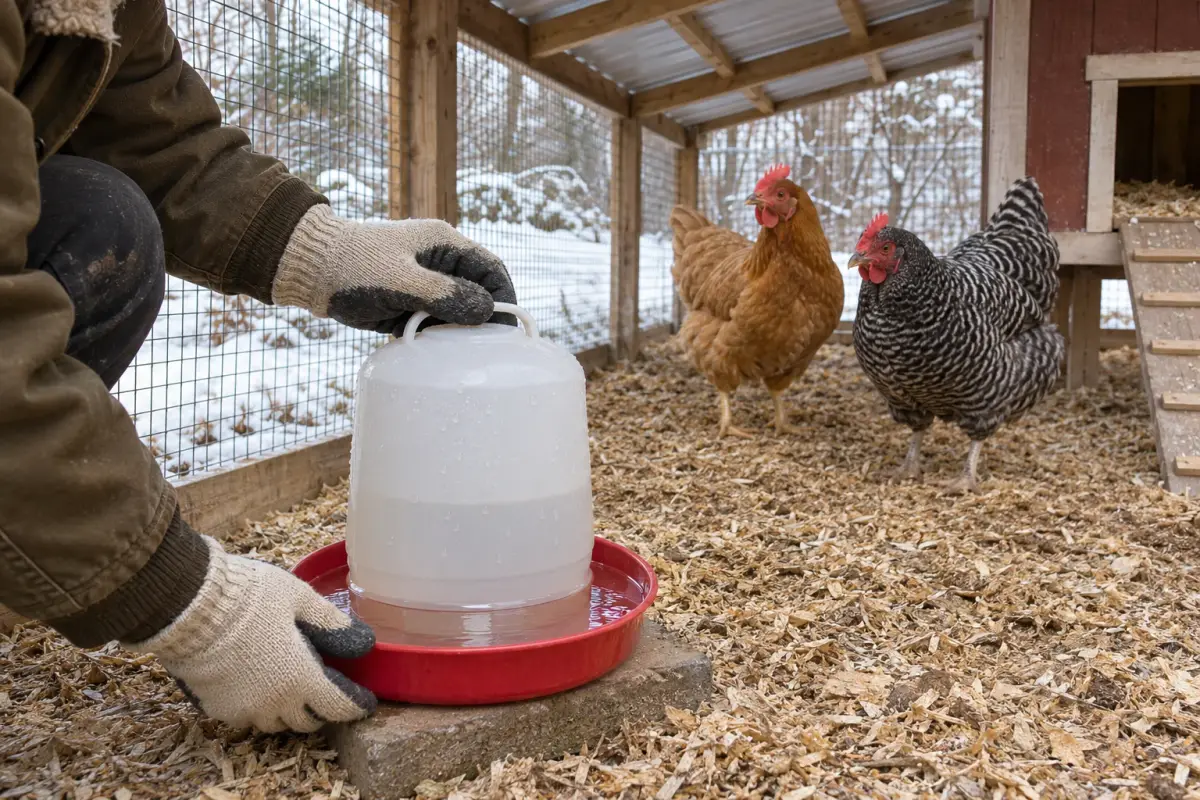
A bowl with a skin of ice is functionally empty. Winter is the other season when flocks quietly go without, because the water is there but frozen solid. Utah State University Extension advises changing water frequently so it does not freeze, and the same idea applies to heated bases and heated waterers: they only help if you check that they are working each morning.
If a hard freeze is forecast, carry out fresh water at first light and again in the afternoon, and use a rubber pan that you can flex to pop the ice out. Check any heated waterer by hand, because a tripped outlet or a chewed cord looks the same as a working unit from across the yard. Our guide to a heated chicken waterer covers that choice in detail.
Setting up water so the flock never runs dry
Plan for more capacity than the daily need. Utah State University Extension says a standard one-gallon fountain supplies the daily water for about 12 to 15 adult chickens in cool weather and only 6 to 12 in hot weather, and advises adding two or three extra drinkers beyond the estimated need so spills and leaks do not empty the flock and timid birds are not driven off by dominant ones. Our overview of the chicken waterer types explains how each one works.
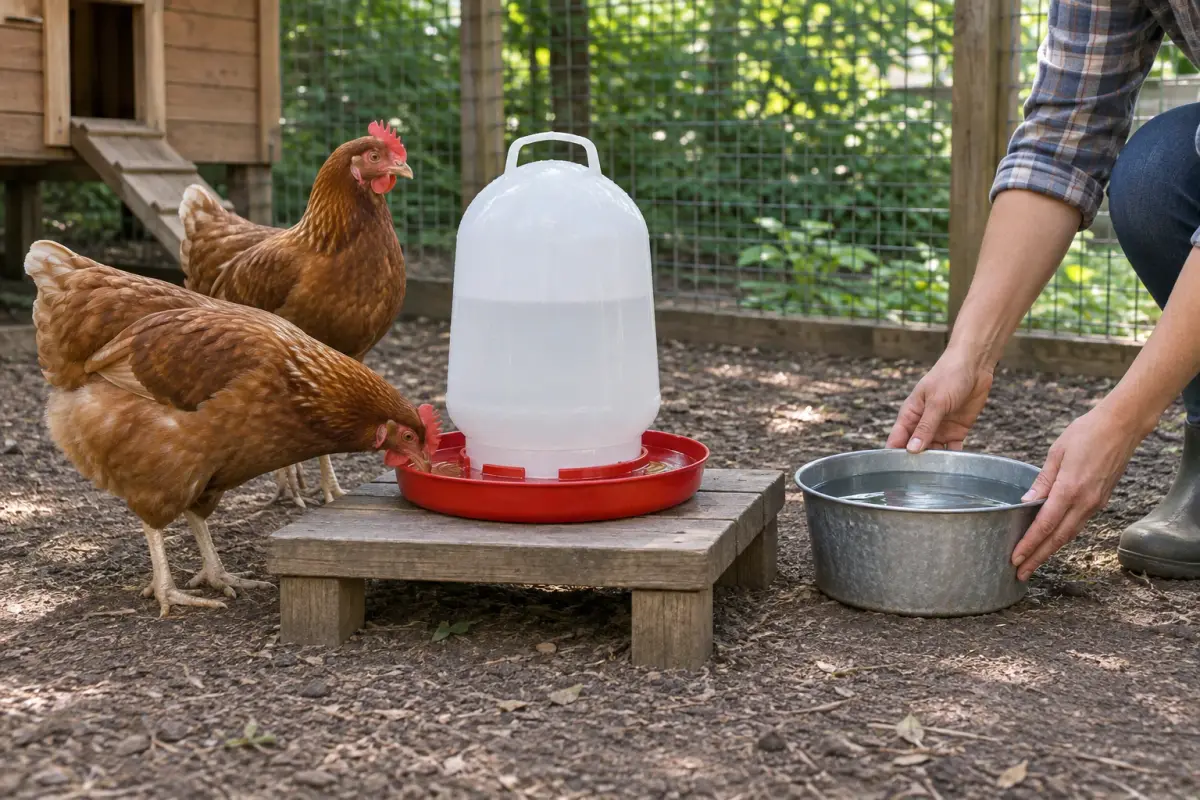
Put drinkers in shade, off the ground on a block or hung so shavings and droppings stay out, and keep them away from the feeder. If you are choosing between feeders and waterers for a new flock, browse chicken feeders and waterers and read the chicken feeder buying guide first. If you are building from scratch, the same thinking applies to the chicken coops you pair them with: leave room for two drinking stations.
If your chickens have been without water
If a flock has gone without water for several hours, offer cool, clean water straight away and watch them. Do not panic, but do not leave them either. The extension.org guidance on extreme heat describes heat exhaustion as heavy panting, wings held out, pale comb and wattles, and lethargy or limpness, and says to cool the bird in cool, not icy, water up to the neck, never the head, then move her somewhere cool.
Call a veterinarian who treats poultry if a bird is limp, will not stand, or has not perked up within a short time of drinking, and call sooner for chicks. Expect egg production to dip for a while after a dry spell. Collect eggs more often while the flock recovers, and go back to our feeders and waterers range only after you have decided how many drinking points you need.
This page is general information, not veterinary advice, and it cannot replace advice from a veterinarian who treats poultry.
Common questions
How long can a chicken survive without water?
The Merck Veterinary Manual says deprivation beyond 12 hours harms laying and growth, and beyond 36 hours deaths rise sharply. Heat and young age make it much worse, so never plan around the longer figure.
Can chickens go overnight without water?
Healthy adult hens usually cope with the overnight dark hours because they are roosting and not drinking, but water must be available at first light. A hen that has gone a full day should be checked and watched.
How much water does a chicken drink per day?
Utah State University Extension estimates about 0.05 to 0.08 gallon per day in cool weather and 0.08 to 0.16 gallon in hot weather for an adult bird, so a flock of six may need roughly half a gallon or more in summer.
Do chickens stop laying if they miss water?
Yes, laying can drop. The Merck Veterinary Manual links more than 12 hours without water to reduced egg production, and extension guidance says low water intake also cuts feed intake, which lowers laying further.
Sources we checked
This guide is general information, not veterinary advice. If your pet is unwell or injured, contact your veterinarian.


