






Buying guides
Chicken Waterers: How to Choose the Right Type
A good chicken waterer is one the whole flock can reach, that stays clean, and that does not freeze or run dry. Extension guidance puts an adult hen at roughly 0.05 to 0.08 gallon a day in cool weather and up to 0.16 gallon in heat, so size and number of waterers matter more than the style.
By Matt GarnettUpdated November 13, 20264 min read3 sources
How much water does a flock actually need?
Start with the numbers, because they decide everything else. Utah State University Extension estimates that an adult chicken drinks about 0.05 to 0.08 gallon per day in cool weather and 0.08 to 0.16 gallon per day in hot weather. Wisconsin Extension offers a handy rule of thumb as well: hens generally drink about 2 pounds of water, roughly a quart, for every pound of feed they eat.
That means a flock of ten hens can easily go through a gallon or more on a hot afternoon. If you are comparing chicken feeders and waterers, look at the reservoir size first and work backward from your flock count rather than choosing by looks.
How many waterers do you need?
Utah State suggests that a common 1-gallon fountain-style drinker supplies roughly 12 to 15 adult birds in cool weather and 6 to 12 in hot weather. It also advises adding two or three extra drinkers beyond the estimate, which covers spills and leaks and lets timid hens drink without being chased off by bossy ones.
For a flock of 30, that works out to about 3 drinkers on paper in cool weather and 5 in hot weather, so planning on 5 to 8 total is sensible. For a small backyard flock of four to six birds, two separate waterers in different spots is a cheap way to protect against one tipping over.
Types of chicken waterer compared
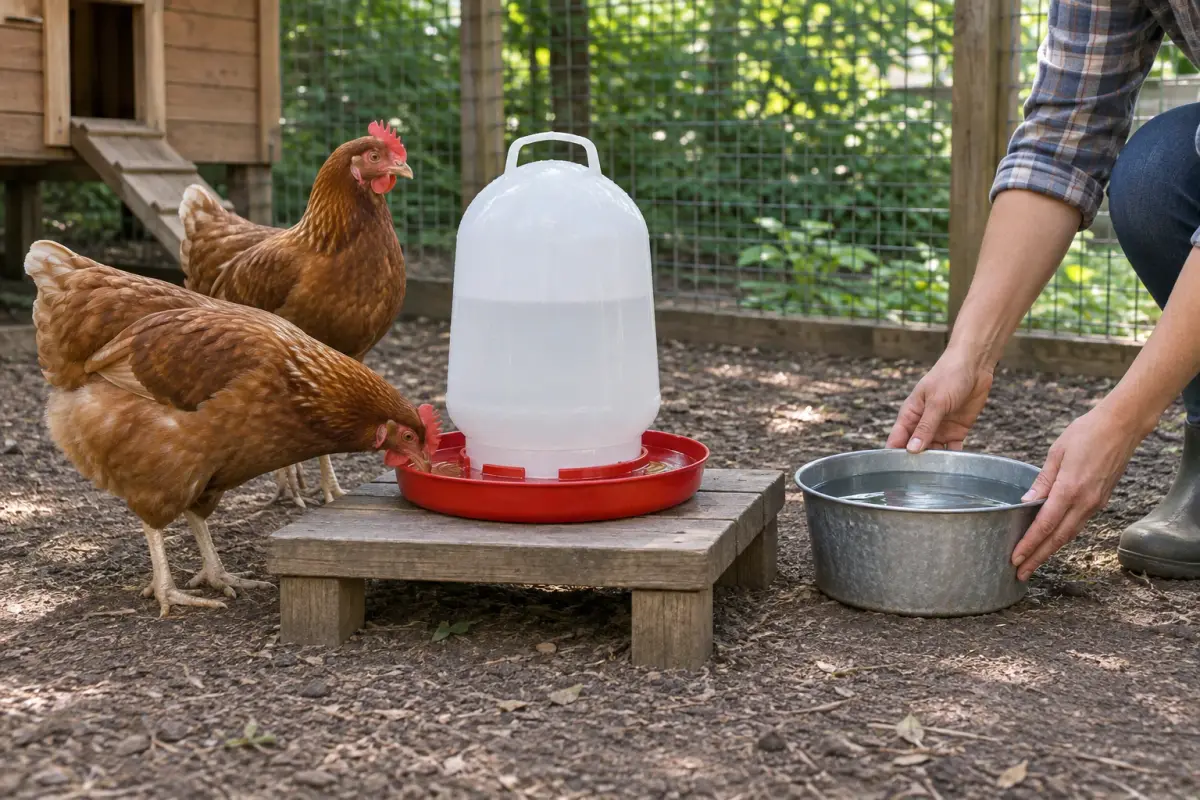
Gravity fountains are the familiar bell-shaped design: a reservoir sits upside down on a shallow tray. They are simple and easy to see into, but the open tray collects bedding and droppings, so they need frequent rinsing. Cup and nipple systems keep water enclosed and cleaner, but birds have to learn to use them and a small leak can soak the bedding.
Larger bucket or barrel setups with drinking nipples hold a lot of water and need filling less often, which suits bigger flocks or anyone away during the day. Open pans and rubber tubs are the least tidy, though they are easy to empty and chip ice out of in winter. Pick the type that fits how often you can realistically check it.
Keeping water clean
Utah State notes that water should be changed frequently to prevent bacterial growth, and that fresh water also helps avoid over-warming in summer. In practice that means dumping and rinsing the waterer on a regular rhythm and scrubbing off slime when you see it, rather than only topping it up.
Hang or raise the waterer on a block so it sits around the height of a hen's back, which keeps scratched-up litter out of the water. Placing it away from the roosts also stops droppings falling in. Look at the setup in your chicken coop and run and choose a spot that is shaded in summer.
Winter: stopping water from freezing
Illinois Extension says chickens need access to water at least every 10 hours, day and night, and that you can prevent freezing with a heated waterer or a heated bowl. Wisconsin Extension lists heated bases, insulated containers and, where none of those is available, giving fresh water twice daily. It also suggests keeping two waterers and swapping them so one can thaw indoors.
Heated products bring a safety job with them. Illinois Extension advises keeping electrical cords and connections off the floor and out of the flock's reach, and any electrical heating device can fail. Use equipment rated for outdoor poultry use, inspect it regularly, and check the water several times on a freezing day.
Waterers and feeders work as a pair
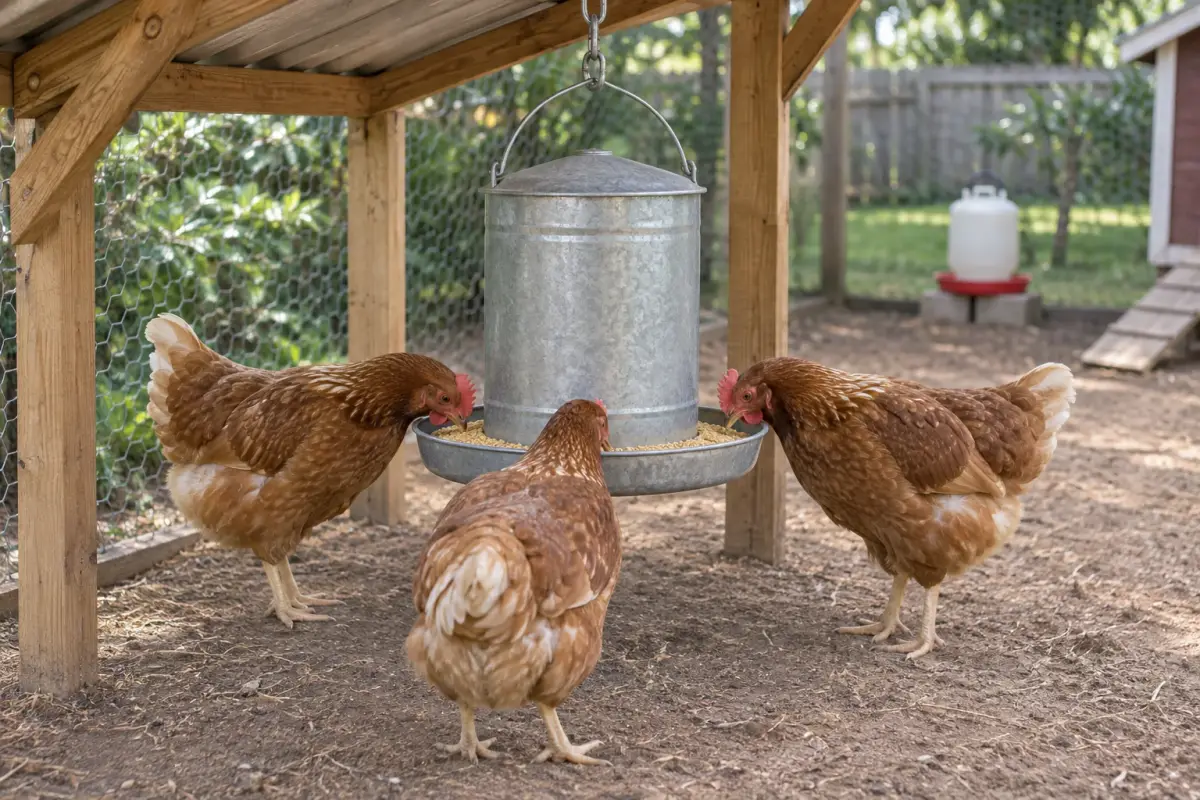
Hens drink more when they eat, so place the waterer close to, but not under, the feed. A sturdy hanging unit such as this 25 lb automatic poultry feeder keeps feed dry on the other side of the run, while a gravity-style design like the rain-proof gravity feed kit shows how feeder ports work on a bucket.
If you are still planning the whole setup, our guide to choosing a chicken feeder covers the feed side in the same way, and the feeders and waterers collection lets you browse both together.
When to see a vet
A hen that stops drinking, sits fluffed up, has swollen eyes or watery droppings, or a sudden drop in water use across the flock deserves attention. Poultry illness can move quickly, so contact a veterinarian who treats poultry, or your state extension office, rather than waiting.
This page is general information, not veterinary advice, and it cannot replace advice from a veterinarian who treats poultry.
Waterer reservoirs and drinking points
| Design | How water is presented | Access to inspect |
|---|---|---|
| Gravity fountain | Inverted reservoir over a shallow tray | Reservoir opening and tray |
| Cup system | Water delivered to drinking cups | Cup mechanism and connections |
| Nipple system | Water released at a nipple fitting | Fittings and leaks |
| Bucket or barrel system | A larger reservoir feeds outlets | Inside reservoir and each outlet |
| Open pan or rubber tub | An exposed water surface | The whole inside surface |
Common questions
How many waterers do I need for 10 chickens?
Using Utah State's estimate, a 1-gallon fountain serves roughly 12 to 15 hens in cool weather and 6 to 12 in heat, so one is borderline in summer. Two or three drinkers is safer, since extra units cover spills and let shy hens drink.
How often should chickens have fresh water?
Illinois Extension says chickens need access to water at least every 10 hours, day and night. Change the water often so bacteria do not build up, and check it more in hot or freezing weather.
How do I keep a chicken waterer from freezing?
Options from extension sources include a heated base or heated waterer, an insulated container, or swapping two waterers so one thaws indoors. If none is available, give fresh water at least twice daily.
Is a heated chicken waterer safe?
It can be, with care. Keep cords and connections off the floor and out of reach, use outdoor-rated equipment, and inspect it often, because any electrical device can fail.
How much water does a chicken drink a day?
Utah State Extension estimates about 0.05 to 0.08 gallon per day in cool weather and 0.08 to 0.16 gallon in hot weather for an adult chicken, so consumption roughly doubles in a heat wave.
Sources we checked
This guide is general information, not veterinary advice. If your pet is unwell or injured, contact your veterinarian.


