






Care & how-to
Heated Chicken Waterers: Types, Safety and Setup
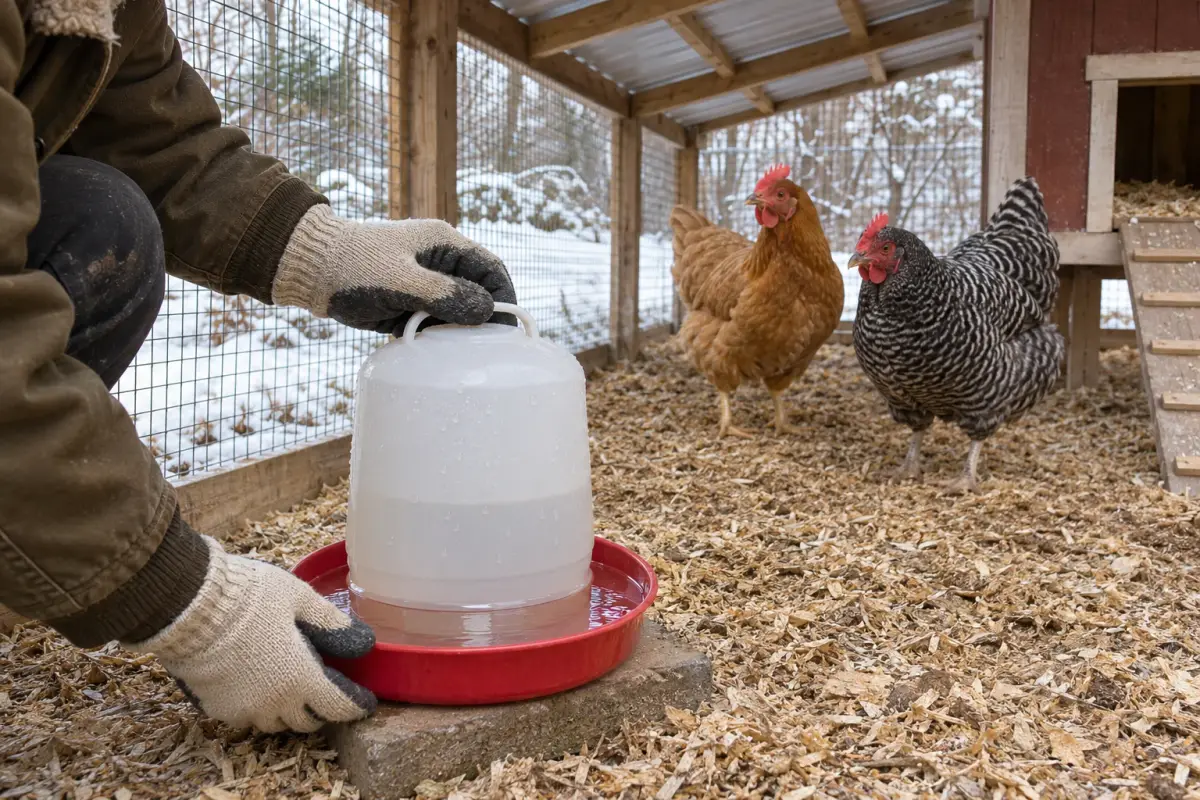
A heated chicken waterer keeps drinking water liquid in freezing weather, and extension services recommend one or another way of preventing ice. The main choices are a heated base under a metal waterer, a heated bowl, or a non-electric setup. Whichever you pick, protect the cord and shield the heat source. Our chicken feeders and waterers cover the rest of the setup.
By Matt GarnettUpdated November 13, 20265 min read6 sources
Why unfrozen water matters in winter
Chickens cannot go without water for long. University of Illinois Extension says birds need water at least every 10 hours, day and night, and Clemson Cooperative Extension warns that chickens cannot swallow properly without it. Merck Veterinary Manual adds that poultry will not eat if the amount of water is inadequate, so a frozen waterer quietly cuts feed intake and, in laying flocks, egg production.
Wisconsin Extension notes that hens generally drink about 2 pounds of water, roughly a quart, for every pound of feed they eat. A flock of ten hens can easily go through a couple of gallons on a cold day even though they drink less than in summer, so a small heated dish that melts a skin of ice is not the same as a waterer that keeps a full reservoir drinkable. Size the heated unit to your flock first.
The main kinds of heated waterer
A heated base is a thermostat-controlled plate that sits under a metal waterer. Iowa State University Extension recommends using a heated base for the waterer to keep water flowing, and Wisconsin Extension notes that heated bases are widely available. Use a metal fount with a base that is made for that purpose, because heat applied under an unsuitable container can damage it. Bases suit a classic hanging or standing fount and are easy to lift out for cleaning.
A heated bowl or a waterer with a heater built in is the second route, and Illinois Extension names both options. North Carolina State Extension calls heating highly suggested but warns that heaters prevent freezing yet can evaporate water quickly, so for bulk waterers it recommends units that can be heated safely, and a reservoir that does not run dry. Open heated dishes also fill with bedding and droppings fast, so check them often.
Cord, heat and fire safety
Electricity in a dusty coop deserves respect. Illinois Extension says that when you use heaters or heated bowls, the electrical cords and connections should be off the floor and not accessible to the chickens, and it also advises checking daily for spills and leaks because water adds moisture to the coop and causes health problems. Run the cord along a wall or in a conduit rated for outdoor use, and use an outdoor-rated outlet protected by a ground-fault circuit interrupter.
Wisconsin Extension points out that chicken houses are dusty and says great care should be taken to shield any heat source and keep it clean and safe. It also mentions heat lamps hung over the waterer, which put a hot bulb above bedding and splashing water. A heated base or a heater designed for the waterer keeps the heat low and contained, so we would put those ahead of a lamp. Keep bedding away from the unit and brush dust off it every week.
Non-electric ways to slow freezing
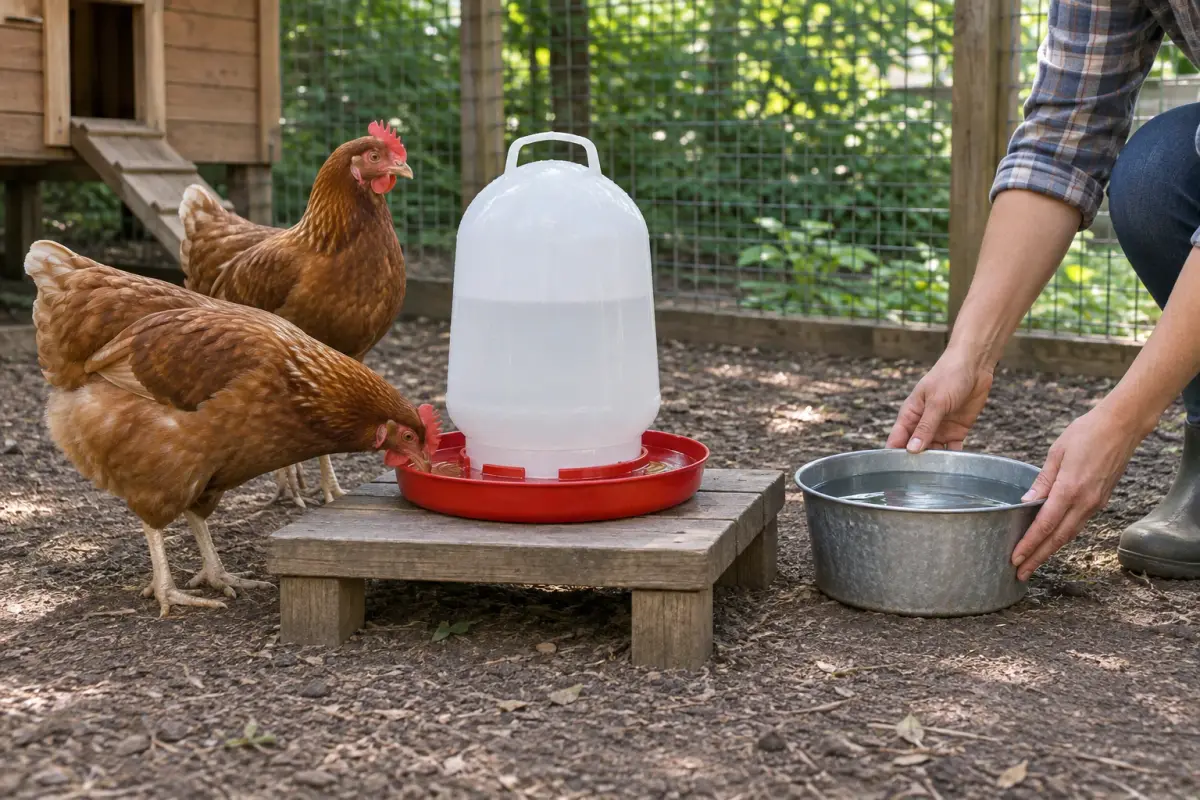
If the coop has no safe power, Wisconsin Extension lists simple options. Highly insulated containers can keep water unfrozen for several hours, rubber pans make it easier to remove ice without breaking the pan, and keeping two waterers lets you swap them, thawing the spare indoors. Without any of these, provide fresh water twice a day. Iowa State Extension adds that you can bring warm water out to replace what has frozen.
These methods work best in moderate cold and with a routine you can keep, because in a hard freeze the water turns to ice between visits. Put the waterer in the sun where you can, stand it on a block off the ground and out of drafts, and be ready to swap in the thawed spare at the same time every morning.
Setting it up and keeping it clean
Place the waterer under cover, away from the roosts so droppings do not fall in, and raise it to roughly the height of a hen's back so bedding is kicked in less. Clean it often, since warm water grows slime faster than cold. Our guide to chicken waterers covers sizing and the types of drinker in more detail.
Keep feed dry beside it. A gravity feeder with a roof, such as this weatherproof automatic poultry feeder, keeps feed off the damp floor, and a gravity feed kit for buckets and bins turns a lidded bucket into a rain-resistant feeder. For a full comparison, read our guide to choosing a chicken feeder.
When to call the vet
Call a vet who treats poultry if a bird stops drinking, seems weak, has labored breathing, or if several hens go off their feed after a cold spell. Do not give any medicine or supplement yourself without veterinary direction. Merck Veterinary Manual also recommends a well-insulated coop, where chickens huddle and fluff out their feathers to keep warm, so check ventilation as well as water if birds look unwell.
If you are planning a winter flock, remember that the waterer is one part of the system. Look at the coop, the run and the feeders together, and browse our chicken coops as well as our chicken feeders and waterers.
This page is general information, not veterinary advice, and it cannot replace an examination by the vet who knows your pet.
Common questions
Do chickens need a heated waterer?
Not always, but they do need unfrozen water. Extension services suggest a heated base or bowl where winters freeze, or hand-swapping two waterers if you have no safe power in the coop.
How do I keep chicken water from freezing without electricity?
Use an insulated container, a rubber pan so ice releases easily, or two waterers you swap and thaw indoors. Wisconsin Extension says to provide fresh water twice a day if you use none of these.
Is a heated chicken waterer a fire risk?
Any electric device in a dusty coop can be. Keep the cord off the floor and away from the birds, shield the heat source, keep bedding away and brush off dust, and stop using any unit that looks damaged.
How much water do chickens drink in winter?
Hens generally drink about 2 pounds of water, roughly a quart, for every pound of feed they eat, according to Wisconsin Extension. Intake falls in the cold but never to zero, so provide a full reservoir.
Sources we checked
- University of Illinois Extension — How to care for backyard chickens in winter
- Iowa State University Extension — Keep Your Chickens Healthy and Producing During Winter Months
- North Carolina State Extension — Caring for Small Animals and Poultry During Winter
- University of Wisconsin Extension — Preparing for Winter
- Clemson Cooperative Extension — Caring for Animals in Cold Weather
- Merck Veterinary Manual — Management of Backyard Poultry
This guide is general information, not veterinary advice. If your pet is unwell or injured, contact your veterinarian.


