Care & how-to
How Hot Is Too Hot to Walk a Dog?
Once the air stays at 85°F or higher, walking your dog can be dangerous, especially on pavement that has had no chance to cool. The AKC cites data that asphalt reaches 135°F when the air is 86°F, which can blister paw pads. Put your hand on the pavement for ten seconds: if it is too hot for you, it is too hot for your dog. Walk early or late, on grass, and keep it short.
By Matt GarnettUpdated November 14, 20264 min read3 sources
The temperatures to know
The AKC describes around 70°F as ideal dog weather. Once the air reaches 85°F and stays there through the day, the AKC says even short outings can be dangerous, and veterinarian Dr. Jerry Klein adds that the ground may be too hot to walk on when it is 85°F or more without the chance for pavement to cool.
For small breeds, the AKC suggests limiting time outside to 10 to 15 minutes once it is above 90°F, and says even thick-coated arctic breeds should not be left out long in that heat. Humidity makes everything harder, because dogs cool themselves mainly by panting, and panting works poorly when the air is already wet.
Why pavement is the real problem
Dark surfaces soak up sun and hold heat long after the air cools. According to data the AKC cites from the Journal of the American Medical Association, asphalt can reach 135°F on an 86°F day. Concrete, sand, truck beds and metal manhole covers can all be hot enough to burn, and artificial turf can be surprisingly hot too.
Small and short-legged dogs are closer to that heat, so they warm up faster from below as well as from the sun, the AKC notes. A dog's paw pads are tough, but they are not shoes, which is why some owners reach for dog boots on summer walks, and the first long walk of summer is when pads that have not toughened up gradually tend to blister.
The hand test for hot pavement
Step 1: Before you set off, press the back or palm of your hand flat on the pavement where your dog will walk. Step 2: Hold it there for ten seconds, which is the time the AKC suggests. Step 3: If you cannot keep your hand down comfortably for the full ten seconds, the surface is too hot for your dog's paws.
Repeat the test at different spots on the route, because a sunny parking lot can be far hotter than a shaded sidewalk. You can also try it barefoot, which the AKC mentions as another check. If the surface fails, switch to grass, wait for evening, or keep it to a quick bathroom break.
How to protect your dog's paws from hot pavement
Walk in the early morning or after sunset, and pick grassy, shaded routes, as the AKC advises. Build up pavement walking during cooler months so pads toughen gradually. Keeping pads moisturized with a product made for dogs can help, because dry, cracked pads burn more easily.
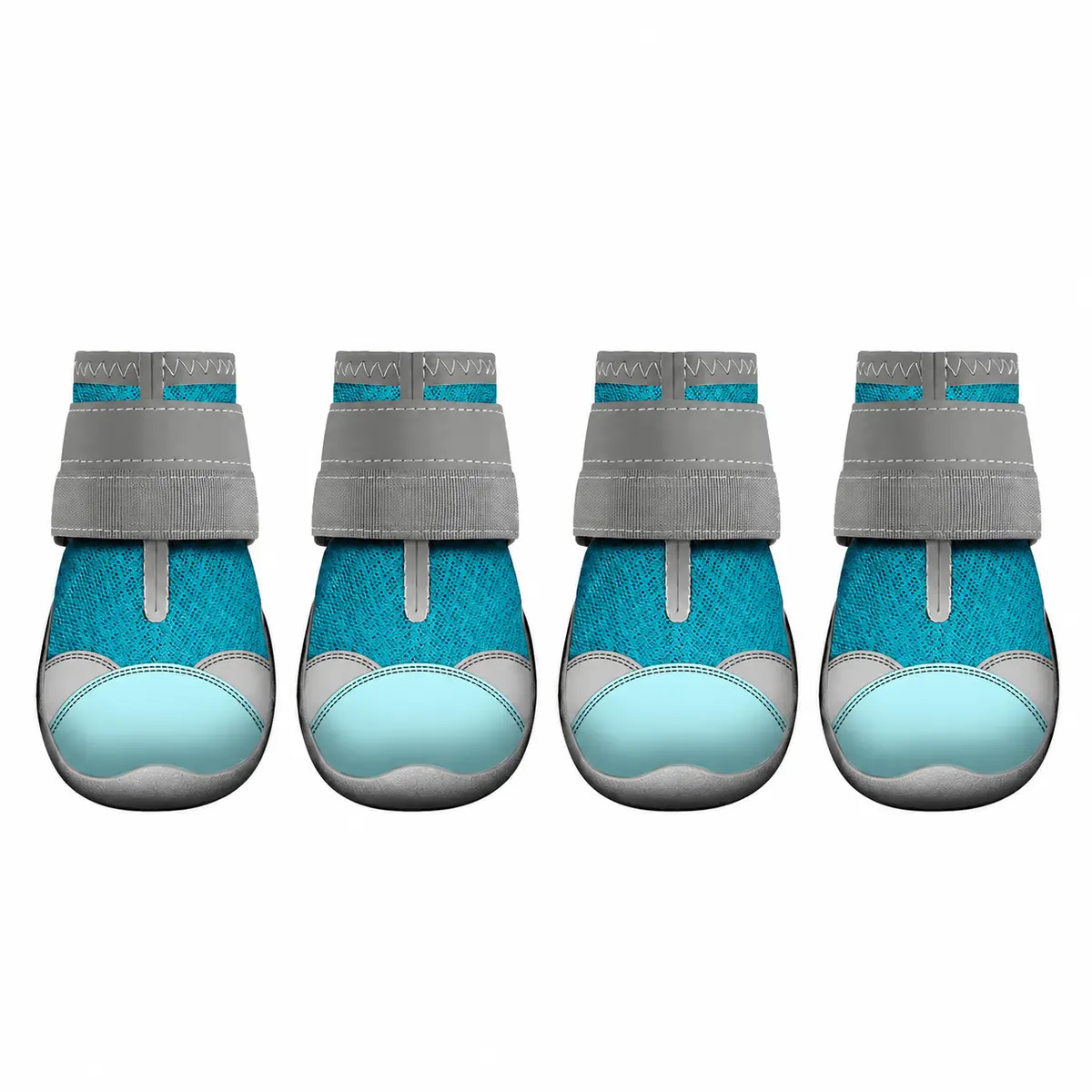
Dog boots give the most protection on hot surfaces. The AKC suggests a snug fit with wraparound closures and full-foot grips, and allowing your dog time to get used to them indoors first. A mesh summer style such as the Breathable Mesh Dog Boots with Reflective Strap is one example of the type. After any summer walk, look at the pads. Redness, blisters, limping or constant licking of the feet are signs of a burn worth showing your vet.
Signs your dog is overheating on a walk
The AKC lists seeking shade, restlessness, heavy panting, reddened skin and excessive drooling among signs of heat stress. If you see them, stop, get into shade, offer water and wet the belly and paws with cool water. A dog's normal resting temperature is about 99 to 102.5°F, and the AKC treats anything over 104°F as heat stress.
Bright red gums, wobbling, vomiting, confusion or collapse point to heatstroke, which the AKC describes above 106°F as needing emergency veterinary care. Call your vet or an emergency clinic straight away and keep cooling your dog on the way there.
Safer ways to exercise on hot days
On days when walks are risky, move exercise indoors. Scent games, food puzzles, short training sessions and a frozen stuffed toy tire a dog's mind without heating their body. A hard plastic wading pool made for dogs, which the AKC suggests, gives a cool place to splash in a shaded yard, and a cooling mat indoors gives your dog a cooler spot to rest afterward.
Flat-faced breeds, puppies, seniors, overweight dogs and dogs with heart or breathing problems need the most care, and the ASPCA suggests keeping them in air conditioning as much as possible on hot days.
This page is general information, not veterinary advice, and it cannot replace an examination by the vet who knows your pet.
Common questions
When is it too hot to walk your dog?
The AKC flags air temperatures of 85°F or more that stay high through the day as the point where even short walks can be dangerous. Test the pavement with your hand and walk early or late instead.
What pavement temperature burns dog paws?
Asphalt can reach 135°F on an 86°F day, according to data the AKC cites, which is hot enough to blister pads. If you cannot hold your hand on it for ten seconds, it is too hot.
Do dog boots help on hot pavement?
Yes. Boots with a snug fit, wraparound closures and full-foot grips shield pads from hot surfaces. Give your dog several short practice sessions indoors before using them on a walk.
Sources we checked
This guide is general information, not veterinary advice. If your pet is unwell or injured, contact your veterinarian.