






Breeds
Great Dane vs Irish Wolfhound
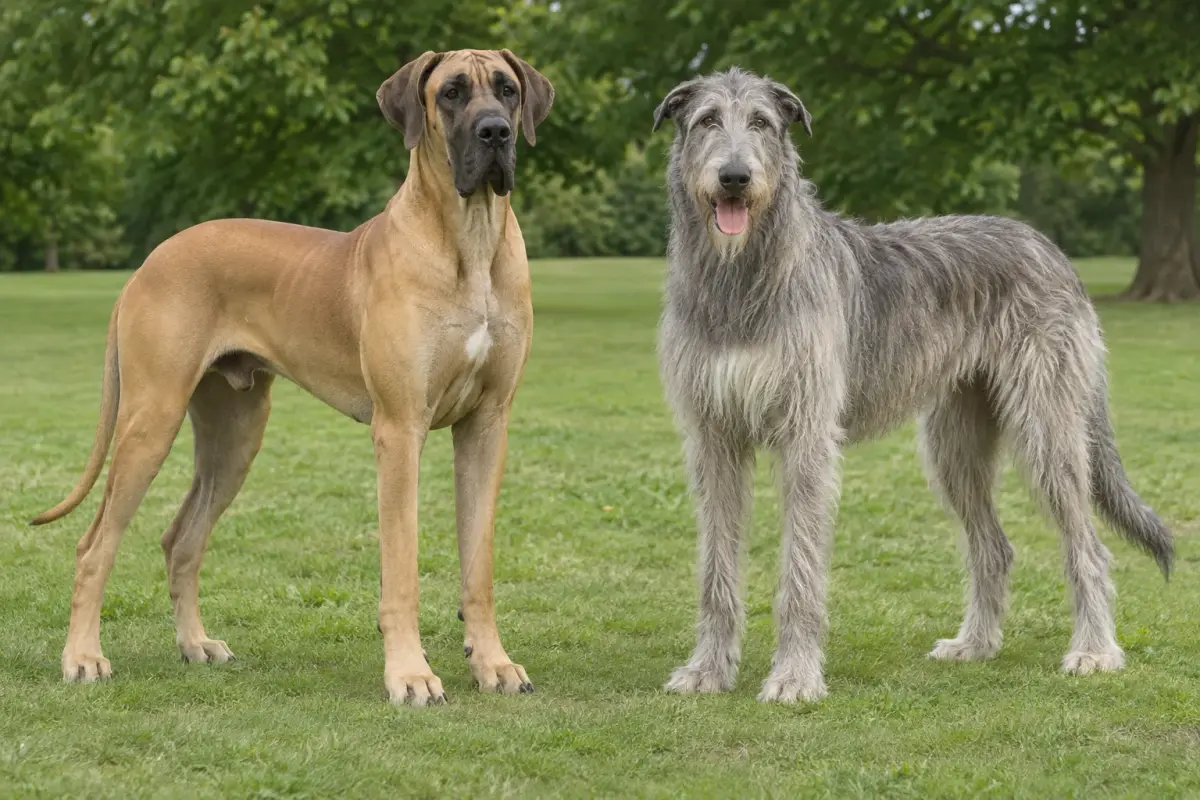
The Great Dane usually has the heavier, smoother-coated build, while the Irish Wolfhound has a rough coat and a sighthound background. Both are giant dogs whose practical needs extend beyond a gentle reputation. Choose by adult handling, space, coat care, activity, and the individual’s behavior rather than deciding that one unusually tall dog will be interchangeable with another.
By Matt GarnettUpdated November 10, 20263 min read4 sources
Compare size, lifespan, and daily care
VCA gives Great Danes a 110–175-pound weight guide and Irish Wolfhounds a 105–120-pound guide. Their heights and builds vary by individual, so meet adults rather than using a single number to decide handling needs. AKC describes the Wolfhound as its tallest breed, but tall does not necessarily mean heavier.
VCA’s broad lifespan guides are 7–10 years for Danes and 6–8 for Wolfhounds. Neither predicts an individual’s future. Both need regular activity and training; coat maintenance differs between a Dane’s short coat and a Wolfhound’s harsh coat. Best fit depends on the dog’s actual needs and your capacity to support a very large companion.
Think through the logistics of a giant adult
Before choosing either, walk through an ordinary day at adult size. Consider the carrier or vehicle arrangements, such as a car ramp, comfortable resting space, such as a bed sized for giant breeds, and whether the adults providing care can manage walks and routine handling. A calm dog can still be difficult to move or assist when it becomes unwell.
Ask the caregiver how the individual travels and accepts care, including grooming and gentle examination. Think about where you would get help if mobility changed or you were unable to handle the dog yourself. These questions are not answered by a breed’s height record or a photograph showing a giant dog curled on a couch. Many households also set aside a crate or a gated area, and our XXL dog crates are the range to look at for a giant adult.
Compare a companion reputation with the actual behavior
AKC describes the Irish Wolfhound as calm and kindly. Its Great Dane profile also emphasizes a companion temperament. Those descriptions are starting points for a conversation, not assurances about children, visitors, or existing pets. Ask for specific observations from the home the dog already knows.
VCA notes hunting and chasing in the Wolfhound’s background, so discuss the individual’s reactions to smaller animals and outdoor movement. Do not assume a relaxed indoor presence settles that question. Ask what management has worked and seek qualified help when compatibility is uncertain. A giant dog’s physical size makes thoughtful preparation particularly valuable.
Plan for coats, movement, and cooperative training
VCA describes weekly Wolfhound brushing with a dog brush and periodic removal of dead coat, while the Dane’s short coat has simpler maintenance. Ask which tasks are needed for the actual dog and how comfortable it is with them. Coat length is only one part of care when reaching and handling a giant adult.
Both need humane teaching and regular movement. Discuss appropriate activity for the individual’s age and condition with your veterinarian instead of assuming either should match an ambitious exercise plan. Practice everyday cooperation and arrange support when needed. Consider settling, comfortable handling, and safe walks alongside any activities you hope to enjoy together.
Choose with health records and long-term support
A Great Dane may appeal if you prefer a smooth-coated giant and can manage its weight and care. An Irish Wolfhound may appeal if you enjoy a rough-coated hound and can support its handling and outdoor management. Neither is universally easier, healthier, or the better family choice.
Review medical and behavior records with your veterinarian and the caregiver. Broad lifespan ranges do not establish which dog will live longer. Seek advice about unexplained changes in appetite, movement, comfort, or behavior. Choose the individual whose daily and future needs fit the practical help, time, and care your household can provide.
This page is general information, not veterinary advice, and it cannot replace an examination by the vet who knows your pet.
Common questions
Is the tallest dog always the heaviest?
No. Height and weight are different comparisons, and individuals vary. VCA’s guides place Great Danes at 110–175 pounds and Irish Wolfhounds at 105–120 pounds, so assess the actual adult.
Does a calm Wolfhound automatically get along with small pets?
A calm reputation cannot establish compatibility. VCA notes a hunting and chasing background, so ask about the individual’s history around smaller animals and arrange qualified advice and appropriate management when needed.
Which giant needs more coat maintenance?
The Wolfhound’s rough coat involves different maintenance from a Dane’s smooth coat, including periodic dead-coat removal. Ask about the actual dog’s grooming routine and handling comfort rather than judging from appearance alone.
Sources we checked
This guide is general information, not veterinary advice. If your pet is unwell or injured, contact your veterinarian.


