






Breeds
Rottweiler vs German Shepherd
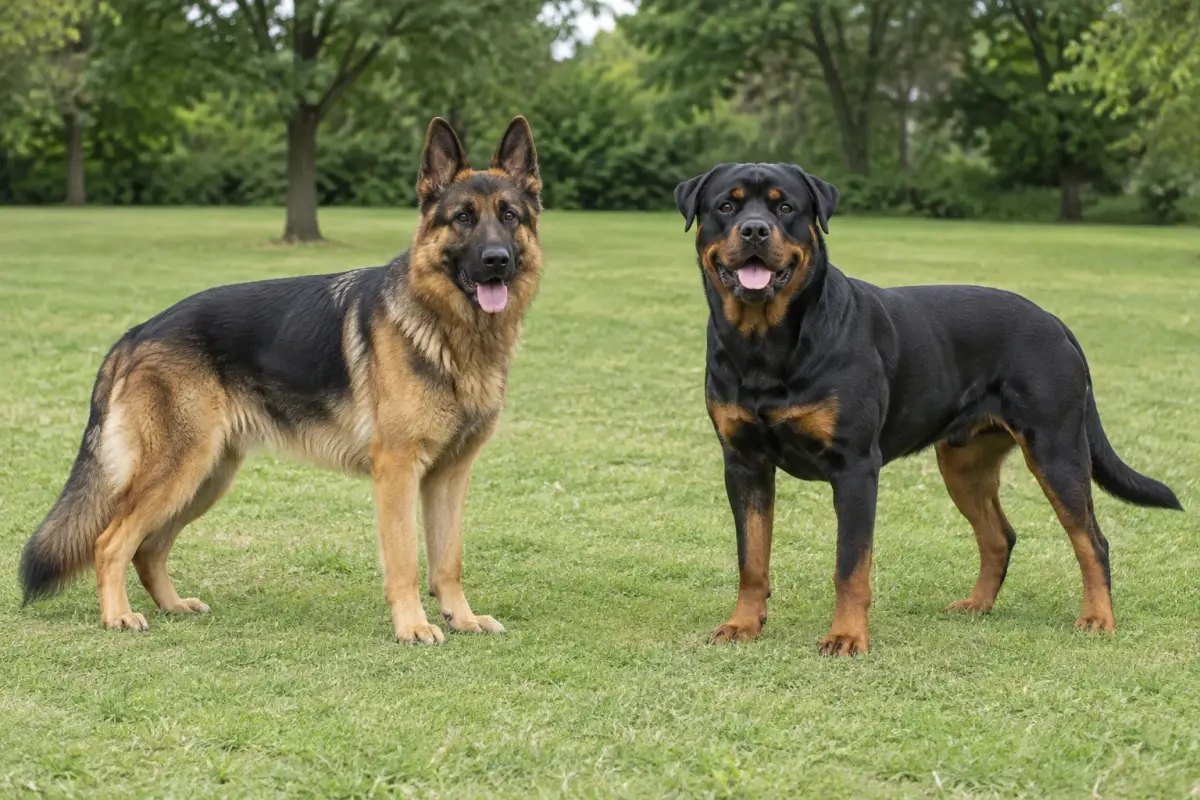
The Rottweiler is usually the heavier, more solidly built dog, while the German Shepherd has a lighter, athletic outline and a more substantial shedding coat. Both are powerful working companions that need training and careful management. Choose by your handling comfort, daily engagement, and the actual dog’s history rather than selecting a guardian reputation or appearance alone.
By Matt GarnettUpdated November 14, 20263 min read4 sources
The practical differences side by side
VCA gives Rottweilers an 80–135-pound weight guide and German Shepherds a 50–90-pound guide. The ranges overlap, but the Rottweiler is generally heavier. Both need a caregiver comfortable managing a strong adult, including walks, transportation, and routine handling when circumstances are less convenient.
VCA lists German Shepherds at 12–14 years and its Rottweiler guide places longevity around 10 years; neither is an individual prediction. Both need activity and training. Rottweilers have shorter, simpler coats, while Shepherds shed substantially. Best fit depends on the actual dog’s behavior, health, and care needs rather than one score for strength or intelligence. Everyday gear matters for either dog: see harnesses for German Shepherds, harnesses for Rottweilers and beds for large dogs.
Think through visitors and unfamiliar situations
AKC describes both as confident working dogs with strong family connections. A useful question follows: how does the particular dog respond when someone unfamiliar arrives? Ask about visitors, caregivers, walks, and handling rather than treating a reputation for protection as a benefit without responsibilities.
VCA notes watchful or protective tendencies in both breeds. Discuss what the current caregiver does successfully and what situations need support. Make a practical plan that everyone responsible for the dog can follow. A breed description cannot establish safety with children, other animals, or strangers, and affection toward familiar people does not answer every compatibility question.
Choose an involved training relationship
Both dogs have working backgrounds and need more than a person who admires their appearance. Ask about learned skills, response to distractions, and comfortable handling. Consider whether you enjoy patient teaching and can maintain clear routines rather than assuming a highly capable breed will automatically understand your home.
Use humane, reward-based guidance and arrange qualified support when needed. Review any behavior concerns before bringing a dog home, particularly if its size or reactions may be difficult to manage. An adult with a well-described history can offer useful information, but moving environments still requires adjustment and realistic expectations.
Compare activity and coat care on an ordinary day
VCA describes substantial activity and mental engagement for German Shepherds and regular structured activity for Rottweilers. Ask what the individual does comfortably now. Discuss appropriate exercise with your veterinarian, taking age, health, and mobility into account rather than trying to meet a breed-wide target regardless of condition.
A Rottweiler’s short coat is relatively straightforward, but routine grooming and handling still matter. A Shepherd’s double coat brings more loose hair and brushing. Ask for a demonstration of the dog’s normal care and decide whether you can maintain it. Include the practical time for walks, attention, rest, and care when comparing the commitments. For active play, an inflatable herding ball or a herding ball with handles is one option; browse herding balls for German Shepherds.
Make the final choice with records and support
A Rottweiler may appeal if you are comfortable with a heavier working companion and can guide a watchful dog. A German Shepherd may appeal if you enjoy sustained teamwork and can manage activity and shedding. Neither is universally easier, healthier, or more appropriate for a family.
Review available medical and behavior records with your veterinarian and the caregiver. Broad longevity guides cannot predict a particular animal’s future. Seek advice about unexplained changes in appetite, movement, comfort, or behavior rather than assuming they reflect stubbornness or personality. Choose the individual whose needs fit the long-term support your household can provide. You can also browse toys for German Shepherds and beds for large dogs when planning.
This page is general information, not veterinary advice, and it cannot replace an examination by the vet who knows your pet.
Common questions
Is a Rottweiler usually heavier than a German Shepherd?
VCA lists Rottweilers at 80–135 pounds and German Shepherds at 50–90 pounds. Individuals vary, so compare actual adult size and handling needs rather than deciding from a breed label alone.
Which dog needs more coat care?
German Shepherds generally bring more brushing and loose hair because of their double coat and substantial shedding. Rottweilers still need routine grooming and comfortable handling despite a shorter, simpler coat.
Does either breed automatically make a good protection dog?
A breed label cannot guarantee safe or suitable protective behavior. Consider the individual’s history, humane training, visitor management, and your ability to handle it responsibly before choosing a working companion.
Sources we checked
This guide is general information, not veterinary advice. If your pet is unwell or injured, contact your veterinarian.


