Breeds
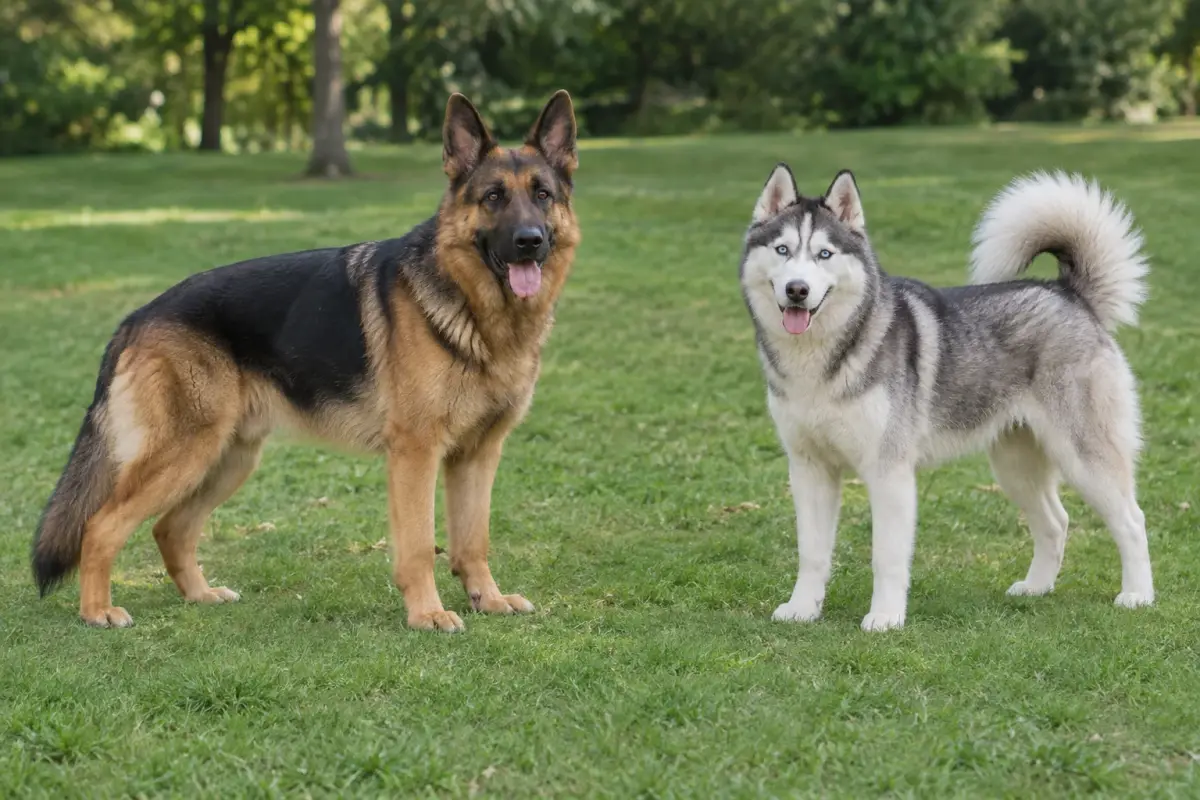
German Shepherd vs Siberian Husky
A German Shepherd often combines close teamwork with watchfulness, while a Siberian Husky brings a more independent sled-dog style and strong enthusiasm for movement. Both need an active, involved home. The better match depends on how you enjoy training, the animals already in your household, and your ability to manage a strong, energetic dog safely every day.
By Matt GarnettUpdated November 10, 20263 min read4 sources
Compare size, lifespan, and everyday demands
VCA gives German Shepherds a 50–90-pound weight guide and Siberian Huskies a 35–60-pound guide. Its lifespan range is 12–14 years for both. Individuals can fall outside broad guides, so use records and a veterinary discussion when planning for a particular dog.
Both have double coats, shed, and need sustained activity and mental engagement. The Shepherd’s herding and protection background differs from the Husky’s pack-based sled work. Training style, social history, and containment deserve more attention than coat pattern or eye color. Neither is an easy choice for a household that wants little daily involvement. Practical gear helps either way: see harnesses for German Shepherds and harnesses for Huskies.
Ask how the dog responds to people and animals
AKC describes the German Shepherd as a versatile, intelligent worker. When considering an individual, ask how that attention and confidence appear in everyday life. How does it meet a visitor? Can it settle while you speak to someone? What guidance does it need outside familiar surroundings?
AKC describes the Siberian Husky as a friendly breed developed for work in packs. That history does not establish compatibility with your pets. Ask specifically about the actual dog’s experience around smaller animals and other dogs, and discuss careful introductions. A friendly response to a person cannot answer every question about another animal.
Choose the kind of training you enjoy
VCA notes that Shepherds can be highly trainable but need consistent guidance, while Huskies may bring greater independence. The useful question is whether you enjoy working patiently with the dog in front of you. Ask for examples of learned skills and situations that still require support.
Use humane, reward-based instruction and make household expectations clear. An adult’s known behavior can be helpful when choosing, but moving homes may still require adjustment. Ask who will help if you need training support, and budget time for practice. Intelligence does not make a dog understand new rules without teaching.
Think through movement, boundaries, and coat care
VCA highlights roaming and chasing tendencies in Huskies, making secure management an essential discussion before adoption. Walk through your home and outdoor arrangements with that question in mind. Ask about escapes or chasing in the individual’s history rather than assuming a fence or an affectionate relationship settles the issue.
Both dogs also need a sustainable grooming routine. Ask how each accepts brushing and how you will handle seasonal loose hair. Deshedding tools such as a handheld deshedding comb, a hair removal glove or a double-sided deshedding comb are a usual starting point. Consider an ordinary day with bad weather, a busy schedule, or limited help. Your choice should fit the care and safe activity you can maintain when conditions are less convenient.
Make the final decision with individual information
A Shepherd may suit someone who enjoys structured teamwork and can guide a watchful dog through everyday situations. A Husky may suit someone who enjoys an independent, energetic companion and takes secure management seriously. Meet the individual, ask direct questions, and avoid choosing solely for appearance.
Review health records and suitable activity with your veterinarian. Ask about unexplained changes in mobility, comfort, appetite, or behavior rather than treating them as stubbornness or breed character. Neither size nor a shared lifespan range establishes which dog will be healthier. Long-term fit includes your ability to respond as needs change. Browse toys for German Shepherds to plan for play.
This page is general information, not veterinary advice, and it cannot replace an examination by the vet who knows your pet.
Common questions
Which breed is usually larger?
VCA gives German Shepherds a weight guide of 50–90 pounds and Siberian Huskies a guide of 35–60 pounds. The ranges overlap, so check the size of the actual dog.
Does an intelligent dog need less training?
No. Intelligence does not provide knowledge of your household rules. Both breeds need clear, humane instruction and suitable engagement. Ask about the individual dog’s learning history and any ongoing support needs.
Can a friendly Husky automatically live with a cat?
No breed description establishes that an individual is safe around smaller animals. Ask about the dog’s actual history, discuss careful management, and get qualified help when compatibility is uncertain.
Sources we checked
This guide is general information, not veterinary advice. If your pet is unwell or injured, contact your veterinarian.