






Care & how-to
Feral Cat Shelters: Keeping Outdoor Cats Warm in Winter
A good feral cat shelter is small, raised off the ground, windproof, and packed with loose straw, not blankets or hay, which hold moisture and turn cold. Add a heated or thick plastic water bowl, a little extra food and a cleared entrance after snow, and outdoor cats can get through winter much more safely. Pet cats are safest indoors once temperatures drop.
By Matt GarnettUpdated November 14, 20265 min read2 sources
How cold is too cold for cats?
There is no single number. Cornell's Feline Health Center describes the danger as a combination of low temperatures, wind and snow or ice, which together put outdoor cats at risk of hypothermia and frostbite. A dry cat with a thick coat, sheltered from the wind, copes with far colder weather than a wet, thin or elderly cat on an exposed porch. Kittens, seniors, short-haired cats and cats with health problems are the most vulnerable.
For pet cats, the simplest answer is to bring them inside whenever it is near freezing, and Cornell recommends keeping cats indoors at all times as the best prevention. Community and feral cats usually cannot be brought indoors, so for them the goal is shelter that keeps them dry and out of the wind, plus enough food to fuel their own heat.
What makes a good outdoor cat shelter
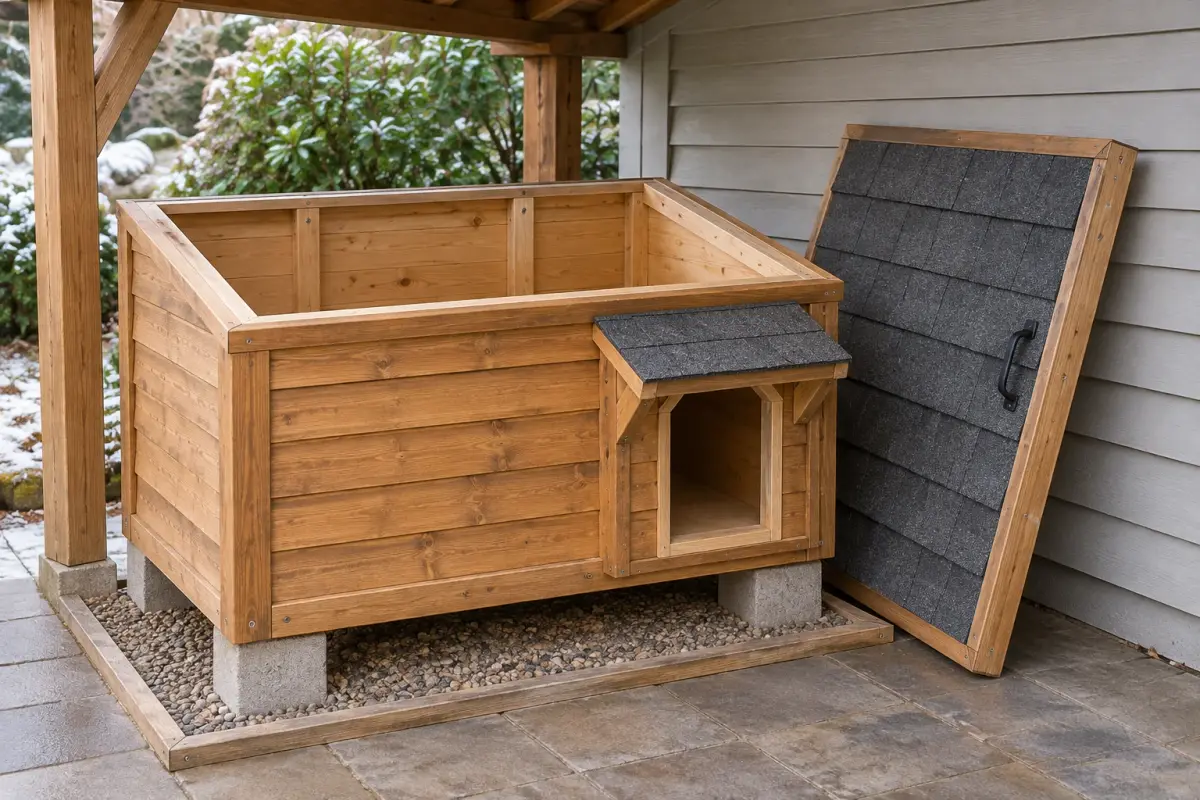
Smaller is warmer. A cat heats the space with its own body, so a shelter that is just big enough for two or three cats to curl up together holds heat far better than a large doghouse. Common designs use a lidded plastic storage tote or a foam cooler, lined with rigid foam board, with a single entrance hole about 6 inches across cut a few inches above the floor so snow and rain do not blow straight in.
Raise the shelter off the ground on a pallet or a couple of bricks, because the frozen ground draws heat away from the floor. Face the entrance away from the prevailing wind, or toward a wall, and add a flap of heavy plastic or a short tunnel for extra protection. Ready-made outdoor cat houses do the same job and are worth considering if you are not handy with a craft knife; look for insulated walls and a raised floor.
If you are comparing ready-made designs, inspect the insulated outdoor cat house and heated cat house specifications against the site and weather rather than treating either as suitable for every location.
Why straw, not blankets or hay
This is the detail most well-meaning people get wrong. Blankets, towels and newspaper soak up moisture from the cats' breath, wet paws and the air, then freeze, leaving the cats lying on something colder than bare plastic. Hay looks similar to straw but also absorbs moisture and can grow mold. Both Cornell and Alley Cat Allies advise loose straw instead.
Straw is made of hollow, dry stalks that shed moisture, so cats can burrow into it and stay dry. Fill the shelter loosely about halfway, fluff it occasionally, and top it up through the season. Check it after storms and replace any straw that is wet or soiled. Heated pads designed for outdoor pet use are an option where you have a safe, covered power supply, but straw alone works well for most shelters.
Food and water in freezing weather
Cats burn more calories keeping warm, so both sources suggest offering a little more food in winter to keep them from losing weight. Dry food will not freeze; wet food can, so put it out in a sheltered feeding station at a regular time and pick up what is left. A simple station can be a second tote turned on its side, or a board propped to keep snow off the bowls.
Water freezes fast. A heated bowl made for outdoor use is the most reliable answer, and Cornell notes that deep, thick plastic bowls stay liquid longer than shallow ceramic ones. Put the water near the shelter but not inside it, where spills would wet the bedding. Before a big snowstorm, leave extra food and water out in case you cannot reach the colony for a day or two.
Our outdoor cat house guide explains what to check across outdoor cat houses before winter.
Other winter hazards for outdoor cats
Cats crawl into engine compartments and wheel wells to soak up leftover warmth, and many are injured every winter when a car starts. Make a habit of looking under the car, checking the wheel wells, and banging on the hood or honking before you turn the key. Ask neighbors to do the same if you feed a colony nearby.
Antifreeze tastes sweet, and Alley Cat Allies warns that even a teaspoon spilled on a driveway can be fatal to a cat. Store it sealed, clean up leaks immediately, and choose a pet-safer formula where possible. Rock salt and chemical ice melts can burn paws and are harmful if licked off or drunk from puddles, so use a gentler product near shelters and feeding areas.
Signs of hypothermia and frostbite, and when to call a vet
Shivering, slowing down, weakness, lethargy and searching for warm places to burrow are early signs of hypothermia. As it worsens, the cat may stop shivering, become stiff, confused or unresponsive, and have a slow heartbeat and breathing. Frostbite most often affects the ear tips, tail and paws, which may look pale, gray or bluish, then red and swollen as they warm, and later dark.
If you find a cat that is cold and weak, bring it somewhere warm, wrap it loosely in a dry towel and call your vet or an emergency vet right away. Do not rub frostbitten skin or use a heating pad or hair dryer on it. For feral cats that cannot be handled, contact a local trap-neuter-return group or animal control, who can help you get the cat to a vet safely.
This page is general information, not veterinary advice, and it cannot replace an examination by the vet who knows your pet.
Common questions
Can feral cats survive winter outside?
Many do, especially with a dry, windproof shelter, regular food and unfrozen water. Thick coats and huddling together help, but kittens, seniors and sick cats are at real risk in hard freezes, so shelter matters.
Should I put a blanket in an outdoor cat shelter?
No. Blankets, towels and newspaper absorb moisture and freeze, making the shelter colder. Use loose straw, which stays dry and lets cats burrow in. Replace it if it gets wet or dirty.
Do outdoor cats need a heated shelter?
Not usually. A small, insulated, raised shelter filled with straw traps the cats' own body heat well. Heated pads made for outdoor pet use can help in very cold areas if wired safely and kept dry.
How many cats can share one shelter?
Most shelters are sized for two to three cats, which is enough for them to share warmth without leaving too much empty space to heat. Larger colonies are better served by several small shelters.
Sources we checked
This guide is general information, not veterinary advice. If your pet is unwell or injured, contact your veterinarian.


