






Buying guides
Best Catio: What Actually Matters When You Choose One
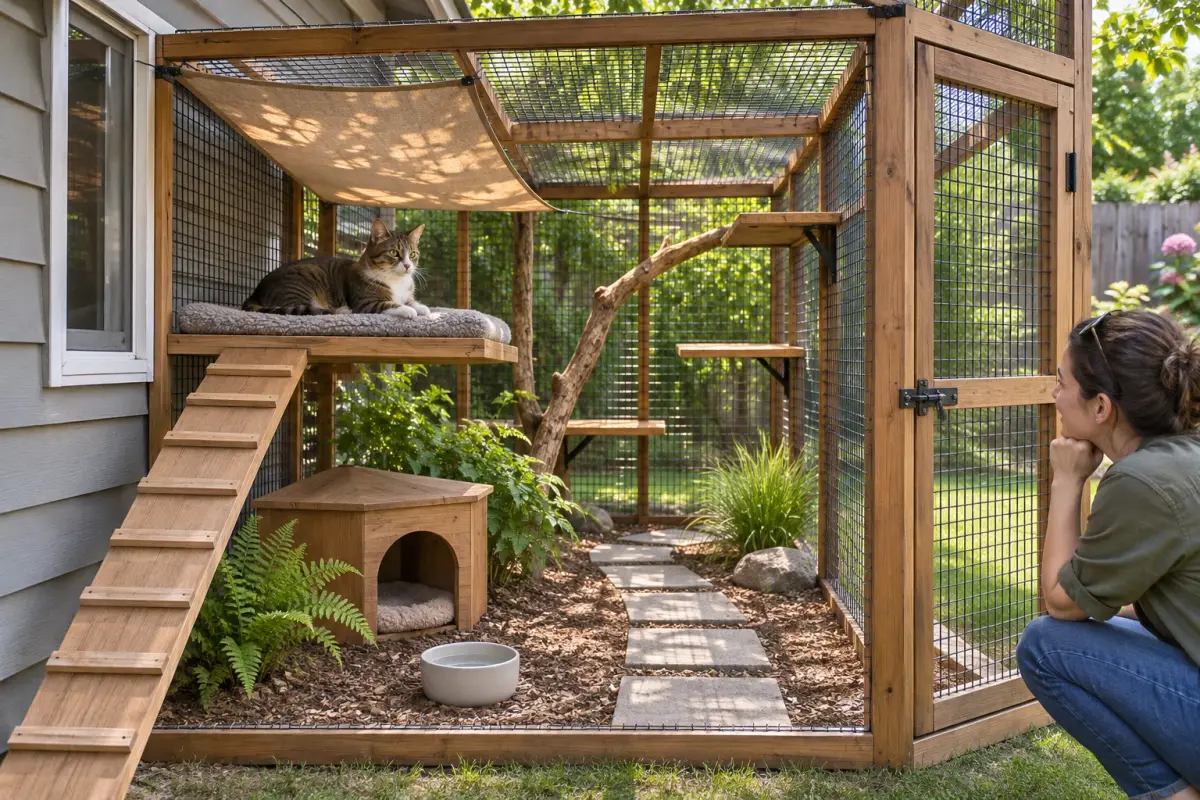
The best catio is a fully enclosed outdoor space with sturdy mesh, secure latches, shade and shelter, and enough room for your cat to climb, rest and watch. Safety comes first, so check the build before the looks. This guide covers the types, what to look for, what to avoid and how to introduce your cat.
By Matt GarnettUpdated November 13, 20264 min read3 sources
What a catio is and why people choose one
A catio is a secure outdoor enclosure that lets a cat enjoy fresh air without roaming free. The American Humane Society lists the risks of free-roaming cats as disease from unfamiliar cats, parasites, traffic, loose dogs and wildlife, toxins such as pesticides and antifreeze, and getting lost or trapped. It names catios, harness walks and supervised patio time as safer outdoor options.
VCA Animal Hospitals also mentions that a catio can be built as an extension of almost any window or door. Seen that way, a catio is not a cat tree outdoors; it is a barrier between your cat and everything on that list, so the quality of the barrier is what counts. Browse our outdoor cat houses and catios to compare the main designs.
What matters most: the enclosure itself
Because the point is containment, start with the structure. Every side, including the top, should be enclosed, with mesh that is strong enough that a determined cat cannot push through it and that has no gaps at the joins. Doors and latches should be secure enough that a cat, and a visiting raccoon or dog, cannot open them. A weak latch is the most common failure point on any enclosure.
Look at the frame and ground contact too. A heavy frame stays put in wind, and a floor or ground barrier stops a cat from squeezing out underneath. Wood should be treated for weather and checked for splinters, and metal should be rust-resistant with no sharp edges. A wooden catio with a weatherproof finish and a galvanized steel catio with a canopy illustrate two common builds.
Types compared: window, portable and freestanding
A window or door catio attaches to the house and is the smallest option, suited to apartments and cats that want a short sun session. A freestanding catio sits in a yard or on a patio and gives room for several levels. A portable enclosure, such as a pop-up cat tent, is easy to move but lighter, so it needs supervision and is not a substitute for a fixed structure.
Choose by space and by cat. A confident climber will use height, ramps and shelves; an older cat may prefer a low, flat floor with a sheltered bed. Multi-cat homes need more room and more than one resting spot. If you rent, a window or freestanding model is easier to take with you than one built into a structure.
Inside the catio: shelter, shade and plants
Offer shade and cover from rain and wind, plus a place to hide. VCA advises offering a wide variety of safe resting places with interesting views, and says high spots should be a choice rather than a hiding place from a frightened cat. A mix of perches at different heights and a covered bed covers both.
Be careful with plants. The ASPCA lists lilies as toxic to cats, with kidney failure as the clinical sign, and advises calling its poison control line at (888) 426-4435 or your vet right away if a cat has eaten one; a consultation fee may apply. Check every plant against the ASPCA list before putting it in or near the catio, and keep water available and out of direct sun.
What to avoid
Avoid enclosures with open tops, wide mesh or thin wire, flimsy zippers on a permanent setup, and any gap a cat's head can fit through. Do not leave a cat alone in a light pop-up tent in hot sun or when predators are nearby. Avoid placing a catio over areas treated with pesticides, and keep it away from hot surfaces.
Do not treat a catio as a way to skip vet care. The American Humane Society advises talking with your veterinarian about vaccinations and other precautions before adding any outdoor access, and it notes that fleas, ticks and intestinal parasites are more common outdoors. Microchips and ID tags still matter in case a cat gets out during a door opening.
Introducing your cat and ongoing care
Introduce the catio gradually. Let your cat explore with the door open and you present, use treats and toys, and keep the first sessions short. VCA says gradual training with treats and play works best for outdoor experiences like harness walks, and the same patient approach helps with a new space.
Check the enclosure regularly for loose mesh, rust, worn latches and chewed wood, and clean the floor and bedding. Watch your cat for signs of stress, such as hiding, pacing or refusing to go out, and slow down if you see them. If your cat seems unwell after outdoor time, call your vet. For indoor climbing too, see our best cat trees guide. This page is general information, not veterinary advice, and it cannot replace an examination by the vet who knows your pet.
Catio placement and structure
| Format | Physical arrangement | Check before choosing |
|---|---|---|
| House-attached | An enclosure joins a window or door | Interface,fixings and opening |
| Freestanding | An enclosure stands in a yard or patio | Footprint,doors and fixing instructions |
| Portable tent | Soft panels supported by a portable frame | Closures,frame and intended conditions |
Common questions
Is a catio worth it?
For many owners it is a safer middle ground between indoor-only life and free roaming. The American Humane Society lists catios as a secure way to give cats fresh air while limiting contact with traffic, predators and disease.
How big should a catio be?
Big enough for your cat to climb, rest and turn around comfortably, with more room if you have several cats. There is no fixed size, so judge by your cat's size and activity.
Do cats need a roof on a catio?
Yes, an enclosed top keeps a cat from climbing out and keeps out predators. A solid or covered section also gives shelter from sun and rain.
Are plants safe in a catio?
Only some are. The ASPCA lists lilies as toxic to cats, so check every plant against its list before planting. Call your vet or ASPCA Poison Control at (888) 426-4435 if your cat eats one.
Can I leave my cat in a catio all day?
That depends on weather, shade, water and how secure the enclosure is. Start with short supervised sessions, and make sure your cat always has shelter and water if it stays out longer.
Sources we checked
This guide is general information, not veterinary advice. If your pet is unwell or injured, contact your veterinarian.


