






Buying guides
Best Outdoor Cat Houses: How to Choose a Warm, Dry Shelter
The best outdoor cat house is small, insulated, raised off the ground and dry inside, with a door just big enough for a cat and a flap or offset entrance to block wind. Small matters because a cat's body heat warms the space. Line it with straw, not blankets, which soak up moisture, as Alley Cat Allies advises. A heated pad helps in hard freezes if you have a safe outdoor outlet.
By Matt GarnettUpdated November 14, 20264 min read2 sources
What matters most: size, insulation and staying dry
A cat warms its shelter with its own body heat, so a small interior stays warmer than a large one. For one to three cats, a space roughly 2 feet by 3 feet by 18 inches high is a common guide. Insulation in the walls and roof keeps that heat in, and a floor raised a few inches off the ground stops cold and damp seeping up.
Dryness matters as much as warmth. Alley Cat Allies recommends straw for bedding because it resists moisture, and warns against blankets and towels, which absorb water and make the inside colder. A sloped or overhanging roof, sealed seams and a door positioned away from the wind all help keep the inside dry. If you are shopping, start with outdoor cat houses and check each against these points.
The main types compared
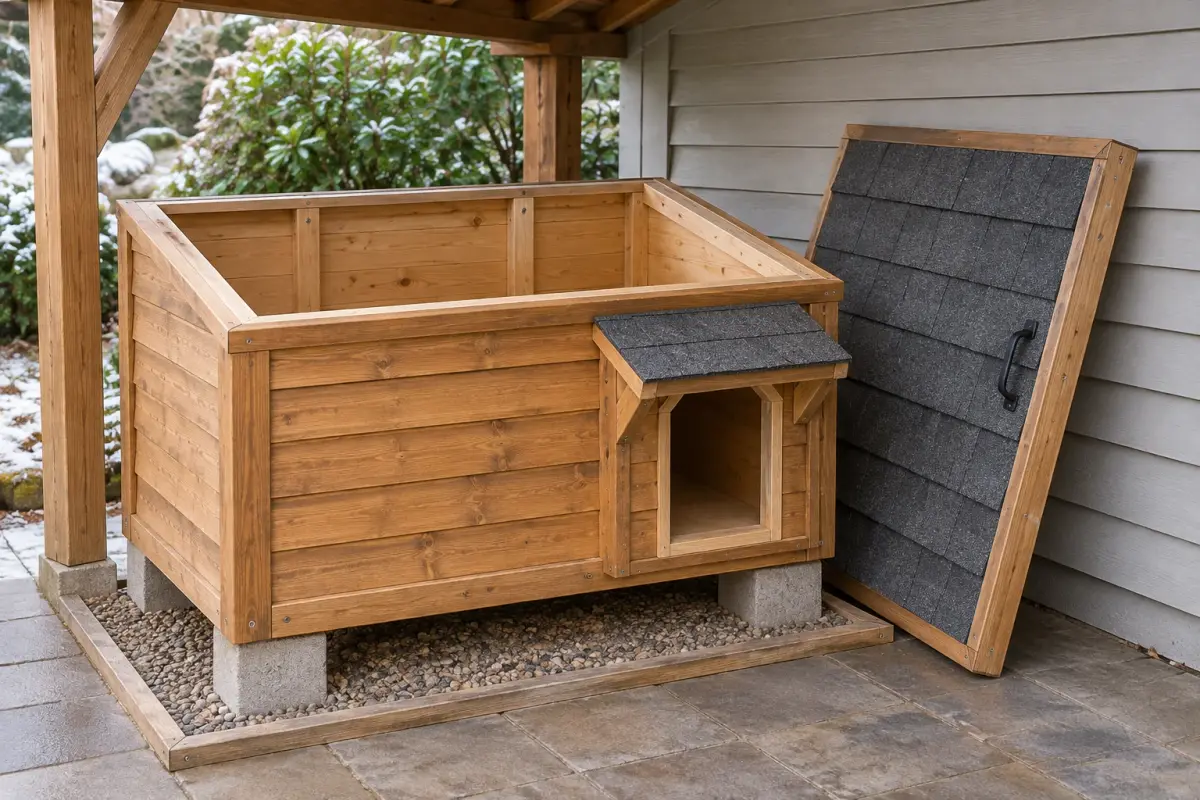
Compare the shell material separately from the insulation. Plastic, foam and wooden shelters use different bodies, while an insulated design adds layers around specified surfaces. This raised insulated fir-wood cat house with a PVC door flap uses fir panels around a foam core; it is a wooden house with passive insulation, not a plastic shelter. Check usable interior space, entrance clearance, cleaning access and the maker's placement instructions. Heated models add an electrical component, whose exact US input, outdoor-use instructions and included parts need separate verification.
Many caregivers also build shelters from insulated storage bins lined with foam board, which Alley Cat Allies describes in its shelter guidance. For more on shelters for community cats, see our feral cat shelter guide. Two-door designs give cats an escape route if a predator or another cat appears at one door, which many cats prefer.
Best type for each situation
For a single pet cat that goes outdoors, a small insulated or heated cat house on a porch, out of the wind, gives a warm retreat. For a colony of community cats, several small shelters spread out work better than one large one, because cats that do not get along will not share.
For very cold climates, choose an insulated house with a heated pad rated for outdoor use, plus straw, and a door flap. For wet climates, prioritize a raised floor and waterproof roof; a foldable waterproof cat house is one waterproof option. For areas with wildlife or dogs, a two-door design and a door no wider than about 6 inches keep larger animals out.
What to avoid
Avoid blankets, towels, hay and folded newspapers as bedding; Alley Cat Allies notes hay holds moisture and freezes. Avoid oversized houses a cat cannot warm, doors facing the prevailing wind and shelters placed directly on cold, wet ground. Avoid putting food and water inside the shelter, where spills make the bedding wet.
Avoid household heating pads, space heaters and unprotected cords outdoors, which can burn or shock. Do not use antifreeze anywhere cats can reach it; it is deadly. If you care for a cat that is thin, injured, coughing or has not been seen for several days in freezing weather, contact a local vet or community cat group for help.
How to size and place a cat house
Choose a house large enough for the number of cats that will share it to curl up, but no larger. A door of about 5.5 to 6 inches across admits cats while keeping out most larger animals. If the house is big, partially fill it with straw to reduce the air space cats must warm.
Place shelters in quiet spots near where the cats already rest, against a wall or under a deck, with the door facing away from the wind or toward a wall a few inches away. Raise them on pallets or bricks, and keep feeding stations nearby but separate.
Care and seasonal maintenance
Check shelters weekly in winter. Fluff and top up the straw, and replace it when it is damp, soiled or flattened; one Alley Cat Allies guide suggests replacing straw every few months. Clear snow from doors after storms and check that heated pads and cords are working and undamaged.
At the end of winter, empty and clean the house, let it dry fully and store it or leave it for shade and rain shelter. A plastic or foam shelter lasts several seasons; a wooden one lasts longer if resealed each year. When one wears out, see our outdoor cat houses.
Outdoor cat-house shells and added features
| Construction | Physical arrangement | Verify on the exact model |
|---|---|---|
| Plastic or foam shell | A molded or foam enclosure | Actual material,wall layers and cleaning access |
| Wooden house | Timber panels around a resting space | Finish,joints and removable access |
| Insulated house | Additional layers around stated surfaces | Which walls,roof and floor contain them |
| Heated house | A listed electrical warming component | US input,installation and included heater |
| Two-door house | Two entrances into the structure | Each opening and usable interior |
Common questions
What is the best bedding for an outdoor cat house?
Straw, which resists moisture and lets cats burrow. Avoid blankets, towels and hay, which absorb water and make the shelter colder. Fluff and top it up through the winter.
Are heated outdoor cat houses safe?
Yes, if the heating pad is made for outdoor pet use, low wattage, with a chew-protected cord plugged into a weatherproof outlet. Check the cord and pad regularly.
How big should an outdoor cat house be?
Small enough for the cats' body heat to warm it. For one to three cats, about 2 feet by 3 feet by 18 inches high is a common guide.
Where should I put an outdoor cat shelter?
In a quiet spot near where cats already rest, raised off the ground, with the door facing away from the wind. Keep food and water nearby but outside the shelter.
Sources we checked
This guide is general information, not veterinary advice. If your pet is unwell or injured, contact your veterinarian.


