






Breeds
Doberman vs German Shepherd: Which Protective Breed Fits You?
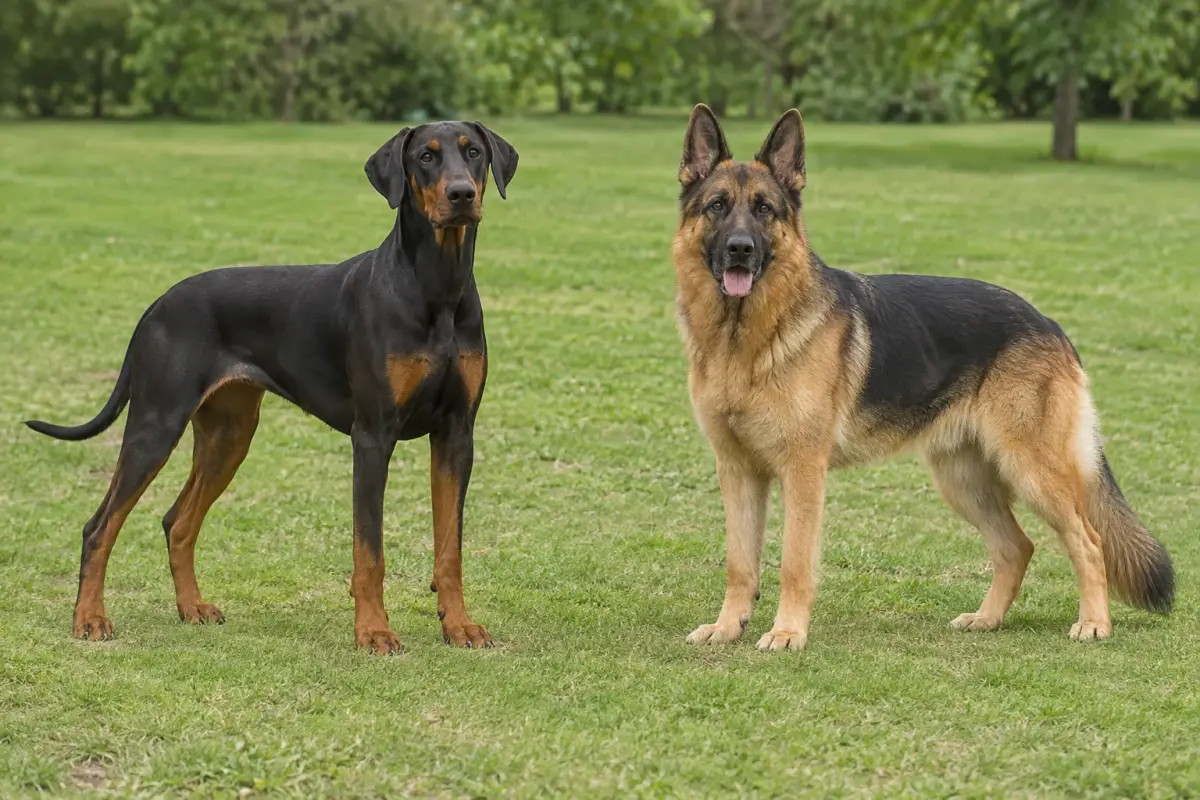
The Doberman Pinscher and the German Shepherd are both intelligent, loyal working dogs, similar in height and protective of their families. The Doberman is sleeker, with a short, low-shedding coat, and is more prone to anxiety when left alone; the German Shepherd carries a heavy double coat that sheds a lot and is the more versatile all-round worker. The AKC lists Dobermans at 60 to 100 pounds and German Shepherds at 50 to 90.
By Matt GarnettUpdated November 14, 20264 min read4 sources
Side by side
Size: the AKC lists Doberman males at 26 to 28 inches and 75 to 100 pounds, females at 24 to 26 inches and 60 to 90; German Shepherd males at 24 to 26 inches and 65 to 90 pounds, females at 22 to 24 inches and 50 to 70. Lifespan: AKC gives Dobermans 10 to 12 years and German Shepherds 12 to 14. Popularity: the German Shepherd is No. 4 and the Doberman No. 16. Coat: Dobermans short and smooth; Shepherds a double coat that sheds heavily.
Energy: VCA rates both high. Training: both very trainable with consistent, positive methods. Protectiveness: both strongly protective of family. Time alone: VCA says Dobermans have limited tolerance and are prone to anxiety, and Shepherds have limited tolerance and prefer engagement. Experience: VCA rates both best for experienced or committed owners. Cold: Dobermans feel it. Best for: active owners who want a loyal, trainable guardian.
Origins and roles
The AKC calls the Doberman one of dogkind's noblemen and among the world's finest protection dogs, and VCA says it was developed for protection and companionship and often excels in obedience and working roles. Its sleek, lean build is designed for speed and agility.
The German Shepherd Dog was developed for herding and protection, per VCA, and the AKC calls it generally considered dogkind's finest all-purpose worker, a large, agile, muscular dog of noble character and high intelligence. Shepherds do everything from service and guide work to companionship, which makes them the more versatile breed.
Temperament and training
VCA describes Dobermans as intelligent and devoted, highly protective, eager to learn and responsive to positive reinforcement, but warns that without socialization they may become overprotective or reactive. Their high energy needs both physical and mental outlets. They are sensitive dogs that bond closely and dislike long hours alone.
German Shepherds are loyal, confident and protective, especially in unfamiliar situations, says VCA, and very trainable with consistent leadership. Without dedicated training they may become overprotective or reactive, and they need mental stimulation to stay engaged. For both breeds, start socialization early, use reward-based methods and keep training going for life.
Grooming and shedding
Here the breeds differ most. VCA calls the Doberman coat low maintenance, needing weekly brushing, occasional baths and a watch on the skin for irritation or hair loss. Its short coat gives little protection against cold, so a coat or sweater helps in winter.
The German Shepherd's double coat needs frequent brushing and sheds heavily year-round, with extra-heavy seasonal sheds, according to VCA. Expect hair on floors and furniture, and plan on an undercoat rake and regular vacuuming. If shedding matters to you, the Doberman is the clear choice.
Health
VCA calls dilated cardiomyopathy one of the most significant risks in Dobermans, a heart disease that can cause heart failure or sudden death without obvious early signs, and strongly recommends regular cardiac screening. It also lists von Willebrand disease, Wobbler syndrome, hip dysplasia, hypothyroidism and bloat. For German Shepherds, VCA lists hip and elbow dysplasia, degenerative myelopathy, exocrine pancreatic insufficiency, epilepsy, perianal fistula and pannus.
Ask breeders for hip, elbow and, for Dobermans, heart screening on both parents, and ask your vet about the signs of bloat in deep-chested dogs. Keep either breed lean to protect its joints, and plan for regular checkups as it ages.
Which to choose
Choose a Doberman if you want a sleek, low-shedding, highly trainable guardian, are home enough to keep it company and are committed to lifelong heart screening. Choose a German Shepherd if you want a versatile working partner for training, sports and family life and can live with heavy shedding and plenty of brushing.
Both need a confident owner, daily exercise, ongoing training and secure fencing. A well-fitted harness from our Doberman harnesses or German Shepherd harnesses pages is one practical piece of kit for training walks. If you are new to working breeds, meet adult dogs of both, talk to breed clubs and enroll in puppy classes from the start.
This page is general information, not veterinary advice, and it cannot replace an examination by the vet who knows your pet.
Common questions
Which is bigger, a Doberman or a German Shepherd?
They are close in height, but Dobermans tend to be slightly taller and heavier. The AKC lists Doberman males at 26 to 28 inches and 75 to 100 pounds, and German Shepherd males at 24 to 26 inches and 65 to 90 pounds.
Which sheds more, a Doberman or a German Shepherd?
The German Shepherd, by far. VCA says its double coat sheds heavily year-round with heavier seasonal sheds, while the Doberman's short coat needs only weekly brushing.
Which is easier to train, a Doberman or a German Shepherd?
Both are highly trainable. VCA describes Dobermans as eager to learn and German Shepherds as very trainable with consistent leadership. Both need early socialization and positive, structured training.
Which lives longer, a Doberman or a German Shepherd?
The German Shepherd, on average. The AKC lists German Shepherds at 12 to 14 years and Dobermans at 10 to 12 years. Heart screening is especially important for Dobermans.
Sources we checked
This guide is general information, not veterinary advice. If your pet is unwell or injured, contact your veterinarian.


