






Breeds
Sheltie vs Collie: Is a Sheltie Just a Mini Collie?
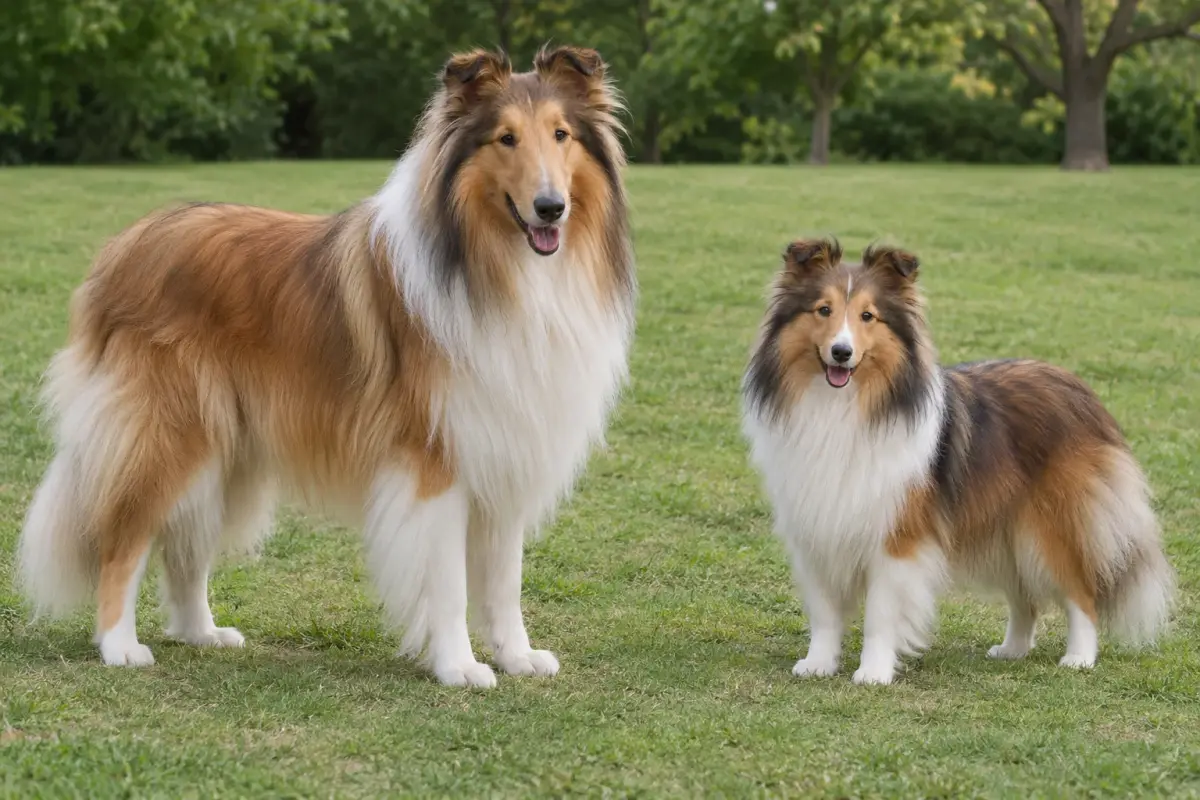
A Shetland Sheepdog is not a miniature Collie, though it looks like one: the two are separate breeds that share old Scottish collie-type ancestors. The Sheltie is much smaller, at 13 to 16 inches and 15 to 25 pounds per the AKC, against 22 to 26 inches and 50 to 75 pounds for the Collie. Both are gentle, clever family dogs that are excellent with children. Shelties bark more and are shyer with strangers; Collies need more space and food.
By Matt GarnettUpdated November 10, 20264 min read4 sources
Side by side
Size: the AKC lists Shetland Sheepdogs at 13 to 16 inches and 15 to 25 pounds, and Collie males at 24 to 26 inches and 60 to 75 pounds, females at 22 to 24 inches and 50 to 65. Lifespan: 12 to 14 years for both, per the AKC. Popularity: the Sheltie ranks 29th and the Collie 39th. Coat: Shelties have a long, harsh coat over a dense undercoat; Collies come in rough, long-coated, and smooth, short-coated varieties.
Energy: both are moderate. VCA says a Collie needs a long walk, good run or energetic play daily, and a Sheltie a long walk, short run or backyard games. Barking: VCA rates Shelties 5 out of 5 and Collies 4. Training: both rated 5 out of 5 for ease of training. Children: both excellent. Strangers: Collies are friendlier; Shelties can be aloof or shy. Best for: Shelties suit smaller homes; Collies suit families with room for a big dog.
Temperament
VCA describes the Collie as a gentle, devoted companion, playful and very good with children, good with other dogs and pets, quick to learn and eager to please. It does well in dog parks. Its main drawback, per VCA, is overly enthusiastic barking. Collies are usually friendly with visitors once introduced.
Shelties are loyal, biddable and gentle, and VCA calls them excellent companions for children, though they may nip at heels when excited. They tend to be a one-family dog, aloof or even shy with strangers, so early socialization matters, and some are timid. VCA says most bark a lot and are sensitive to correction, so they need gentle training. They rank among the most accomplished breeds in agility and obedience.
Grooming and shedding
The Sheltie is the higher-maintenance coat for its size. VCA says brushing and combing every other day is needed to prevent mats, and shedding is above average. Pay attention to the fluffy hair behind the ears, the mane and the trousers on the back legs, where tangles form first.
A rough Collie's long, thick coat needs a good brushing once or twice a week, while a smooth Collie needs only a brief weekly brush, according to VCA. Collie shedding is average to above average. With either breed, use a pin brush and an undercoat rake, and expect a heavy shed seasonally. Brush down to the skin, not just the top layer, or mats form underneath.
Exercise and space
Neither breed is hyperactive, but both are herding dogs that need daily activity and mental work. VCA calls the Sheltie a calm yet alert housedog that enjoys herding, agility, games and tricks. The Collie, it says, is a well-mannered housedog given adequate exercise, enjoys cold weather but cannot live outside in it, and benefits from games and tricks for mental exercise.
Size makes the real difference at home. A Sheltie fits comfortably in an apartment if you can live with the barking, while a 70-pound Collie needs more room, a bigger car and more food. Both should be walked on a leash, with a well-fitted dog harness if you prefer one, or in a fenced area, since herding instincts can make them chase moving things.
Health and which to choose
Both breeds tend to stay at a good weight, according to VCA, though their coats make it hard to judge: feel under the fur for the ribs. Ask breeders for eye and hip screening of both parents, and ask your vet which health checks matter as your dog ages.
Choose a Sheltie if you want a small, highly trainable, devoted dog that excels at sports and does not mind its barking or reserve with strangers. Choose a Collie if you want a bigger, gentle, people-friendly family dog with a slightly quieter voice and have the space for it.
This page is general information, not veterinary advice, and it cannot replace an examination by the vet who knows your pet.
Common questions
Is a Sheltie a miniature Collie?
No. The Shetland Sheepdog is a separate breed. VCA explains that Shelties and Collies share early collie-type ancestors, which is why they look alike, but the Sheltie developed on the Shetland Islands as a small herding dog.
Which is bigger, a Sheltie or a Rough Collie?
The Collie, by a lot. The AKC lists Collies at 22 to 26 inches and 50 to 75 pounds, and Shelties at 13 to 16 inches and 15 to 25 pounds.
Do Shelties bark more than Collies?
Usually, yes. VCA rates the Sheltie 5 out of 5 for barking and says most bark a lot, while it rates the Collie 4 out of 5 and notes overly enthusiastic barking can be a problem.
Are Shelties and Collies good with kids?
Both are excellent. VCA rates both 5 out of 5 with children. Shelties may nip at heels in play, so teach children not to run from the dog and supervise young kids.
Sources we checked
This guide is general information, not veterinary advice. If your pet is unwell or injured, contact your veterinarian.


