






Breeds
Cocker Spaniel vs Springer Spaniel: Size, Energy and Grooming
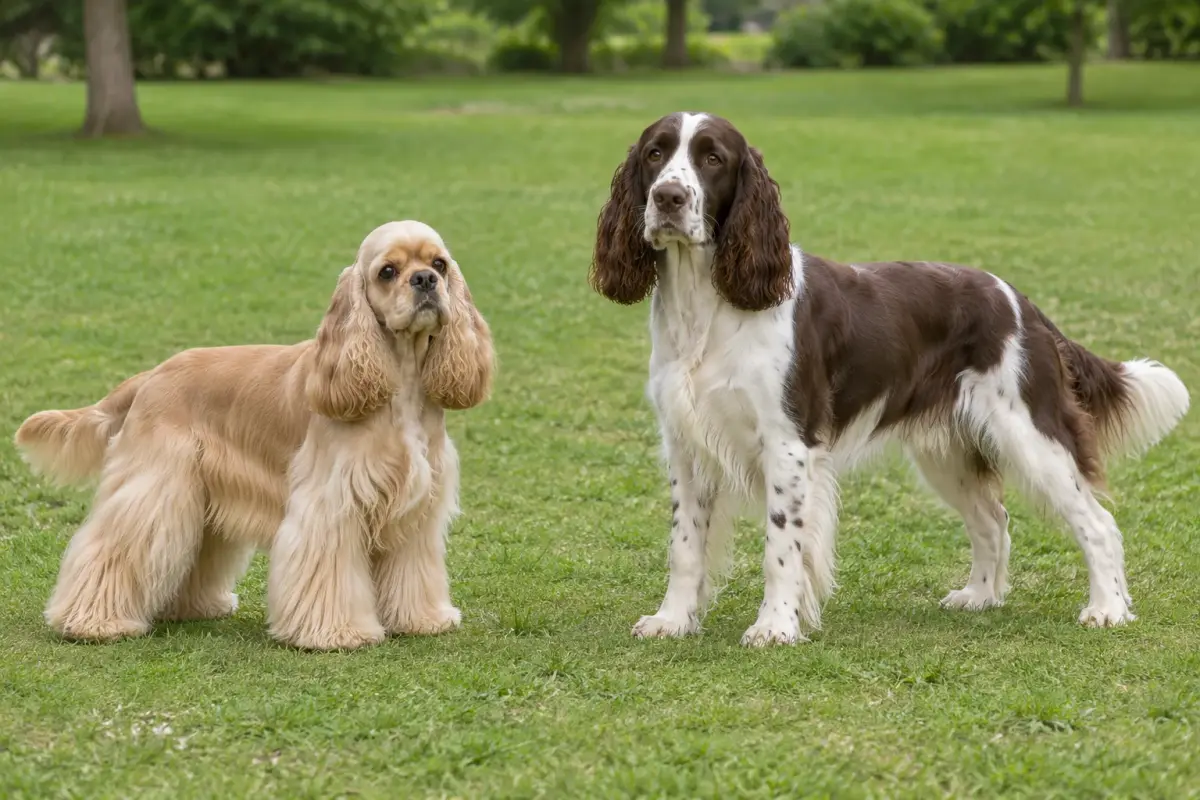
The English Springer Spaniel is the bigger, more energetic bird dog, at about 40 to 50 pounds per the AKC, built for long days in the field. The Cocker Spaniel, known in America as the American Cocker, is a smaller companion of 20 to 30 pounds with a fuller coat and more moderate exercise needs. Both are sweet, eager-to-please family dogs with long ears that need weekly care, and both need regular grooming.
By Matt GarnettUpdated November 10, 20264 min read4 sources
Side by side
Size: the AKC lists English Springer Spaniels at about 19 to 20 inches, with males around 50 pounds and females around 40, and Cocker Spaniels at 13.5 to 15.5 inches and 20 to 30 pounds. Lifespan: AKC gives Springers 12 to 14 years and Cockers 10 to 14. Popularity: Springers rank 28th and Cockers 32nd on the AKC list. Coat: both medium-length, silky and feathered.
Energy: VCA says Springers need a long walk, jog or energetic games daily, and Cockers moderate daily exercise. Training: both eager to please; VCA notes Springers can be excitable and easily distracted, and Cockers are sensitive. Children: VCA describes both as usually or generally good with kids. Grooming: Cockers need daily brushing; Springers once or twice a week. Best for: Springers suit active families; Cockers suit companion homes.
Origins
Both come from the same spaniel family that, as VCA explains, was developed by at least the 1300s to flush birds, then split by size and by the terrain and game they hunted. The smaller woodcock-hunting dogs became Cockers, and the AKC recognized the Cocker Spaniel in 1878. American breeding later produced the smaller, rounder-headed Cocker that the AKC simply calls the Cocker Spaniel.
The AKC describes the English Springer Spaniel as a sweet-faced, lovable bird dog of great energy, stamina and brains, prized by sport hunters as a mannerly pet during the week and a hunting buddy on weekends. VCA notes that field-bred Springers tend to be more energetic and need even more exercise than show-bred dogs.
Temperament
VCA describes Springers as exuberant and energetic, usually good with children, happy and not easily bothered, outgoing with strangers and good with other pets and dogs. They love retrieving and swimming, and some bark a lot. VCA also notes that a few Springers have been implicated in sudden aggressive episodes with little warning, which is worth asking breeders about.
Cocker Spaniels are gentle, affectionate and sociable, per VCA, enjoying family life and responding well to gentle, reward-based training. They are sensitive, and without consistent guidance or early socialization some develop anxiety or reactivity. VCA rates their tolerance for time alone as limited. The AKC calls Cockers merry and frolicsome, with an impish personality.
Exercise
A Springer is a sporting dog in every sense. VCA calls it a fairly calm housedog only when it gets enough exercise, a long walk, jog or energetic games every day, and a good candidate for dog parks. It tolerates both warm and cool weather well, making it a good partner for hiking, running and swimming.
Cockers need moderate daily exercise, walks, play and interactive games, says VCA, and adapt well to most living spaces. They enjoy outings and play but do not need the same mileage as a Springer. Both breeds benefit from obedience training for the mental exercise it provides, and both love retrieving games, so a few dog toys picked for Cockers, like a plush shark toy, are worth having on hand for fetch.
Grooming and ears
The Cocker is the bigger grooming commitment. VCA advises daily brushing with a suitable dog brush to prevent tangles, says professional grooming is often needed to keep the coat in shape, and stresses skin and ear care to prevent infection. The Springer's medium-length, silky coat needs brushing and combing once or twice a week, with professional grooming and clipping every few months.
Both breeds have long, heavy ears. VCA says Springer ears must be checked weekly, and it names ear disease and allergic skin disease as common Cocker concerns, along with eye conditions. Clean ears as your vet shows you, dry them after swimming, and see your vet for head shaking, odor or redness. Springers also tend to gain weight, so measure meals.
Which to choose
Choose an English Springer Spaniel if you want a medium-sized, energetic companion for long walks, hikes, swimming or bird work, and you can provide plenty of daily exercise. Choose a Cocker Spaniel if you want a smaller, affectionate housedog with moderate exercise needs and are ready for daily brushing and regular grooming appointments.
For either breed, ask breeders about temperament in their lines, eye screening and ear health, and start gentle socialization and positive training early. Budget for grooming as a regular cost rather than an occasional extra, and keep a dog grooming kit at home for the weeks between appointments.
This page is general information, not veterinary advice, and it cannot replace an examination by the vet who knows your pet.
Common questions
Which is bigger, a Cocker or a Springer Spaniel?
The English Springer Spaniel. The AKC lists Springers at about 19 to 20 inches and 40 to 50 pounds, and Cocker Spaniels at 13.5 to 15.5 inches and 20 to 30 pounds.
Which is more energetic, a Cocker or a Springer?
The Springer. VCA says it needs a long walk, jog or energetic games daily, and field-bred Springers need even more. Cockers need moderate daily exercise.
Which spaniel is better with kids?
Both are family-friendly. VCA describes Springers as usually good with children and Cockers as generally good with them. Springers are bigger and bouncier, so supervise play with small children.
Do Cocker and Springer Spaniels shed?
Both shed an average amount and need regular brushing. VCA advises daily brushing for Cockers and once or twice a week for Springers, plus professional grooming for both.
Sources we checked
This guide is general information, not veterinary advice. If your pet is unwell or injured, contact your veterinarian.


