






Breeds
Cane Corso vs Pit Bull: Size, Temperament and Who Each Suits
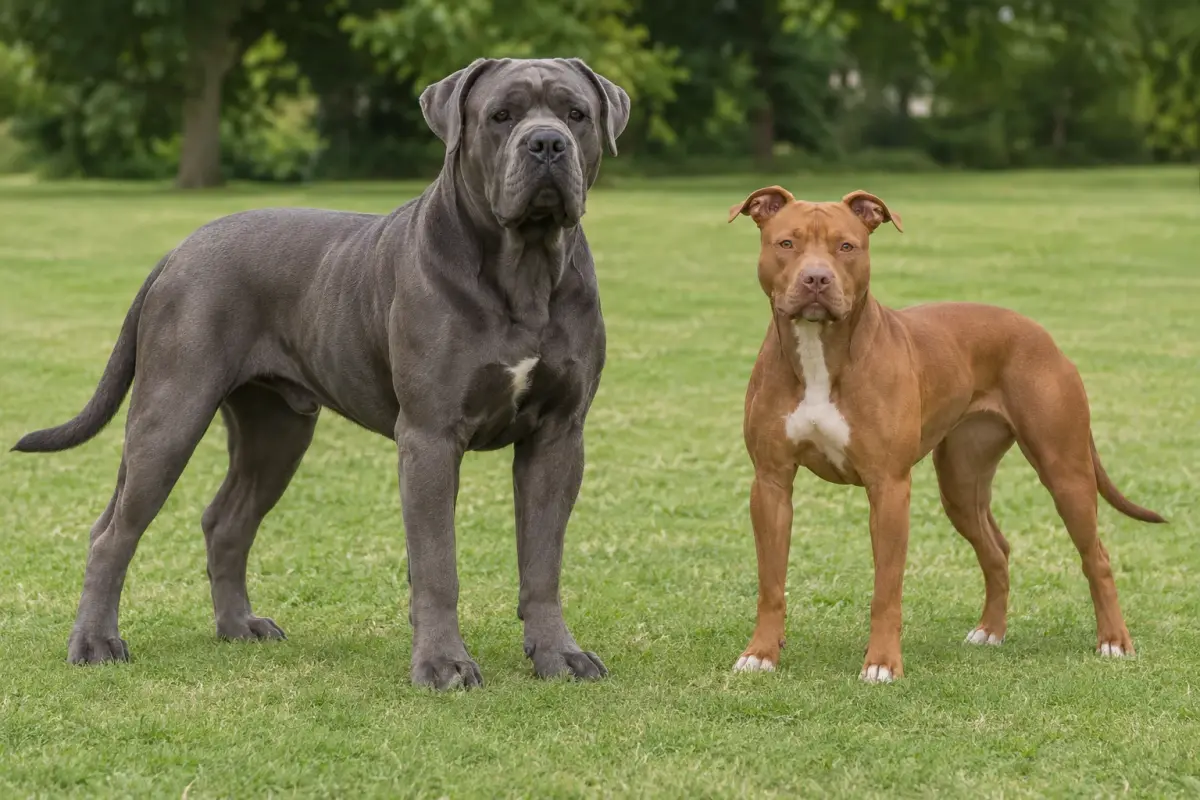
The Cane Corso is a large Italian guardian mastiff, standing up to 27.5 inches per the AKC and built to protect; the American Pit Bull Terrier is a medium-sized athlete of 30 to 60 pounds under the United Kennel Club standard, famously friendly with people. Both are strong, loyal and need experienced, consistent handling. The biggest difference is purpose: the Corso is wary of strangers by design, while the pit bull welcomes them but may not tolerate other dogs.
By Matt GarnettUpdated November 10, 20264 min read3 sources
Side by side
Size: the AKC lists Cane Corso males at 25 to 27.5 inches and females at 23.5 to 26, weight proportionate to height. The UKC gives APBT males 18 to 21 inches and 35 to 60 pounds, females 17 to 20 inches and 30 to 50. Lifespan: AKC gives the Corso 9 to 12 years. Registry: the Corso is an AKC breed ranked 14th; the APBT is a UKC breed, first registered in 1898. Coat: both short and easy to brush.
Energy: VCA rates the Corso high; the UKC describes the APBT as a performance athlete. Strangers: VCA says Corsos are protective and alert to the unfamiliar; the UKC says APBTs are extremely friendly. Other dogs: Corsos may be selective; most APBTs show some dog aggression, per the UKC. Experience: both suit confident, experienced owners. Best for: Corsos suit guardian homes with space; pit bulls suit active, people-loving homes with no other dogs or careful management.
Origins and purpose
The AKC traces the Cane Corso to ancient Rome, with a name that roughly means bodyguard dog, and calls it smart, trainable, assertive and a peerless protector. VCA says it was developed in Italy for guarding, hunting and farm work, and is calm indoors but highly alert and responsive to anything unfamiliar.
The American Pit Bull Terrier descends from 19th-century bull-and-terrier crosses brought to the United States, where farmers used them as catch dogs for cattle and hogs, for hunting and as companions, according to the UKC. It is not a guard breed: the UKC says it is too friendly with strangers for that job, and that aggression toward people is uncharacteristic.
Build and size
The Corso is the much bigger dog, with a large, muscular body, a broad head, a pronounced muzzle and a short, coarse double coat in black, gray, fawn or brindle, per VCA. Its sheer size and strength mean leash training and control matter from puppyhood; an adult can easily outweigh its owner's ability to hold it.
The APBT is medium-sized and athletic, with smooth muscle and a body slightly longer than tall, and the UKC says it should never look bulky or muscle-bound. It is a capable climber and jumper, so fences need to be tall and secure. Weight overlap is minimal: even a large pit bull is far lighter than an average Cane Corso.
Temperament and training
VCA warns that without consistent training a Cane Corso may become overprotective and aggressive toward strangers or pets, and that early socialization is essential. It needs confident, consistent leadership and positive training to channel its guarding instinct, and VCA rates it best for experienced, confident owners.
The UKC describes APBTs as eager to please, enthusiastic and noted for loving children. Because most show some level of dog aggression and are powerful, the UKC says they need an owner who socializes them carefully and trains obedience. For both breeds, use reward-based methods, start puppy classes early and keep meetings with other dogs slow and on leash.
Exercise, health and care
VCA says Cane Corsos need regular daily exercise, walks, structured activity and training, and access to secure outdoor space, and that they are sensitive to extreme heat. Pit bulls need at least as much activity, and the UKC notes they excel at obedience, agility, weight pulls and dock jumping, which make good outlets for their energy.
VCA lists hip and elbow dysplasia, patellar luxation, bloat, eyelid disorders, demodectic mange, epilepsy, hypothyroidism and heart disease among Cane Corso concerns, and advises weight control and controlled exercise during rapid growth. Ask breeders of either breed about hip screening, ask your vet about bloat in a deep-chested dog, and keep either breed lean. Strong chewers of either breed need durable toys, so browse toys for Cane Corsos and toys for pit bulls, and give a Corso a bed for large dogs.
Which to choose
Choose a Cane Corso if you are an experienced large-breed owner who wants a calm, devoted guardian and has the space, time and confidence to train and socialize a powerful protector for life. Choose an American Pit Bull Terrier if you want a medium-sized, affectionate, athletic companion that loves people and you can manage it around other dogs.
For either breed, check local ordinances, rental leases and homeowner's insurance first, since both often face restrictions. If adopting, ask the shelter about each dog's history with strangers, children and other dogs, which tells you more than its label.
This page is general information, not veterinary advice, and it cannot replace an examination by the vet who knows your pet.
Common questions
Which is bigger, a Cane Corso or a pit bull?
The Cane Corso, by far. The AKC lists Corso males at 25 to 27.5 inches, while the UKC standard calls for American Pit Bull Terrier males of 18 to 21 inches and 35 to 60 pounds.
Is a Cane Corso a type of pit bull?
No. The Cane Corso is an Italian mastiff breed recognized by the AKC, with Roman roots. The American Pit Bull Terrier descends from bull-and-terrier crosses and is recognized by the UKC.
Which is better with strangers, a Cane Corso or a pit bull?
Pit bulls are usually friendlier; the UKC says they are too friendly with strangers to be good guard dogs. VCA describes Cane Corsos as protective and alert around unfamiliar people.
Are Cane Corsos or pit bulls good with other dogs?
Both can struggle. VCA says Corsos may be selective with other pets, and the UKC says most American Pit Bull Terriers show some level of dog aggression. Early socialization and supervision are essential.
Sources we checked
This guide is general information, not veterinary advice. If your pet is unwell or injured, contact your veterinarian.


