Buying guides
Best Whitening Shampoo for Dogs: How to Choose One
A whitening shampoo for dogs brightens a white or light coat that has yellowed, usually with optical brighteners or a violet tint that cancels yellow tones. Choose a dog-specific, gentle formula, use it only every few baths with a mild shampoo in between, keep it well away from the eyes, and accept that set-in stains from tears or licking rarely wash out.
By Matt GarnettUpdated November 14, 20263 min read3 sources
How whitening shampoos work
Most whitening shampoos use one of two approaches. Bluing or violet-tinted formulas deposit a faint purple pigment that counteracts yellow, the same principle as purple shampoos for blond human hair. Brightening formulas use mild cleansers and optical brighteners to lift dullness and make white reflect more light. Neither bleaches the hair.
Because they tint or brighten rather than strip color, results build gradually and fade between baths. A white coat that has turned pink or rust colored around the mouth, eyes or paws is usually stained by saliva or tears, which whitening shampoo only lightens a little.
What matters most in a whitening shampoo
Gentleness comes first, because it will be used on the face and legs. Choose a dog-specific formula; the AKC explains dog skin is closer to neutral pH than human skin and is more easily stripped of protective oils. Avoid products marketed with bleach or peroxide for use on skin.
Contact time matters with violet formulas: too short does little, too long can leave a faint lilac tinge on very pale or thin coats. Follow the label, and do a test on a small area first. A conditioner after whitening helps, because brightening cleansers can leave long white coats feeling dry.
Best approach for each coat
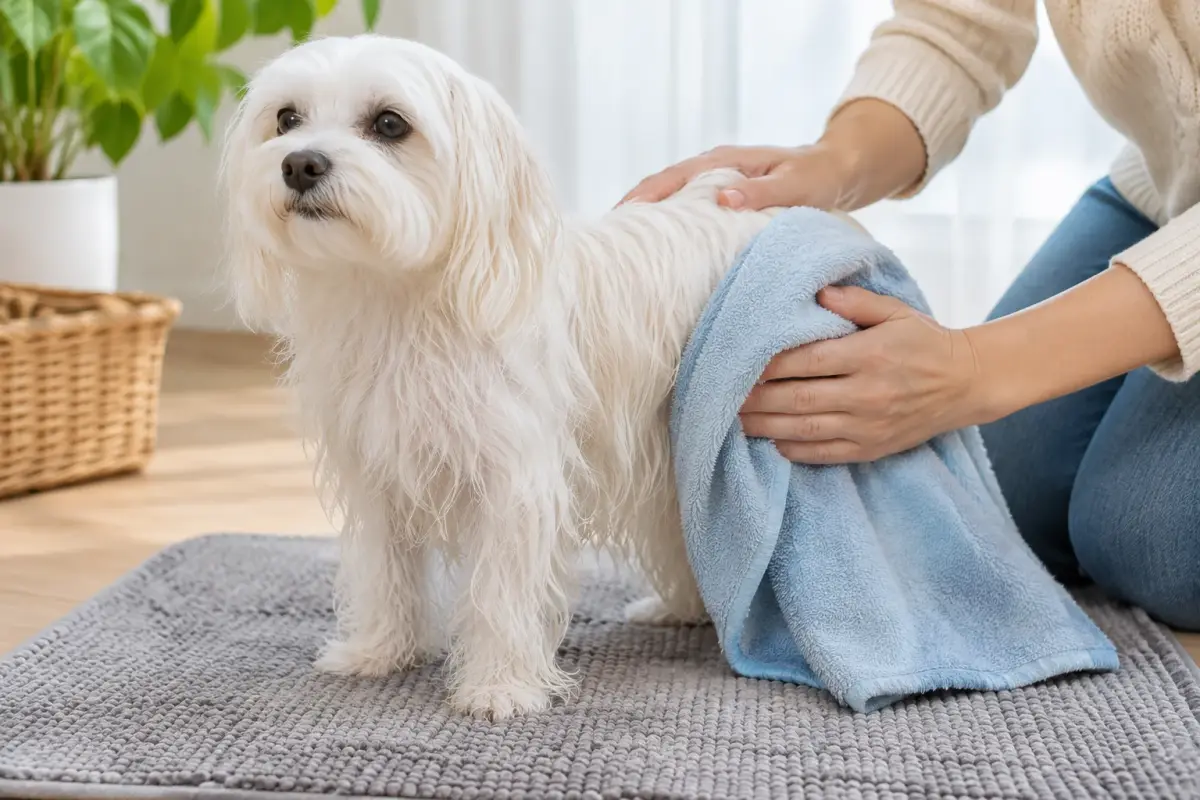
For long, silky white coats such as Maltese and West Highland White Terriers, alternate a whitening shampoo with a moisturizing one and follow with conditioner, combing out tangles before the bath. For short white coats, a whitening shampoo every second or third bath is usually enough.
For cream, silver or pale gold coats, a violet formula can cool warm tones that owners like, so test first. For dogs with sensitive or itchy skin, use a fragrance-free regular shampoo most of the time and limit whitening products, because VCA lists perfumes and soaps among triggers of contact irritation.
Tear stains, paw stains and yellowing
Reddish-brown staining under the eyes and on paws comes from pigments in tears and saliva. Keep hair trimmed away from the eyes, wipe the area daily with a damp cloth and dry it, and rinse paws after walks. Persistent heavy tearing, red eyes or constant paw licking are reasons to see your vet, because the cause may be an eye or skin problem.
General yellowing comes from dirt, oils and urine splash on the legs and belly. More frequent brushing removes surface dirt between baths, and a quick wipe of the belly and legs after outdoor potty breaks prevents much of it building up.
What to avoid
Avoid human whitening or purple shampoos, household bleach, peroxide and baking soda pastes on the face. Avoid leaving violet formulas on longer than directed, and avoid using a whitening shampoo at every bath, which can dry the coat and skin.
Avoid getting any shampoo in the eyes; use a damp cloth for the face rather than lathering. If your dog's skin turns red, flaky or itchy after a whitening product, stop using it, rinse thoroughly with water, and ask your vet if the irritation lasts more than a day or two.
Common questions
Does whitening shampoo work on dogs?
It brightens yellowed or dull white coats, mostly with violet tints or optical brighteners. It lightens tear and saliva stains only slightly, and results fade between baths.
How often can I use whitening shampoo on my dog?
Every second or third bath suits most dogs, with a mild shampoo and conditioner in between. Using it every time can dry the coat. Follow with conditioner on long coats.
What is the best shampoo for white dogs?
A gentle, dog-specific whitening shampoo for occasional use, plus a fragrance-free regular shampoo and a conditioner for long coats. Test violet formulas on a small patch first.
How do I get stains out of my white dog's fur?
Wipe tear and mouth areas daily, trim hair near the eyes, rinse paws after walks and use a whitening shampoo occasionally. See your vet if tearing or licking is heavy.
Sources we checked
This guide is general information, not veterinary advice. If your pet is unwell or injured, contact your veterinarian.