






Buying guides
Best Toys for Bulldogs: What Actually Matters
The best toys for a Bulldog are sturdy, soft-edged and big enough that they cannot be swallowed or lodged at the back of the throat. Dense rubber chews, plush toys for short bursts of tug, and low-effort play beat anything that makes a flat-faced dog sprint in the heat. Bulldogs are laid-back, drool a lot and chew with purpose, so durability and easy cleaning count for more than novelty.
By Matt GarnettUpdated November 13, 20265 min read3 sources
What matters most when choosing toys for a Bulldog
Start with the dog you actually have. The AKC describes the Bulldog as a thick-set, low-slung, well-muscled dog that weighs 40 to 50 pounds and stands about 15 inches tall, and as a laid-back breed that does not need constant mental stimulation. That points toward toys for calm, short sessions rather than endless fetch. When you browse toys for Bulldogs, look first at construction, then size, then how easy the toy is to wash.
Size is the safety criterion that matters most. The AKC's choking guidance recommends choosing toys wider than your dog's jaw, because balls that are too small can lodge at the back of the throat. A Bulldog has a broad, heavy head, so judge the toy against the mouth, not against the dog's weight. If your Bulldog can fit the whole toy between the teeth, it is too small, however sturdy it looks.
Rubber chew toys: the everyday workhorse
A dense rubber chew is the most useful single toy for a Bulldog, because it gives a strong jaw something to work on without splintering. Look for a solid or thick-walled shape with rounded edges and no seams or glued-on parts. A simple rubber training toy is the kind of design to compare: firm enough to resist a determined chewer, smooth enough to rinse clean after a drooling session.
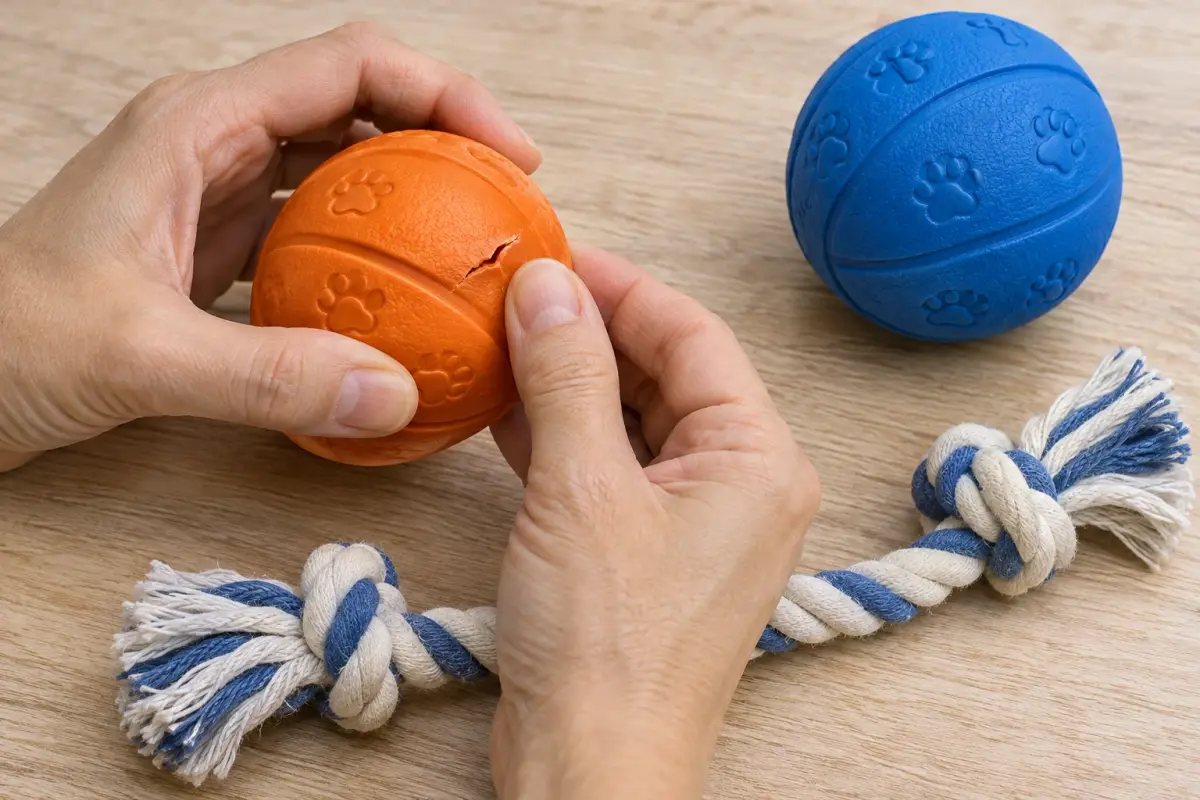
Chew toys also wear down, so inspect them every few days. Replace any toy that cracks, loses chunks or shrinks to a size your dog could swallow. The AKC notes that a dog can hold a chew with its paws until it gets small, but when it is down to the last inch the dog can no longer manage it, so supervise chewing and take the stub away before it can be swallowed whole.
Plush and tug toys for short, calm play
Many Bulldogs love to carry and shake something soft, and a plush toy suits that instinct. A plush animal toy in a wide, flat body shape is easier for a short-muzzled dog to grip than a long, thin one. Treat plush as a supervised toy: it is for carrying, gentle tug and cuddling, not for an unsupervised afternoon of tearing.
Check seams and stitched-on parts before each session. If a seam opens or stuffing shows, retire the toy, since torn fabric and filling are easy to swallow. Keep tug sessions gentle and brief, and let your dog win sometimes. Bulldogs are strong for their size, and a long hard tug adds effort without adding much fun for a breed that tires and overheats easily.
Balls, molar sticks and textured chews
Balls and stick shapes need the most care because they are the easiest to swallow or wedge. Whatever the shape, run the jaw test above; a bite-resistant molar stick and ball toy is one type to compare, and if any part could be taken fully into the back of the mouth, choose a larger one. Bulldogs also tend to pick up and drool on everything, so smooth, washable surfaces are a practical advantage.
Textured chews, such as a fruit-shaped chew toy, are often sold for teeth cleaning. Treat them as something pleasant to chew rather than as dental care, and ask your vet about brushing and checkups. Introduce any new chew while you are watching, and take it away if your dog starts breaking off pieces.
Breathing, heat and how long to play
Bulldogs are a flat-faced breed, and VCA Animal Hospitals explains that many such dogs have airway abnormalities known as brachycephalic airway syndrome. Signs include noisy breathing, snorting and snoring, and VCA notes that signs are often worse in hot or humid weather and that affected dogs overheat more easily. Obesity makes the signs worse, so keeping your dog lean matters as much as any toy.
Choose play that fits those limits. Short indoor sessions, a chew in a cool room and calm tug are kinder than a long game of fetch on a warm day. Stop at the first sign of loud or labored breathing, heavy panting or tiring, and let your dog rest somewhere cool. If your dog ever collapses, faints or has blue or pale gums, call your vet or an emergency vet immediately.
What to avoid, and the right toy for each situation
Avoid small balls, toys with parts that can be pulled off, anything cracked or frayed and chews that break into chunks. For a heavy chewer, lean toward solid rubber. For a gentle carrier or a senior Bulldog, a soft plush toy is plenty. For a dog that gulps and gets hot quickly, pick quiet, low-effort toys and skip anything that encourages running.
Gear that goes with play matters too. VCA recommends a harness rather than a neck collar for dogs with this airway condition, so if you are shopping for walks as well, see our Bulldog harnesses and the guide to choosing a harness for a Bulldog. When you are ready to compare shapes and sizes, return to our toys for Bulldogs.
This page is general information, not veterinary advice, and it cannot replace an examination by the vet who knows your pet.
Common questions
Are tennis balls safe for Bulldogs?
Only if the ball is clearly too big to fit in the back of the mouth, and only under supervision. The AKC warns that balls that are too small can lodge in the throat, and Bulldogs should not be chasing balls hard in warm weather.
How do I know a toy is too small for my Bulldog?
Compare it with your dog's jaw. The AKC advises toys wider than the dog's jaw, so if your Bulldog can take the whole toy to the back of the mouth, move up a size or choose a different shape.
Do Bulldogs need a lot of toys?
No. The AKC calls the breed laid-back, with no need for constant mental stimulation, so a small rotation of two or three sturdy toys, checked often and swapped out when worn, is usually enough.
What should I do if my Bulldog starts breathing loudly while playing?
Stop the game, move your dog somewhere cool and let it rest. Because flat-faced breeds overheat easily, call your vet if the noisy breathing does not settle quickly, and call an emergency vet at once if your dog collapses.
Sources we checked
This guide is general information, not veterinary advice. If your pet is unwell or injured, contact your veterinarian.


