Buying guides
Best Shampoo for Huskies: What a Double Coat Needs
The best shampoo for a Husky is a gentle, dog-specific formula that rinses out of a dense double coat easily, often paired with a deshedding conditioner during coat blows. Huskies need only a few baths a year, according to the AKC. What matters more than the bottle is brushing out loose undercoat first and drying the coat right down to the skin.
By Matt GarnettUpdated November 14, 20263 min read2 sources
What matters most for a Husky coat
The AKC describes Huskies as having thick double coats, minimal body odor and a habit of grooming themselves well, so they need only a few baths a year. Their heavier shedding comes twice a year, when they lose the entire soft undercoat. A shampoo for this breed, whether a gentle one or one of our deshedding shampoos for dogs, should clean without stripping oils, and rinse out of thick fur without leaving residue.
The double coat has a job. The AKC explains the harsh topcoat repels dirt and water while the undercoat insulates in cold and traps cooler air near the skin in heat. Harsh detergents and over-bathing work against that, which is why mild, dog-specific shampoos used rarely are the right approach.
Shampoo and conditioner types compared
A mild, low-fragrance dog shampoo suits routine baths. Deshedding shampoos and conditioners use slippery ingredients that help loose undercoat release during the rinse and the brush-out afterward; they are most useful during a coat blow. Concentrated shampoos that you dilute are easier to work through dense fur and rinse more completely.
Whitening shampoos suit Huskies with white coats that have yellowed, used occasionally. Oatmeal formulas are gentle options for dry skin. Medicated shampoos are only for a skin problem your vet has diagnosed.
Bathing a Husky properly
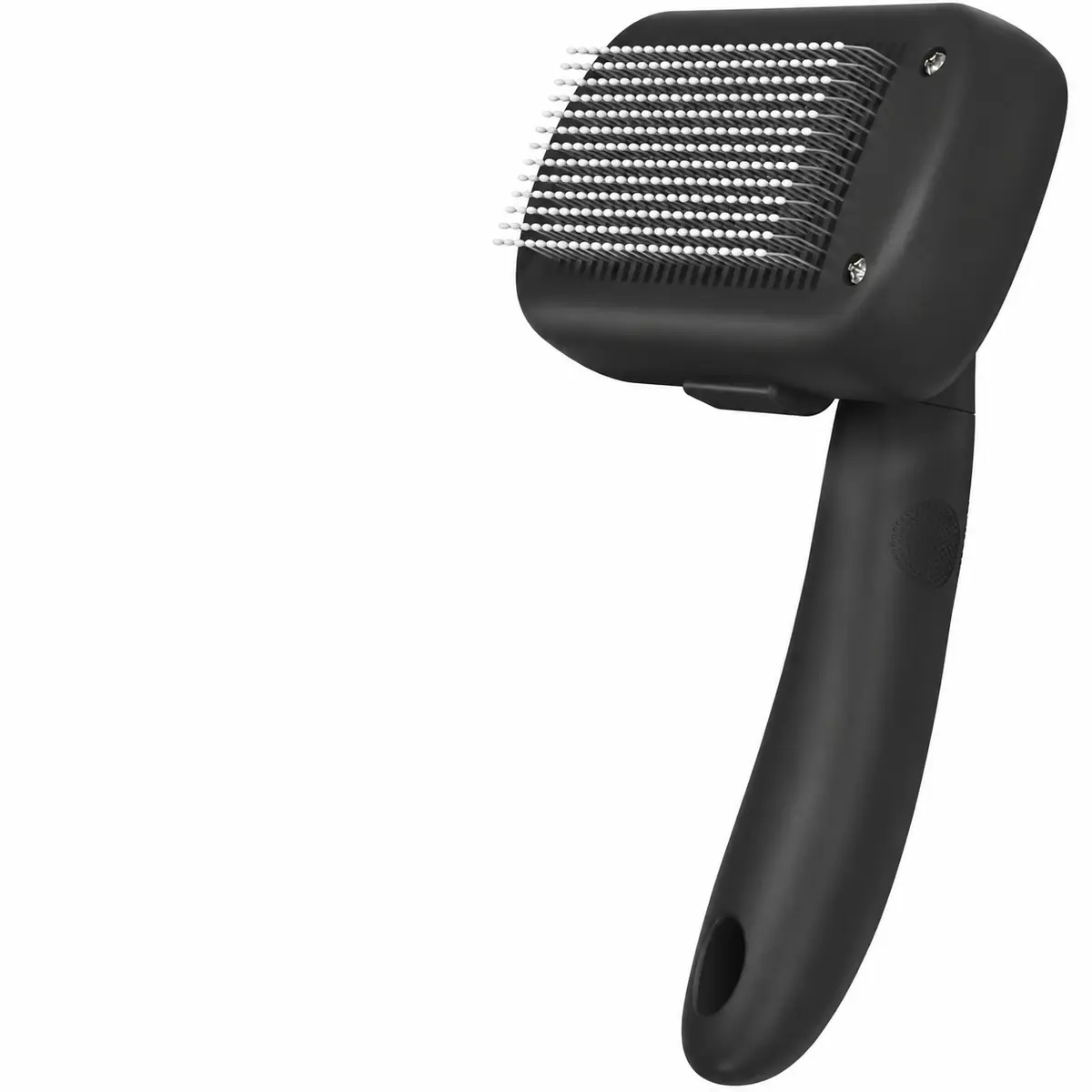
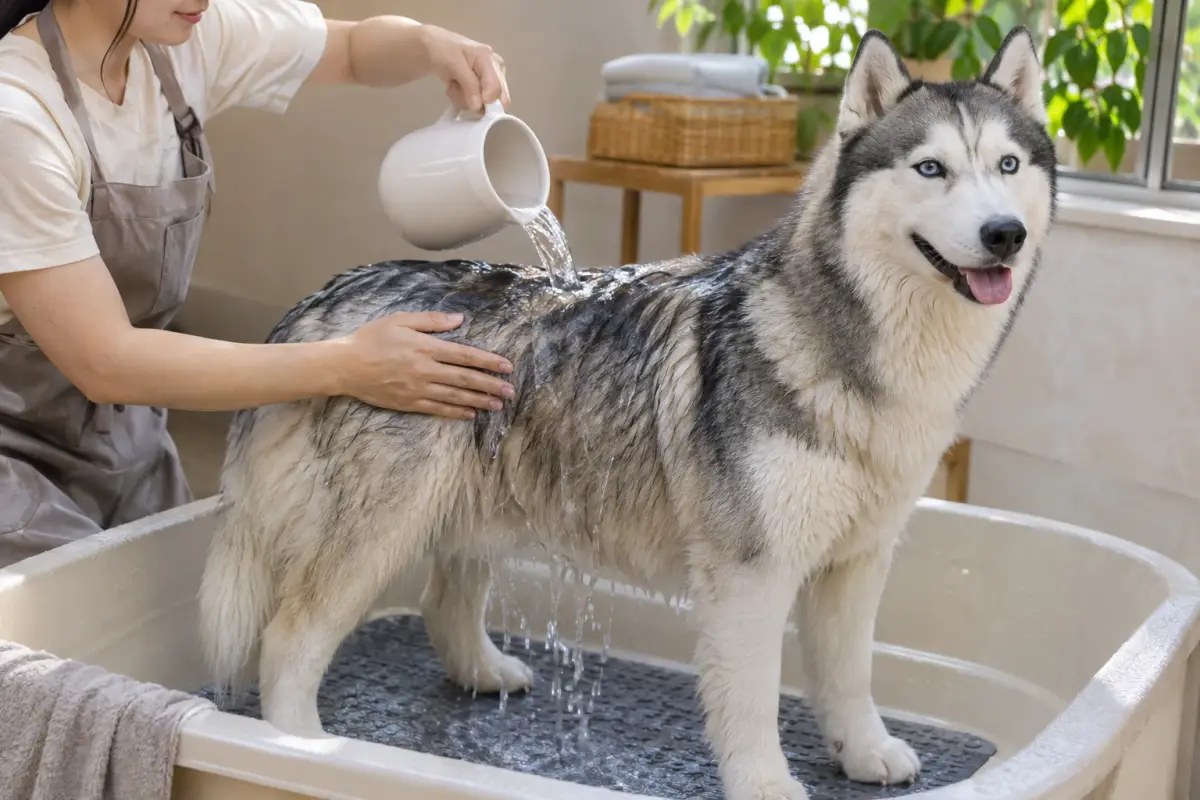
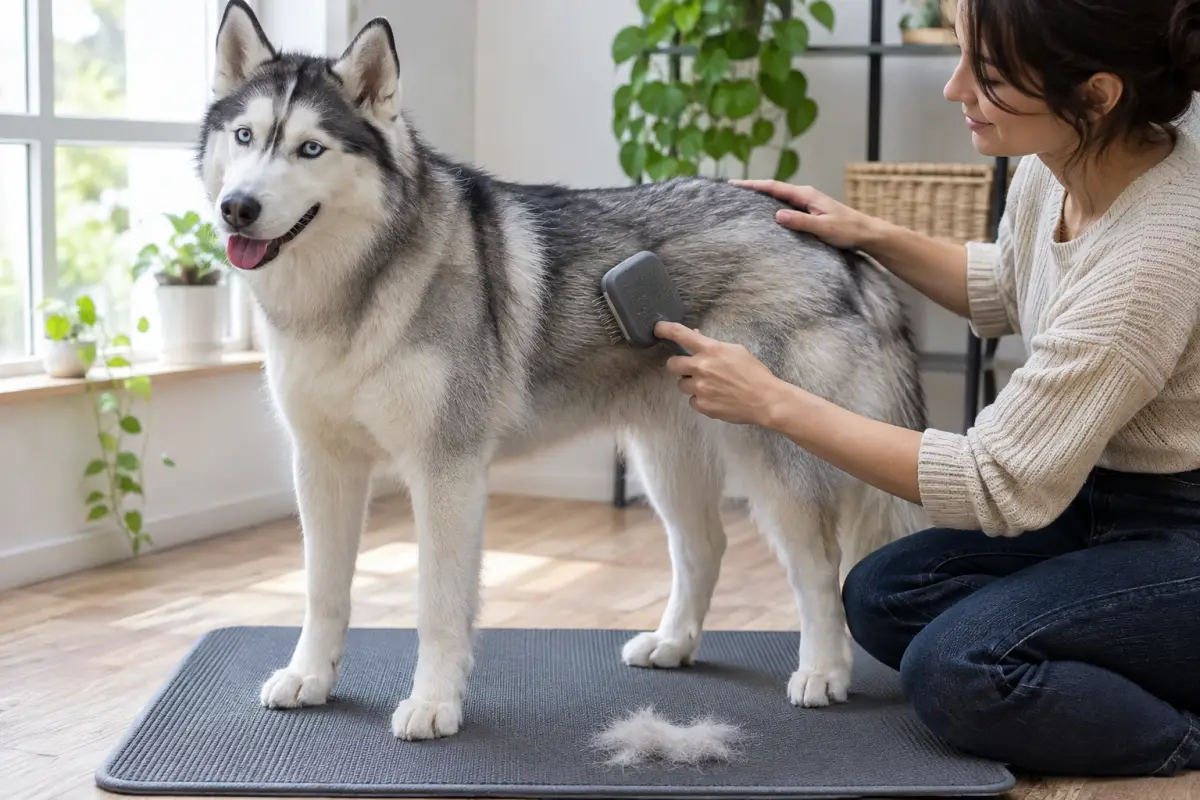
Brush first, with an undercoat rake and a slicker brush, to pull out as much loose undercoat as possible; the AKC notes groomers use a rake or steel comb for this. Bathing an unbrushed Husky mid-shed turns loose undercoat into felt. Wet the coat thoroughly, which takes longer than you expect, and work diluted shampoo down to the skin with your fingers.
Rinse until the water runs completely clear at the skin, not just at the surface. Leftover shampoo in a dense undercoat causes itching and hot spots. Then dry thoroughly with towels and a cool or low-heat dryer, or a high-velocity pet dryer if your dog tolerates it; damp undercoat against the skin is how skin problems start.
How often and what about odor
A few times a year is enough for most Huskies, typically after a coat blow or when they roll in something. The AKC notes the breed has minimal body odor, so a Husky that smells needs checking: ear infections, dental disease and skin infections are common reasons a clean dog starts to smell.
Weekly brushing, which the AKC recommends, does far more for a Husky coat than frequent baths, and a deshedding grooming glove is a quick way to keep up between rake sessions. During coat blows, daily brushing with a rake from our deshedding tools keeps loose fur from matting and keeps it off your floors. A strong vacuum, as the AKC suggests, helps you keep up.
What to avoid
Avoid shaving a Husky to reduce shedding or to cool it down. The AKC warns that shaving a double coat can leave it uneven and unable to function, does not cool the dog, and can raise the risk of sunburn and skin problems. Avoid human shampoo, heavy fragrance and bathing more than needed; a gentle dog shampoo or deshedding shampoo is the safer choice.
Avoid putting a Husky outside to air-dry in cold weather, and avoid leaving the undercoat damp. If you see red, moist patches, hair loss or constant licking at one spot, see your vet promptly, because hot spots can spread quickly under a thick coat.
Common questions
What is the best shampoo for a Husky?
A mild, dog-specific shampoo that rinses out easily, ideally diluted, with a deshedding conditioner during coat blows. Brushing first and drying thoroughly matter as much as the product.
How often should I bathe my Husky?
Only a few times a year, according to the AKC, since Huskies groom themselves well and have little body odor. Weekly brushing keeps the coat healthy between baths.
Does deshedding shampoo work on Huskies?
It helps loose undercoat release during the rinse and brush-out, especially during coat blows. It does not replace raking out the undercoat before and after the bath.
Should I shave my Husky in summer?
No. The AKC explains a double coat insulates against heat too, and shaving can leave the coat uneven while raising the risk of sunburn and skin problems.
Sources we checked
This guide is general information, not veterinary advice. If your pet is unwell or injured, contact your veterinarian.