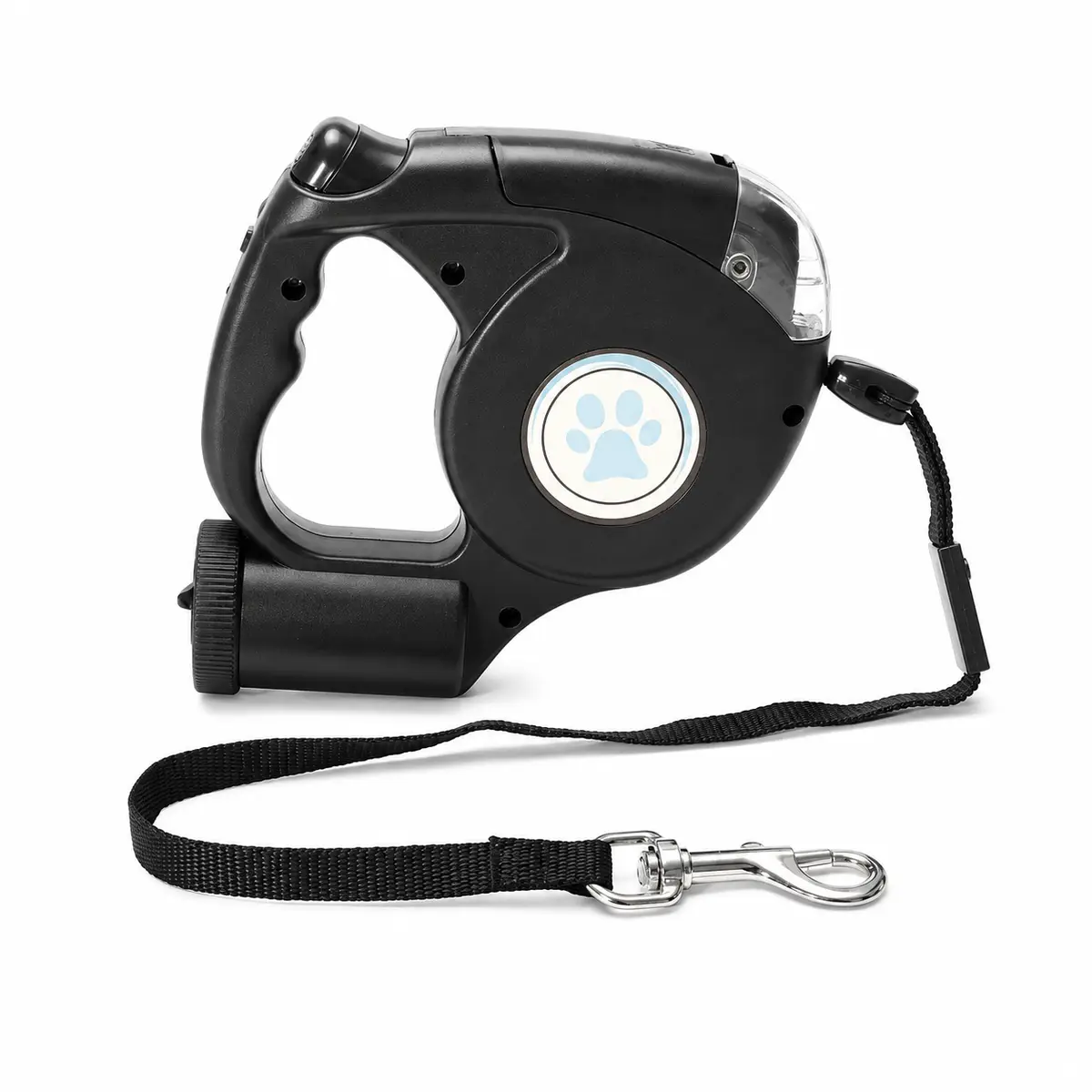
Buying guides
Best Retractable Dog Leash: How to Choose One Safely
If you buy a retractable leash, choose a flat tape rather than a thin cord, a length around 16 feet rather than 26, a brake button you can work one-handed, and a weight rating above your dog's weight. Use it only for a dog that is already leash trained, in open spaces away from traffic, crowds and other dogs.
By Matt GarnettUpdated November 14, 20263 min read2 sources
What matters most: tape vs cord
The line is the safety-critical part of any retractable leash. The AKC explains that tape is thicker, less likely to snap when a dog pulls hard and easier to see, especially in a bright or reflective color that tells other people your dog is leashed. Cord is thin, hard to see at night and more likely to cause burns or cuts if it wraps around a leg or a hand.
For that reason, a tape leash is the better default for almost every dog. Cord designs can be lighter and reel more smoothly, but they are best kept for small, calm dogs. Whatever you choose, never grab the line itself while the dog is moving.
Length, brakes and weight ratings
Retractable leashes generally run from 10 to 30 feet, with 16 feet the most common, according to the AKC, which also notes that lengths around 26 feet are likely too long to supervise a dog properly. A shorter extension gives you a chance to reach your dog before it reaches a problem.
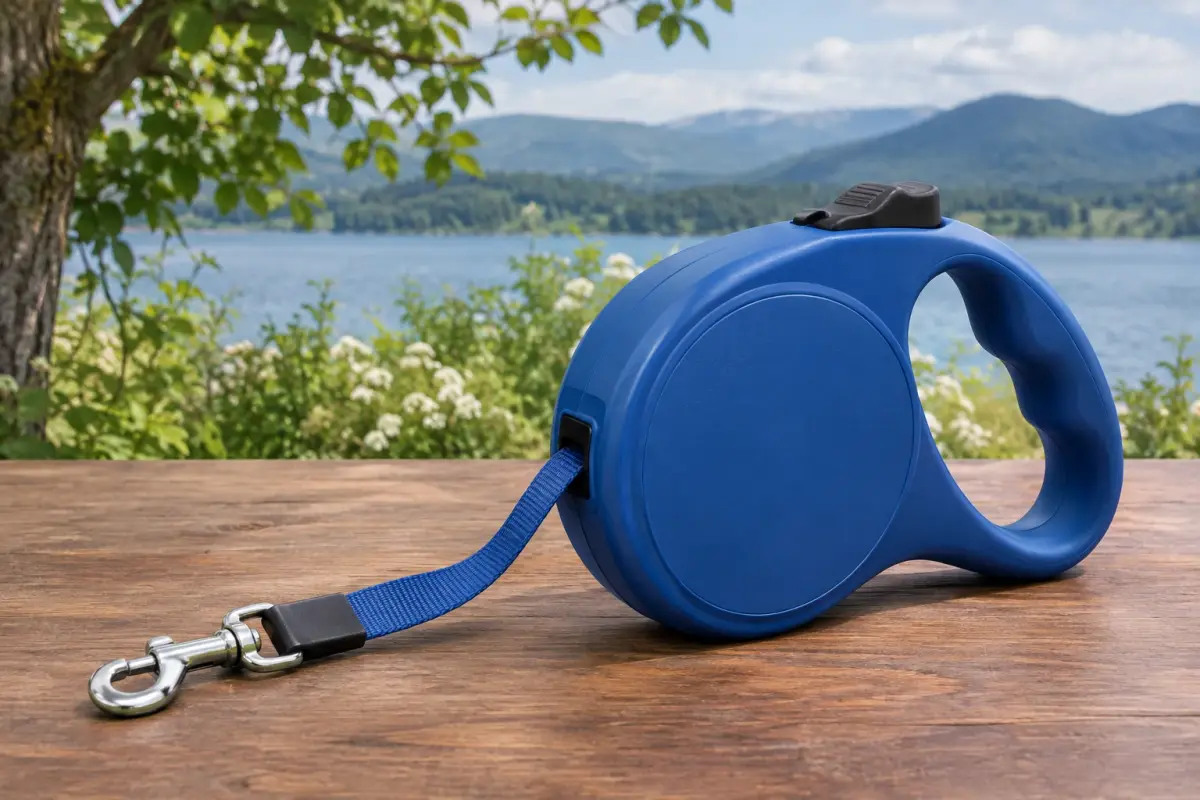
Look for a brake that stops the line instantly, a lock that holds under load, and a handle that fits your hand without slipping, like a ring-handle retractable lead. Check the weight rating and choose one comfortably above your dog's weight. Remember that the leash only retracts when slack, so you cannot reel in a dog that is pulling away.
Where a retractable leash fits, and where it does not
The AKC suggests retractable leashes only for dogs that are already leash trained, in places like an unfenced yard or a large open field with no other people or dogs nearby. Used that way, the extra length of a retractable lead gives a reliable dog more freedom to sniff and explore than a 6-foot lead.
They do not belong at vet clinics, in pet stores, in crowds, in areas with many dogs, or on sidewalks, where the line can catch on objects or let a dog approach strangers or traffic without warning. A fixed leash is the right tool in all of those places.
Best choice for each dog
For a small, calm dog on quiet walks, a compact tape model of about 10 to 16 feet with a weight rating suited to toy breeds is enough. For a medium or large dog that walks politely, a heavy-duty tape model with a large, solid brake and a rating well above the dog's weight is the minimum.
For a dog that pulls, lunges or is still learning, a retractable leash is the wrong tool: it rewards pulling and teaches the dog that tension earns more line. Use a fixed 4 to 6 foot leash and a front-clip harness, or a long line of 15 to 30 feet for open-field practice.
Safety checks, care and lifespan
Clip a retractable leash to a harness rather than a collar, because the AKC warns that hitting the end of the line at speed can injure a dog's neck or spine. Keep the handle wrist strap on so a dropped handle does not clatter after a frightened dog, which can make it bolt.
Test the brake and lock before every walk, check the tape for fraying near the clip, and retire the leash if the line sticks, retracts slowly or shows wear. Keep the housing out of sand and water, which jam the spring. If your dog is ever injured by a sudden stop, have your vet check the neck and back. For more on the risks, see our guide on whether retractable leashes are bad; to replace one, browse our retractable dog leashes.
Common questions
What is the safest type of retractable leash?
A tape model rather than cord, about 16 feet or shorter, with a reliable one-handed brake and a weight rating above your dog's weight, clipped to a harness.
Are retractable leashes bad for dogs?
They carry real risks, including burns from cord and injury when a dog hits the end at speed. Used only with trained dogs in open spaces, with a tape line and harness, the risk is much lower.
What length retractable leash should I get?
Around 16 feet suits most dogs. The AKC notes 26 feet is likely too long to supervise. A shorter leash gives you time to reach your dog.
Can I use a retractable leash on a dog that pulls?
It is not recommended. A retractable lead keeps tension on and rewards pulling. Train with a fixed 4 to 6 foot leash and front-clip harness first.
Sources we checked
This guide is general information, not veterinary advice. If your pet is unwell or injured, contact your veterinarian.