






Buying guides
Best Reptile Heat Lamp: What Actually Matters
The best reptile heat lamp is one sized to the enclosure, run through a thermostat, placed out of your reptile's reach, and checked with two thermometers. The Merck Veterinary Manual warns that heat lamps need extreme caution because overheating is common. A basking bulb also gives heat, not UVB, so most daytime reptiles need a separate UVB light. Browse our reptile heat lamps with those checks in mind.
By Matt GarnettUpdated November 14, 20264 min read2 sources
What a heat lamp has to do
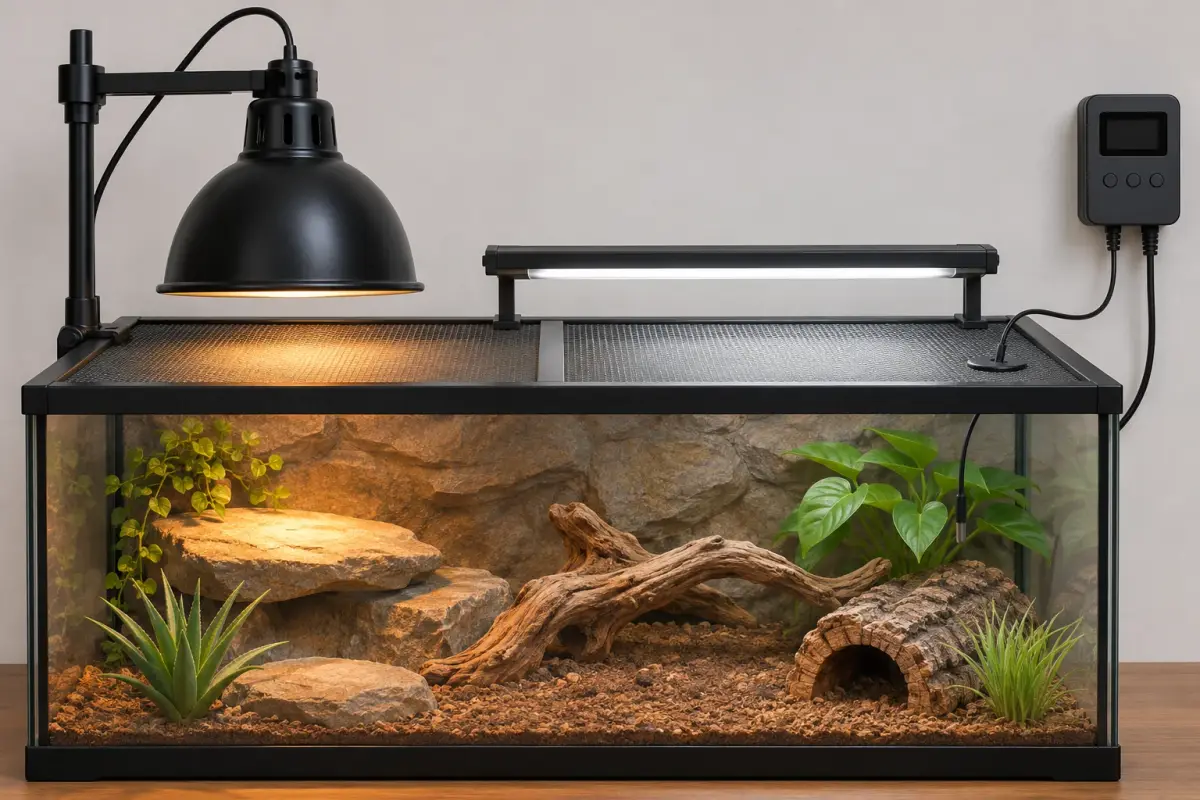
Reptiles depend on their surroundings for body heat, so an enclosure needs a temperature gradient: a warm basking end and a cooler end where the animal can retreat. The Merck Veterinary Manual says tropical species generally prefer 80°F to 100°F, though the right range depends on the species, so confirm yours before buying anything.
The heat lamp creates the warm end. It goes at one end of the enclosure, not in the middle, so the reptile can choose its temperature. Overheating is the real danger: Merck notes that temperatures only 10°F above a species' upper limit may prove deadly for some reptiles, which is why every other feature below is about control.
Bulb types compared
Merck lists several heat sources for reptile enclosures: incandescent bulbs, infrared bulbs, ceramic heat emitters and mercury vapor lamps, plus heating pads and cables. A standard basking bulb gives light and warmth by day and suits most lizards and tortoises that bask. A ceramic heat emitter gives heat without light, which suits night-time warmth, since ordinary light bulbs cannot supply heat at night.
Mercury vapor bulbs give heat and UVB from one unit, but they get very hot, so the reptile needs a spot outside the bulb's focus. Whichever type you choose, buy a fixture rated for the bulb's heat and keep water well away from it. Browse our reptile heat lamps for basking bulb and fixture options.
Thermostat, thermometers and placement
Merck advises that heaters of an appropriate size should be controlled by a thermostat, and that heat sources should be screened from the animal so it cannot touch them. A programmable thermostat switches the lamp on and off as needed, which is the best defense against overheating if you are out for the day.
Fit at least two thermometers, one at the cool end and one at the warm end, and measure just above the substrate where the animal sits instead of only at the top of the tank. A digital probe such as an electronic digital reptile thermometer makes this easy. Merck suggests basking sources sit well above the enclosure floor, so mount the lamp high and check surface temperatures under it.
Heat is not UVB
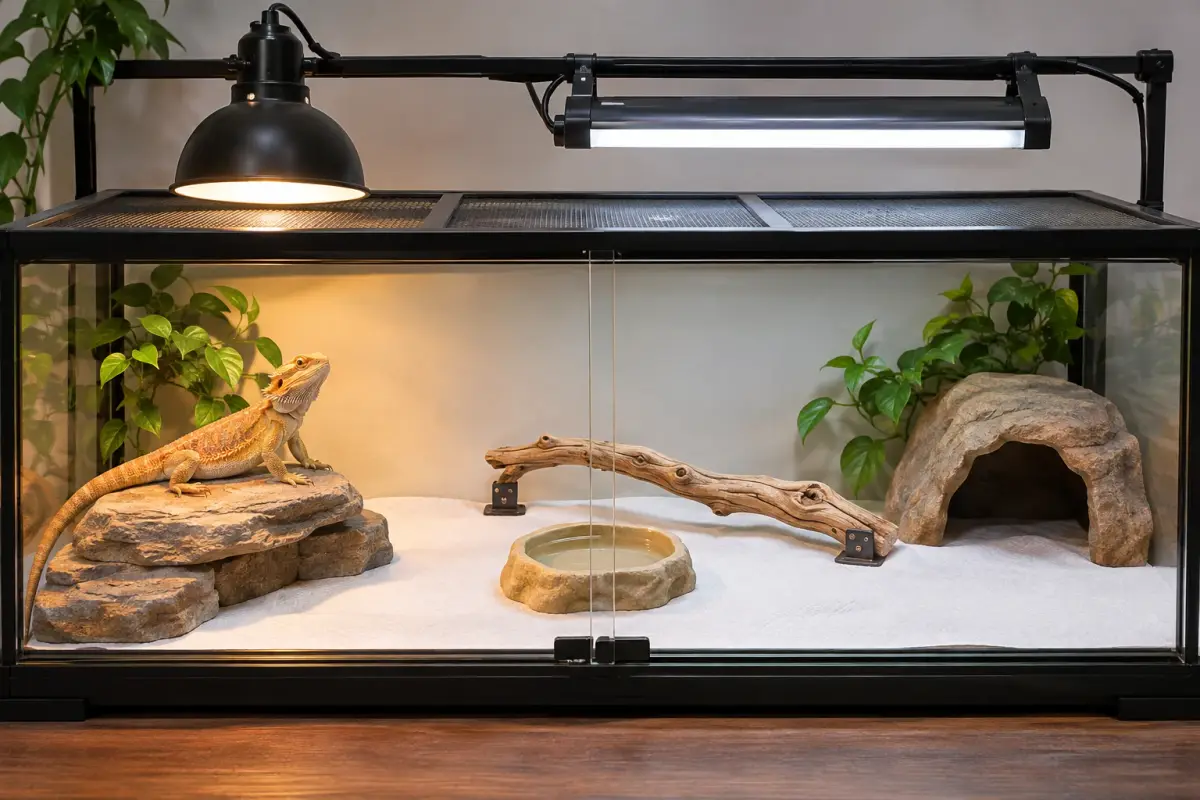
A basking heat lamp does not replace UV lighting. Merck says UVB in the 290 to 320 nanometer range is needed for vitamin D3 synthesis, which supports calcium absorption, and that glass and plastic block nearly all UV, so it cannot pass through a lid or window. Look for a bulb labeled as producing UVB, and place it within the distance its instructions give, which Merck puts at about 18 inches of the basking area for typical lights.
UVB tubes lose output with age, and Merck suggests replacing fluorescent tubes every 9 to 12 months. Ask a vet familiar with reptiles to check your heat and lighting setup at the first exam, and see our reptile terrariums for enclosures with room for a gradient.
What to avoid, and when to call a vet
Avoid hot rocks, which Merck says give inconsistent heat and often cause burns, avoid lamps without a thermostat, and avoid fitting an under-tank heater across the whole floor: Merck advises covering no more than 30 percent so the animal can move off the heat. Never use a heat bulb in a fixture that is not rated for it.
Call a reptile vet if your animal has red or blistered skin, stays pressed against the cool end, or stops eating, since temperature problems and illness overlap. When you are ready to choose, browse our reptile heat lamps.
This page is general information, not veterinary advice, and it cannot replace an examination by the vet who knows your pet.
Common questions
What is the best heat lamp for a reptile?
There is no single best bulb. Choose a type that suits your species, size it to the enclosure, run it through a thermostat, and keep it out of reach. Check temperatures with two thermometers.
Do reptiles need a heat lamp and UVB light?
Most daytime reptiles need both. A heat lamp provides warmth, while a separate UVB source supports vitamin D3 and calcium use. Check what your species needs with a reptile vet.
Can a heat lamp burn my reptile?
Yes. Merck warns that overheating is common with heat lamps and that heat sources must be screened from the animal. Use a thermostat, keep the lamp out of reach, and avoid hot rocks.
Do reptiles need a heat lamp at night?
Often they need some warmth but less than by day. Merck says basking temperatures should drop at night, and ordinary light bulbs cannot supply night heat, so ask your vet which heater suits your species.
Sources we checked
This guide is general information, not veterinary advice. If your pet is unwell or injured, contact your veterinarian.


