






Buying guides
Best Hamster Cage: How to Choose for Syrian or Dwarf
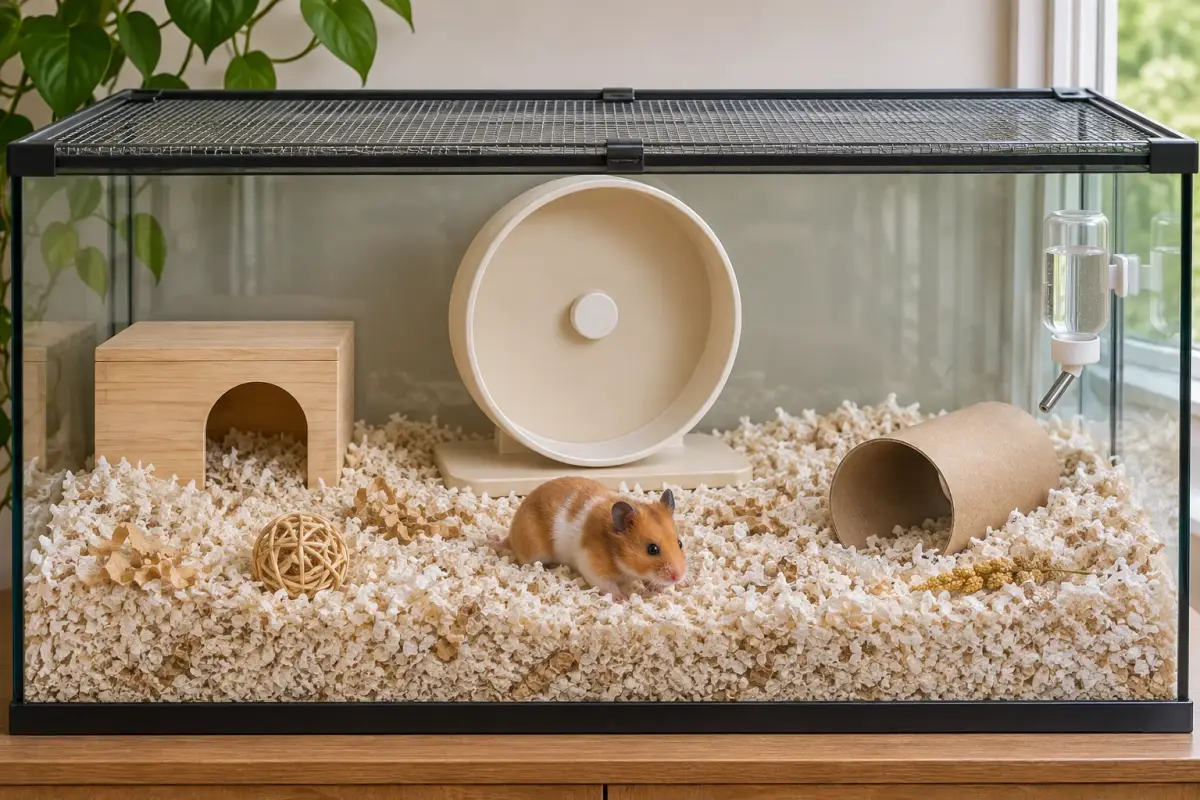
The best hamster cage has a large, unbroken floor, a deep base that holds plenty of bedding for burrowing, and bar spacing small enough to prevent escapes. PetMD's veterinary guidance gives at least 900 square inches of floor space for a Syrian hamster and 700 for dwarf species. Most cages sold as hamster cages are smaller than that, so floor area is the first number to check.
By Matt GarnettUpdated November 9, 20264 min read2 sources
What matters most: floor space
Hamsters run long distances each night and need room to dig, so the useful measurement is continuous floor area, length times width, not counting shelves, tubes or upper levels. PetMD suggests at least 900 square inches, about 40 by 22.5 inches, for a Syrian (see Syrian hamster cages), and at least 700 square inches, about 40 by 17.5 inches, for dwarf and Chinese hamsters.
Bigger is better within reason. A large enclosure lets you separate a sleeping area, a digging area, a wheel and a feeding spot, which reduces stress behaviors such as bar chewing and pacing. If a cage lists only height, look again; height helps less than floor space.
Depth for bedding and burrowing
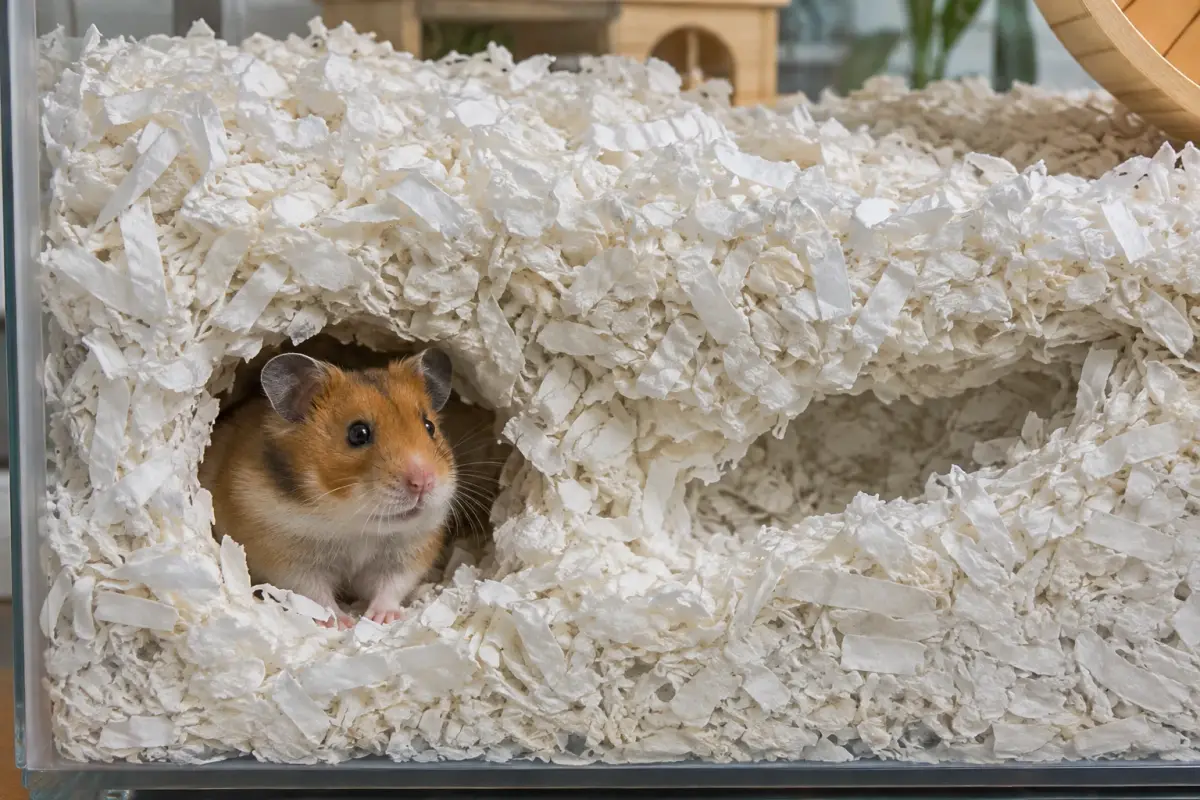
Hamsters are burrowers, and a deep base is what lets them build tunnels. PetMD recommends at least 10 inches of bedding for a Syrian and 6 to 8 inches for dwarf hamsters. That means a tank or a cage with a deep plastic base, not a shallow tray that bedding spills out of.
Use paper-based bedding. VCA advises paper bedding and warns against dusty materials, and calls cedar the least desirable wood bedding because its aromatic oils irritate the airways. Provide a hide and nesting material your hamster can shred.
Cage types compared
Tanks and bin cages with a ventilated wire or mesh lid hold the deepest bedding and stop it being kicked out; PetMD favors a tank base with a clip-on wire top. VCA notes a glass aquarium works when it is well ventilated and has a secure, escape-proof screen top. Large glass or acrylic enclosures look good but are heavy.
Wire cages with a deep plastic base offer good airflow and easy access, but check the bar spacing and base depth. Wooden cages are hard to clean and get chewed. Small modular cages with tubes are usually far too small and the tubes trap waste, which is why PetMD advises against them.
Syrian vs dwarf hamsters
Syrian hamsters are the largest common pet hamster and must live alone as adults. PetMD puts their minimum at 900 square inches of floor with a mesh top spaced half an inch or less, and warns that a wheel too small for a Syrian could contribute to back injuries; most owners choose one of around 11 to 12 inches so the back stays straight.
Dwarf hamsters, including Roborovski, Campbell's and winter whites, are small enough to squeeze through wider bars, so look for narrower spacing, about a quarter inch. They still need generous floor space of at least 700 square inches. Some can live in pairs, but fights happen; be ready with a second enclosure.
What to avoid
Avoid wire floors and wire or open-rung wheels; VCA warns hamsters can trap a foot in open-track wheels. Avoid small wheels that bend the back. Avoid multi-level cages that look big but have small floors, and avoid any cage you cannot clean easily.
Avoid placing the cage in direct sun, near heaters or in drafts, and keep it out of a bedroom if the nighttime wheel noise matters. Poor ventilation lets ammonia build up, which VCA calls a major cause of respiratory disease in pet rodents; a hamster that sneezes, wheezes or has wet eyes needs a vet.
Setup, cleaning and lifespan
Set up a hide, a solid-surface wheel of the right size, a water bottle or bowl, chew items, and areas of deep and shallow bedding. Spot-clean soiled corners daily, as VCA recommends, and do a deeper clean less often than you might think, keeping some old nesting material so the hamster recognizes its home.
A good tank or bin hamster cage lasts for many years and several hamsters. Replace lids with broken mesh and plastic bases that crack. Watch your hamster's weight, teeth and coat; overgrown teeth, weight loss or wet fur around the tail need a vet who treats small mammals promptly.
This page is general information, not veterinary advice, and it cannot replace an examination by the vet who knows your pet.
Enclosure bodies and access to the base
| Construction | Physical layout | What to inspect |
|---|---|---|
| Tank or bin with mesh lid | Deep solid base with a ventilated top | Lid attachment and usable floor |
| Glass or acrylic | Rigid transparent walls | Overall weight and top access |
| Wire with deep base | Barred upper section on a plastic tray | Bar spacing,base depth and access |
| Wooden body | Wood forms the enclosure | Chewing damage and cleaning access |
| Modular tube system | Small sections joined by tubes | Usable space and access to each tube |
Common questions
What size cage does a Syrian hamster need?
PetMD recommends at least 900 square inches of continuous floor space, about 40 by 22.5 inches, with a deep base for at least 10 inches of bedding and bar spacing of half an inch or less.
What is the best hamster enclosure for burrowing?
A tank, bin cage or cage with a very deep plastic base and a ventilated mesh lid. These hold 6 to 10 inches or more of paper bedding, which hamsters need to dig proper tunnels.
Are wire hamster cages bad?
Not if the base is deep, the floor is solid, and the bar spacing is narrow enough. Many wire cages are too small or shallow, though, and bedding gets kicked out. Check floor area and base depth first.
What size wheel does a hamster need?
Large enough that the back stays straight while running. Syrians generally need around 11 to 12 inches; dwarf hamsters need a smaller wheel. Always choose a solid running surface, never wire rungs.
Can two hamsters share a cage?
Syrian hamsters must live alone as adults. Some dwarf hamsters live in pairs, but fighting is common, so have a second enclosure ready and separate them at the first sign of chasing or injuries.
Sources we checked
This guide is general information, not veterinary advice. If your pet is unwell or injured, contact your veterinarian.


