






Buying guides
How Big Should a Hamster Cage Be?
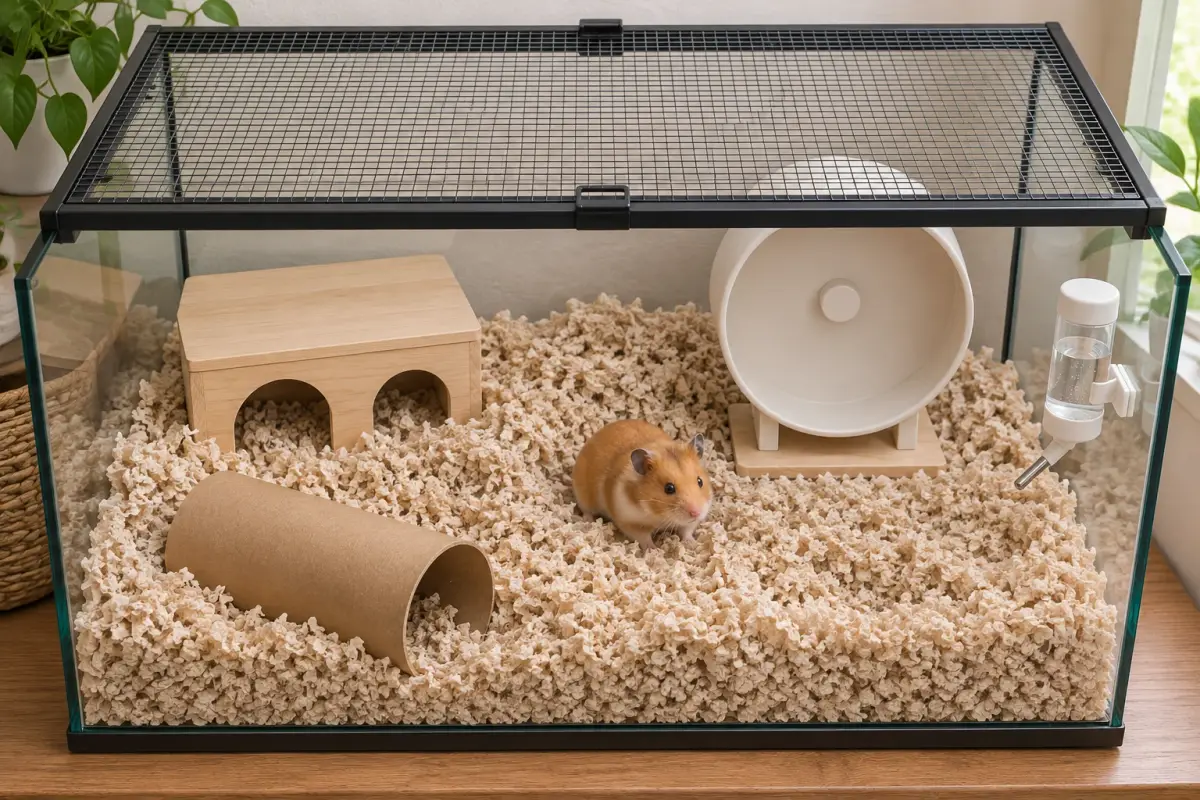
A hamster cage should be as large as you can fit and afford, because hamsters run long distances at night and love to burrow. VCA sets a floor of a 10-gallon tank for a hamster-sized rodent and says bigger is better. Merck Veterinary Manual recommends a solid floor and an enclosure at least 6 inches high, ideally 8 inches or more, so you can add deep bedding. Add a solid wheel, a nest box and hiding places.
By Matt GarnettUpdated November 9, 20264 min read3 sources
The minimum, and why bigger is better
VCA gives a minimum 10-gallon tank for a hamster or gerbil-sized rodent, and is clear that bigger is better for exercise. Merck says the enclosure needs enough room for nesting, eating and exercise. Treat the 10-gallon figure as the absolute floor rather than a target: most hamsters are noticeably more active and settled with much more space.
Floor area matters more than height for a hamster. A long, wide enclosure gives room for a deep digging zone, a separate nest area, a wheel and a feeding spot without everything piled together. Many cages sold as hamster cages are too small, so measure the floor before you buy, and compare it with the space you are able to give. Look at floor area first and height second when you browse large hamster cages, such as a 45-inch cage, and measure the floor yourself instead of trusting the label.
Height and bedding depth
Merck recommends an enclosure at least 6 inches high, with 8 inches or more being better because it allows deeper bedding. Hamsters are natural burrowers, and deep bedding lets them dig tunnels and build nests, which is one of the most important things you can offer them.
Use clean, absorbent, low-dust bedding such as paper bedding or shredded paper, which both VCA and Merck recommend. Avoid cedar and pine shavings, and VCA adds sawdust, corncob and sand to the list of beddings that can irritate the lungs. Pile the bedding deep in at least one area so your hamster can tunnel.
Tank, bin or wire cage?
A glass tank works well if it is well ventilated and has a lockable, escape-proof wire or screen top, which VCA describes. Tanks hold deep bedding without spilling. Cages with a plastic base and wire sides are another option, but check the bar spacing so your hamster cannot squeeze through, and choose a deep base so bedding stays in.
Avoid wooden cages, which VCA warns rodents chew and which cannot be disinfected properly, and anything with sharp edges or wood parts a hamster could chew apart, as Merck cautions. Multi-level cages with tubes can be fun, but VCA notes tubes get chewed and need replacing, and narrow levels do not replace floor space.
The right wheel
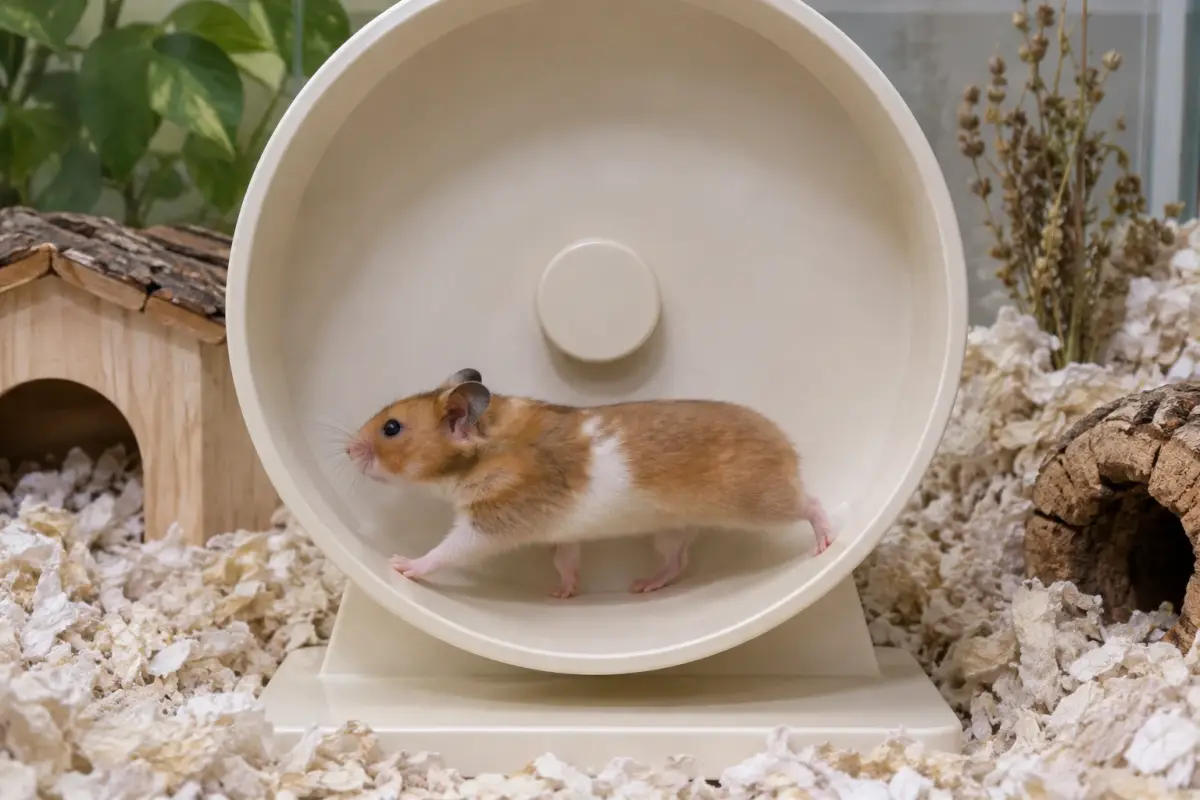
Choose a wheel with a solid running surface, never wire rungs. VCA warns open-track wheels can trap feet and cause serious injury, and Merck also recommends a solid surface. The wheel must be large enough that your hamster runs with a straight back rather than an arched one, which is why Syrian hamsters need a bigger wheel than dwarf species.
A quiet wheel is worth paying for, VCA notes, because hamsters run mostly at night. Fix it firmly so it does not wobble, and place it on a solid base or attach it to the side, not perched on deep loose bedding where it can tip.
What else goes inside
Add a nest box or hut for sleeping, plus tubes and boxes with holes for exploring, as Merck suggests, as long as each is wide enough for your hamster to move through safely. A shallow dish of chinchilla sand for a sand bath is popular, chew items keep growing teeth in check, and a scatter of food encourages foraging.
Use a heavy food bowl and a water bottle or bowl that is cleaned daily. Keep one hamster per enclosure, because Syrian hamsters fight. VCA recommends spot-cleaning daily and changing bedding weekly, though some owners leave part of the nest undisturbed to reduce stress.
Where to put the cage, and when to ask your vet
Keep the enclosure in a quiet room away from direct sun, drafts, heaters and other pets. Merck gives a comfortable temperature range of 64 to 79°F, and VCA notes hamsters do not tolerate heat well. Avoid busy rooms during the day, when your hamster is sleeping. When you are ready to shop, start with our hamster cages and compare the floor area of each against the guidance on this page.
Book a checkup with a vet who knows hamsters soon after you bring yours home. Call your vet if your hamster stops using the wheel, loses weight, has wetness around the tail or seems lethargic.
This page is general information, not veterinary advice, and it cannot replace an examination by the vet who knows your pet.
Common questions
Is a 10-gallon tank big enough for a hamster?
VCA treats a 10-gallon tank as the minimum for a hamster-sized rodent and says bigger is better. Most hamsters do better with considerably more floor space for digging, running and nesting.
How deep should hamster bedding be?
Deep enough to burrow, which is why Merck recommends an enclosure at least 6 inches high and preferably 8 inches or more. Pile paper bedding deep in at least one area of the cage.
Do Syrian hamsters need bigger cages than dwarf hamsters?
Syrians are larger, so they need a bigger wheel and generally more space. Every hamster benefits from a large floor area, deep bedding and plenty of places to explore and hide.
Sources we checked
This guide is general information, not veterinary advice. If your pet is unwell or injured, contact your veterinarian.


