






Buying guides
Best Hamster Wheels: How to Choose a Safe, Quiet One
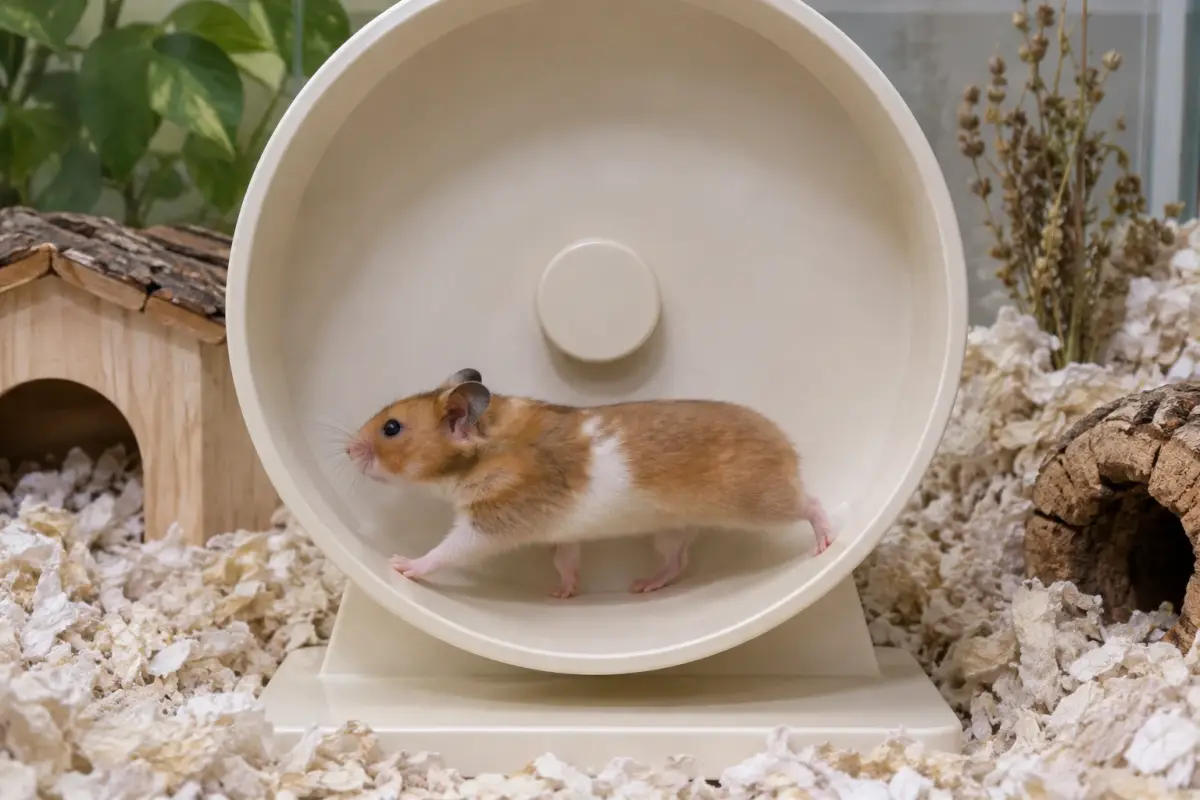
The best hamster wheel has a solid running surface with no gaps, is large enough that your hamster runs with a flat back, and turns quietly. Wire or rung wheels can trap toes and feet, so skip them. Browse our hamster wheels once you know your hamster's size and where the wheel will sit.
By Matt GarnettUpdated November 13, 20264 min read2 sources
What matters most in a hamster wheel
A solid floor comes first. The Merck Veterinary Manual says a hamster's exercise wheel should have a solid, not wire, running surface to protect the feet and toes. VCA Animal Hospitals goes further: the safest wheel has a solid plastic floor with no openings, because open-track or wire wheels can trap a foot and cause injury.
Size comes second. Merck says the wheel should be large enough for the hamster to use comfortably, and the practical test is posture. Watch your hamster run: if its back arches upward, the wheel is too small. A larger wheel lets the spine stay roughly straight. Measure the inside running surface, not the outer shell, because thick walls and a hub can shrink the usable space.
Wheel designs compared
Solid-surface plastic wheels are the standard, and the most useful design for most hamsters. They come as cage-mounted wheels with a stand or a bracket, and as free-standing wheels that sit on the cage floor on a base. A free-standing wheel is easy to move and clean, like this large hamster running wheel, and it suits cages where bars are too thin or widely spaced for a bracket.
Wheels built into a cage are convenient, but check the included wheel against the points on this page before relying on it. A multi-level cage such as this 3-tier hamster cage with an exercise wheel saves a purchase only if the wheel is solid, large enough for your hamster and quiet. If it is not, a separate wheel is easy to add. For cage sizes, see our guide to hamster cages.
Best wheel for each hamster
A Syrian hamster is much larger than a dwarf, so it needs a bigger wheel. Dwarf and Roborovski hamsters can use a smaller one, but the same rule applies: solid floor, flat back. If in doubt, choose the bigger size; a hamster can grow into a wheel but cannot shrink out of a cramped one.
For a hamster that runs all night in a bedroom, noise matters more than anything. VCA warns that hamsters run on wheels relentlessly at night and advises choosing one that does not squeak. Look for a smooth bearing or a quiet spindle rather than a metal axle that rubs. For a cage with a thin base, choose a wheel with a stable stand so it does not wobble.
How to fit a wheel and check it is working
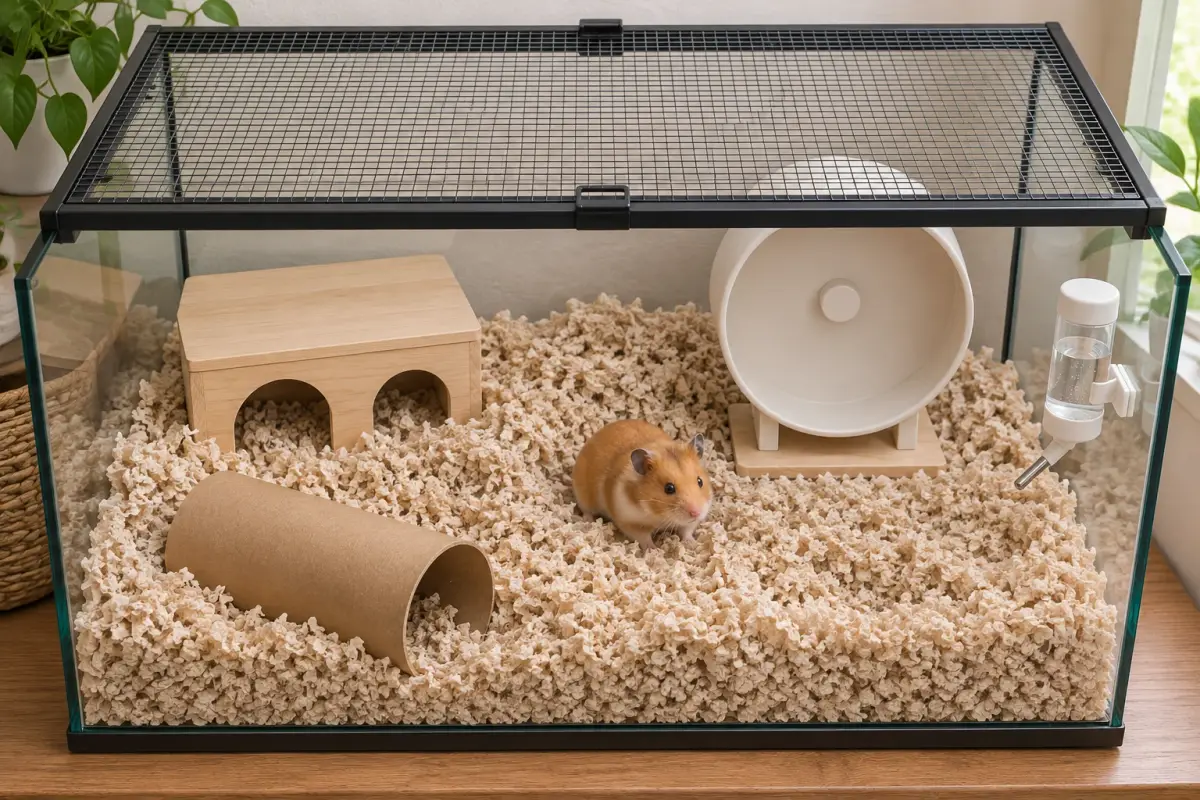
Place the wheel where the hamster can reach it easily and where the bedding will not clog the track. A cage should be at least 6 inches high according to Merck, with 8 inches or more better for deeper bedding, so check that the wheel clears the ceiling and leaves room to run without bumping its head.
Watch the first few nights. A good fit looks smooth: the hamster runs with a flat back, the wheel turns without a wobble, and nothing scrapes. If you hear squeaking, add a drop of pet-safe lubricant only if the maker allows it, or replace the wheel. Check the stand and any screws for wear each time you clean.
What to avoid
Avoid wire and rung wheels, mesh running surfaces and wheels with open gaps. VCA warns that open-track wheels can trap a foot and cause injury. Avoid wheels that are too small, however cute, and avoid wheels with cracked edges, rough seams or sharp plastic after chewing.
Avoid mounting a wheel so that it touches cage bars, since a hamster can catch a toe between the wheel and the bar. And avoid relying on an exercise ball in place of a wheel. A wheel is a daily need, not a toy, so choose it as carefully as you would the cage.
Cleaning, care and when to call your vet
Wipe the running surface when it gets dirty, since urine and bedding build up quickly. VCA advises spot-cleaning the cage daily, cleaning toys weekly and changing all the bedding weekly. Check the wheel for cracks each time. Replace it if it is chewed or loose.
Call your vet if your hamster limps, holds up a foot, has a swollen toe or stops running altogether. A hamster that suddenly avoids its wheel may be in pain. When you are ready to choose, browse our hamster wheels and pick the biggest solid-surface wheel your cage can fit.
This page is general information, not veterinary advice, and it cannot replace an examination by the vet who knows your pet.
Wheel mounting arrangements
| Arrangement | Where the wheel sits | Verify before choosing |
|---|---|---|
| Cage-mounted | A bracket fixes the wheel to the enclosure | Mount compatibility and wheel clearance |
| Freestanding | A base supports the wheel on the floor | Base footprint and stability |
| Included with enclosure | A wheel supplied as part of a habitat | Actual running surface,diameter and mounting |
Common questions
What size hamster wheel does my hamster need?
Choose the largest solid wheel your cage allows. Merck says the wheel should be large enough for comfortable use, and if your hamster's back arches while running, the wheel is too small.
Are wire hamster wheels safe?
No. Merck says to choose a solid running surface rather than wire, and VCA warns that open-track wheels can trap a foot and cause injury. A solid plastic floor with no openings is safest.
How do I make a hamster wheel quieter?
Choose a wheel with a smooth bearing and a stable base, and check that it does not touch the cage bars. VCA advises picking one that does not squeak because hamsters run at night.
Is a cage with a built-in wheel enough?
It can be if the wheel is solid, large enough for your hamster and quiet. Check it against those points, and replace it with a separate wheel if it falls short.
Why does my hamster stop using its wheel?
Common reasons are a wheel that is too small, noisy or wobbly, or a hamster that is unwell. If your hamster limps or avoids the wheel suddenly, ask your vet to check it.
Sources we checked
This guide is general information, not veterinary advice. If your pet is unwell or injured, contact your veterinarian.


