






Buying guides
Best Leopard Gecko Tank: What Size, Material and Setup to Choose
The best leopard gecko tank is the largest secure enclosure you can fit, with a screen or ventilated top, room for a warm side and a cool side, and a hide at each end. VCA lists a 10-gallon tank as the floor for one gecko, and Merck advises going as big as possible. Browse our leopard gecko tanks once you have a size in mind.
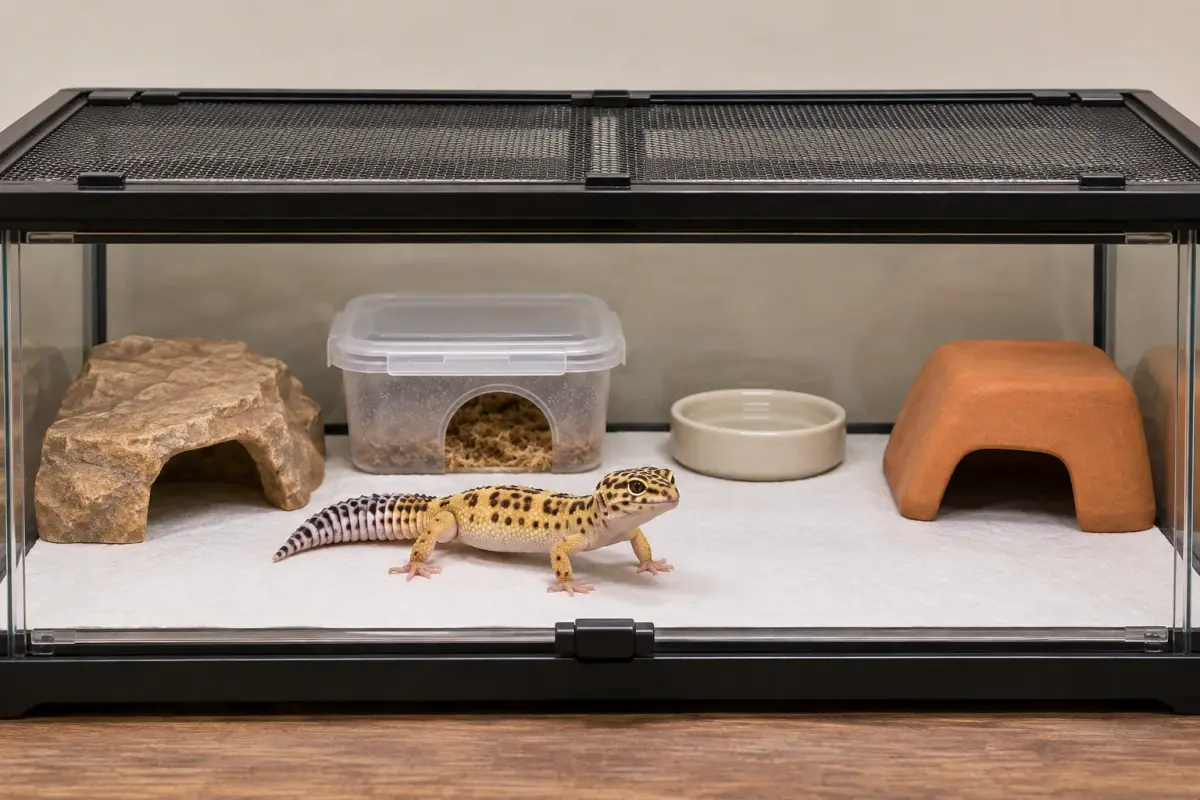
By Matt GarnettUpdated November 14, 20265 min read2 sources
What matters most in a leopard gecko tank
Size and escape-proofing come first. VCA Animal Hospitals says one leopard gecko fits in a 10-gallon aquarium or container at least 6 inches high, and that screen tops are essential to prevent escape. Treat that as a floor. The Merck Veterinary Manual tells keepers to provide the largest enclosure possible, because minimums are a floor and not a target.
Floor space matters more than height for a ground-dwelling gecko, and the space has to allow a warm area and a cooler one. Merck says heaters should be thermostat-controlled, screened from the animal and placed at one end to create a thermal gradient. A tank that is too small cannot hold a real gradient, so the gecko cannot choose where to warm up or cool down.
Glass, wood and other enclosure types compared
Glass tanks are common and let you see the gecko, but Merck points out that glass is a poor insulator, so temperatures can fluctuate widely, and its visibility may also stress reptiles. Wood, plastic and fiberglass are described as more versatile and preferred, though they cost more. Wood suits heat holding, as long as it is sealed against moisture and cleaned carefully.
Ventilation is the other side of the trade. Merck warns not to reduce ventilation to hold in heat or humidity, because that frequently causes skin and respiratory disease, and it notes a mesh top can still restrict airflow on glass enclosures. Front-opening or sliding doors make it easier to reach the gecko without lifting it from above. A wooden reptile terrarium with a sliding door shows that style, so check its listed dimensions and ventilation against your gecko before choosing it. Our broader range of reptile terrariums covers other sizes.
Best setup for each keeper
For a single adult, choose the biggest floor area your space allows, with a secure top and a door you can open without startling the gecko. For a young gecko, a smaller tank can work temporarily, but plan to move up, since a tiny tank will not hold a gradient as the animal grows. Keep one gecko per enclosure unless a reptile vet advises otherwise; Merck says ideally to keep only one species per enclosure to avoid competition for food, basking areas and retreats.
If you are short on space, a front-opening tank with a long footprint beats a tall one. If you travel often, a tank with a thermostat-controlled heater is safer than manual adjustment. Check heating gear in our reptile heat lamps collection, and make sure any heat source is screened from the gecko.
Heating, lighting and the layout inside
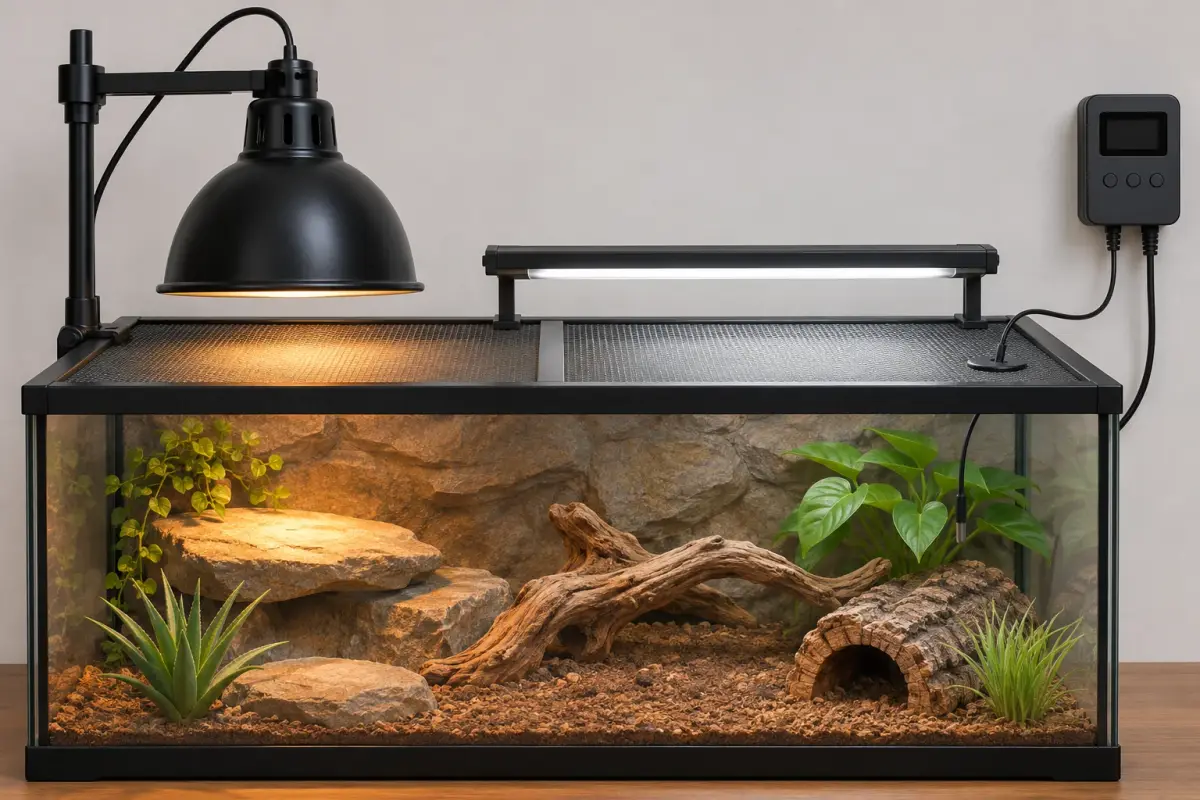
VCA gives the ideal cage temperature as the mid-80s F, with a nighttime minimum of about 70 F. Heat tapes, under-tank heaters or low-level basking lights can all work, but VCA says to avoid in-tank hot rocks because they create hot spots that burn. Keep the gecko at least 6 inches from any heat light to prevent thermal burns, and never place a dome light cover on a plastic surface while it is on, because the heat can melt plastic.
UVB is not required but recommended by VCA, at 10 to 12 inches from the gecko. Provide a hide box or hut, and add wet sphagnum moss, cypress mulch or vermiculite to a moist hide to aid shedding. A hide at each end of the gradient lets the gecko pick warmth or privacy. Use a thermometer at both ends, because guesswork is how tanks end up too cold or too hot.
What to avoid
Avoid loose substrates that can block the gut. VCA lists coarse sand, corncob bedding and crushed walnut shells as risks because geckos can swallow them and they can cause intestinal blockages. Suitable floors include reptile carpet, bark, paper towels or newspaper. Merck also advises avoiding gravel and pebbles for terrestrial species.
Avoid sealing the tank to hold humidity, avoid a lid that does not latch, and avoid cleaning with phenolic disinfectants, which Merck says are toxic. Soap and water are generally enough, and dilute bleach is acceptable if rinsed thoroughly. If your gecko stops eating, has trouble shedding or breathes with its mouth open, see a vet who treats reptiles.
Care, cleaning and when to upgrade
Spot clean daily and replace soiled substrate completely and regularly, as Merck advises for paper and similar bedding. Wash hides and bowls, and check that thermostats, cords and lids are in good order. Provide a water bowl large enough for the gecko to bathe in.
Upgrade when your gecko outgrows the tank or cannot hold a gradient. Look again at the full leopard gecko tank range, and pair it with the right heat and lighting before you set the enclosure up.
This page is general information, not veterinary advice, and it cannot replace advice from a reptile veterinarian who knows your pet.
Common questions
What size tank does a leopard gecko need?
VCA says one leopard gecko fits in a 10-gallon aquarium or container at least 6 inches high. Merck advises the largest enclosure possible, so larger is better for a growing or adult gecko.
Is a glass tank good for a leopard gecko?
It can work, but Merck notes glass is a poor insulator, so temperatures may swing, and visibility can stress reptiles. Wood, plastic and fiberglass are described as preferred. Ventilation matters in any material.
Does a leopard gecko tank need a lid?
Yes. VCA says screen tops are essential to prevent a lizard from escaping. Choose a top that latches and allows airflow, as Merck warns against cutting ventilation to hold heat or humidity.
What temperature should a leopard gecko tank be?
VCA gives the ideal cage temperature as the mid-80s F with a nighttime minimum around 70 F. Provide a warm end and a cooler end, and avoid hot rocks, which can burn.
What substrate is safe in a leopard gecko tank?
VCA lists reptile carpet, bark, paper towels and newspaper as suitable, and warns against coarse sand, corncob bedding and crushed walnut shells because they can block the intestines if swallowed.
Sources we checked
This guide is general information, not veterinary advice. If your pet is unwell or injured, contact your veterinarian.


