Buying guides
Best Puppy Puzzle Toys: How to Choose a Safe First Puzzle
The best puzzle for a puppy is an easy one: a simple treat dispenser or snuffle-style toy sized for a small mouth, with difficulty you can adjust as your puppy learns. Start with treats that fall out readily and stay close while your puppy figures it out. Browse our puppy puzzle toys once you know your puppy's chewing style.
By Matt GarnettUpdated November 14, 20264 min read3 sources
What matters most in a puppy puzzle toy
Size and durability come first. The AKC says to match a puzzle to your puppy's size and personality and to check that it suits their chewing style, warning that a plastic bottle of kibble may not stand up to a power chewer. Small parts are the risk to watch: the American Veterinary Society of Animal Behavior (AVSAB) advises choosing a size suited to your dog to avoid choking and notes that puppy and extreme-chew versions exist.
Adjustable difficulty is the second feature that matters. A puppy that never wins gives up, and one that wins instantly gets bored. The AKC suggests choosing toys whose challenge can grow with your puppy's skills, such as sliders, drawers or rotating parts. AVSAB adds that the easiest setting, with treats that fall out readily, keeps early attempts rewarding and prevents frustration.
Puppy puzzle types compared
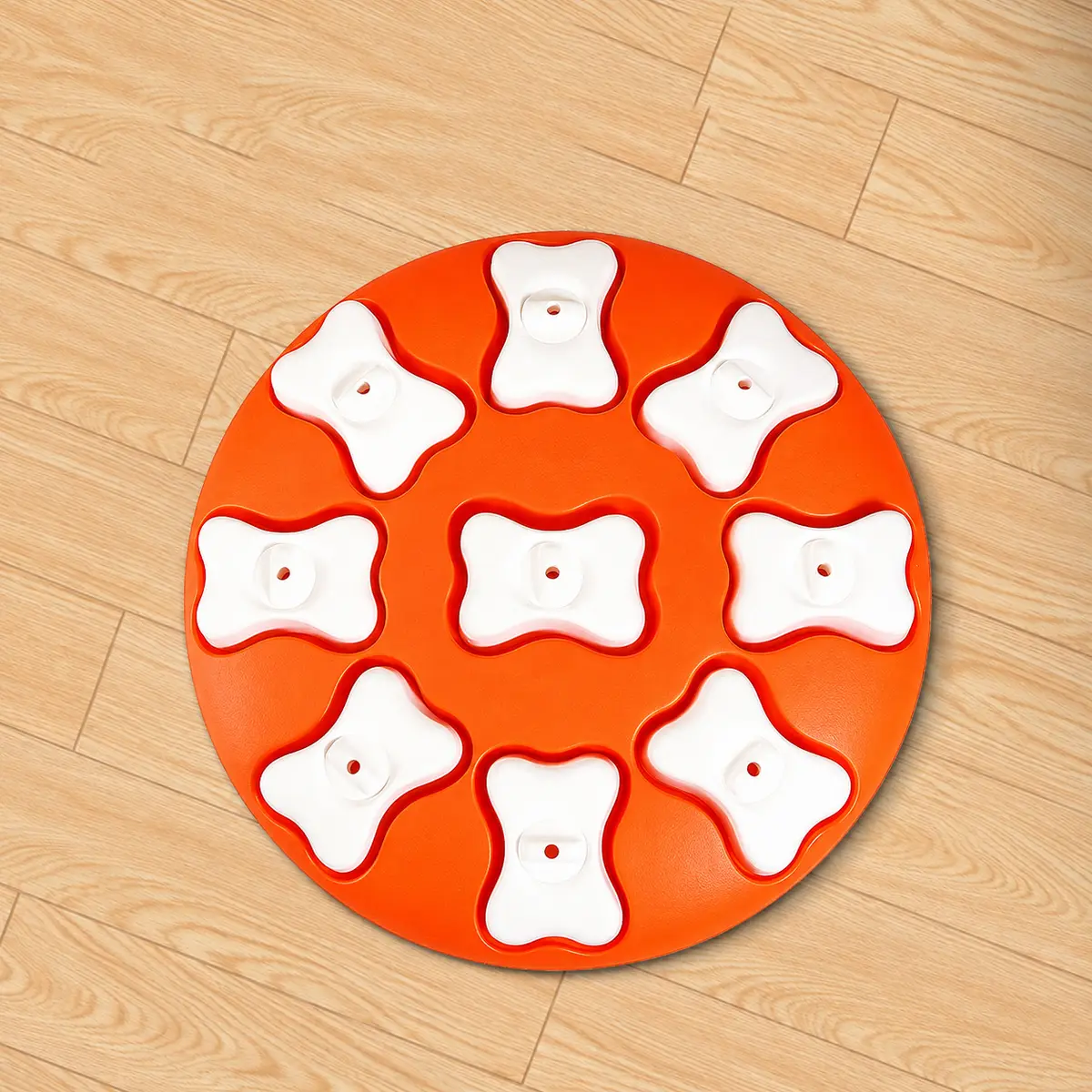
Choose the puzzle by the movement your puppy enjoys. A snuffle mat lets them nose through fabric folds for kibble. A stationary board such as this nine-compartment puppy puzzle feeder keeps the search in one place. Start with one treat in an open compartment and let your puppy find it before increasing the challenge. A rolling dispenser releases food as it moves and gives a puppy who enjoys chasing something to follow. Supervise play and put the toy away if your puppy starts chewing pieces off.
Stuffable rubber toys are the most forgiving option for teething. Fill them loosely at first, then pack tighter or freeze the filling as your puppy improves. For a wider look at feeders and enrichment toys for older dogs, our guide to puzzle feeders for dogs covers the full range of difficulty levels.
Best puzzle type for each puppy
For a heavy chewer or a teething puppy, choose solid rubber or nylon designs without small removable parts, and keep fragile plastic puzzles for supervised sessions only. The AKC recommends durable materials for teething puppies because they are less likely to break apart. A shy or new puppy does best with a snuffle mat on the floor, where success is nearly guaranteed.
For a puppy that struggles to be alone, the AKC notes that puzzle toys can keep a puppy busy when you cannot play, which also helps with learning to be alone. Offer one while you are in the next room, not as a replacement for company. With more than one pet in the house, AVSAB advises giving each animal its own toy and separating them with a gate or crate so nobody guards or steals.
How to introduce a puzzle to a puppy
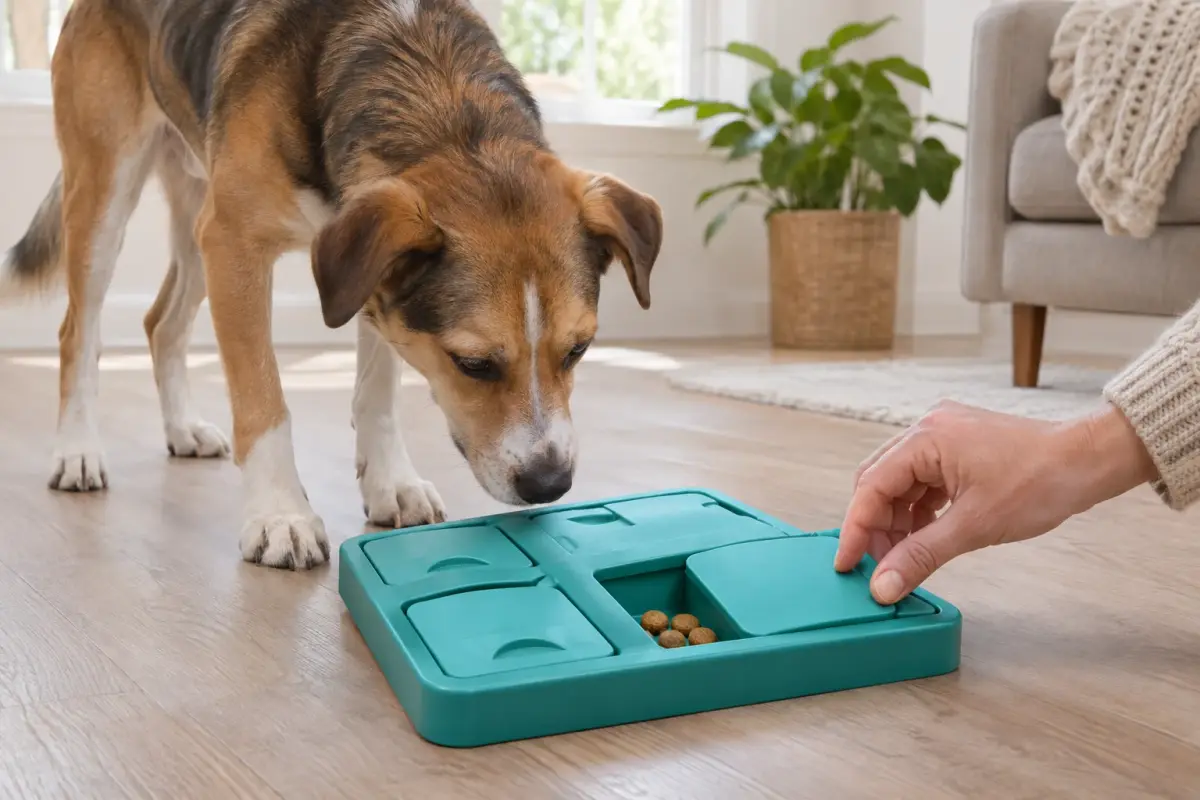
Step 1: choose the easiest setting and fill the toy so food falls out readily. Use a tasty treat for the first few tries so the puppy learns that the toy pays off. If your puppy ignores it, move the toy yourself to show where the food comes out.
Step 2: stay close and watch, especially at first. AVSAB advises supervising food toys. Step 3: raise difficulty slowly. Move from treats to a mix of treats and kibble, then to kibble alone, and only then make the puzzle harder. The AKC points out that mental exercise can be as tiring as physical exercise, so keep sessions short and stop while your puppy is still keen.
What to avoid
Avoid anything with loose, chewable small parts, and throw away any toy that is cracked, torn or punctured. The AKC warns that swallowed small parts or loose stuffing can cause problems. Avoid puzzles too hard for your puppy's stage, because frustration teaches puppies to chew the toy instead of solve it.
If you fill a toy with peanut butter, check the label for xylitol, which is poisonous to dogs, as AVSAB warns. Do not leave a puppy alone with a puzzle until you know how it chews, and never force a puppy to keep working at one. For teething relief rather than food work, our puppy teething toys are a better fit.
Care, rotation and when to ask your vet
Wash food puzzles after each use so old food does not spoil, and check for cracks and worn spots each time. Keep two or three puzzles and swap them between sessions, so each one stays interesting. If your puppy is eating a full meal from puzzles, use the toy for part of their normal meal rather than adding extra food, and watch their weight.
Ask your vet if your puppy swallows pieces of a toy, vomits after puzzle sessions, gulps food to the point of choking, or seems unusually anxious when left alone. When you are ready to choose, browse our puppy puzzle toys and start with the easiest option.
This page is general information, not veterinary advice, and it cannot replace an examination by the vet who knows your pet.
Puppy puzzle mechanisms
| Format | Food location | Moving parts or openings |
|---|---|---|
| Snuffle mat | Within fabric folds | Fold depth and attached pieces |
| Lid or drawer puzzle | Under covers or inside drawers | Lids,sliders and drawer travel |
| Roll-and-dispense | Inside a movable body | Dispensing holes and rolling surface |
| Stuffable rubber | Inside an open cavity | Opening size and material condition |
Common questions
What age can a puppy start using puzzle toys?
Most puppies can start with very simple puzzles once they have settled into their new home, as long as the toy is sized for their mouth. Begin with the easiest setting, supervise, and ask your vet about age-appropriate play.
Are puzzle toys safe for teething puppies?
They can be, if the toy is durable, sized for a small mouth and free of small removable parts. Supervise every session and throw away any toy that cracks or tears.
How do I get my puppy to use a puzzle toy?
Use the easiest setting, fill it so treats fall out readily, and reward early tries with tasty treats. If your puppy ignores it, move the toy to show where the food comes out.
Can a puppy eat all meals from puzzle toys?
Many puppies can eat part of their meals from puzzles, moving from treats to kibble over time. Keep the total food the same as their normal portion and check with your vet about how much your puppy needs.
How long should a puppy play with a puzzle?
Keep sessions short and stop while your puppy is still keen. Mental exercise can be as tiring as physical exercise, so a few minutes of focused work followed by rest is plenty for most puppies.
Sources we checked
This guide is general information, not veterinary advice. If your pet is unwell or injured, contact your veterinarian.