






Buying guides
Best Pet Carriers for Small Dogs: What Actually Matters
The best carrier for a small dog fits its measurements with room to stand, turn and lie down, has mesh ventilation, and closes securely. Soft-sided carriers suit walks and flights, while a hard-sided carrier secured in the car is the safer choice for road trips. Measure your dog before you compare any listing.
By Matt GarnettUpdated November 13, 20264 min read2 sources
Start by measuring your dog
Fit decides everything, so measure before you browse our carriers for small dogs. The AKC says to measure your dog's back from the base of the neck, where the collar sits, to the base of the tail, and shoulder height from the shoulder to the floor, then add a few extra inches to both numbers.
The goal is a carrier your dog can stand up, turn around and stretch out in. The AKC gives the example of a 9-inch-tall Dachshund, who would be cramped in a 9-inch carrier and needs at least 12 inches of height. If your dog falls between sizes, go up a size, since a carrier that is too tight is uncomfortable and unsafe.
Soft, hard and wearable carriers compared
Soft-sided carriers are popular for small dogs because they are light, flexible and often have mesh panels that unzip for airflow, according to the AKC. Hard-sided carriers are more durable, and their sides resist being crushed by luggage or tight spaces. Wearable options such as backpacks, front packs and slings are meant for puppies and small dogs, and rolling carriers steady a dog in busy places.
A shoulder-style bag like the small dog and cat travel bag suits short trips and vet visits. A mesh carrier like the portable mesh dog carrier bag gives more airflow, and the carrying bag for small dogs and cats and pet carrier for small dogs, cats and puppies cover everyday outings.
Ventilation and security
Ventilation is a safety feature, not a luxury. The AKC says mesh panels provide airflow and help prevent heat exhaustion, even in an air-conditioned cabin. Look for mesh on more than one side, so air moves through the carrier and your dog can see out and feel less shut in.
Test every latch, zipper, Velcro strip and clip, because the carrier must keep your dog securely inside. The AKC advises making sure your dog cannot break out. Check stitching at the handles and straps, and inspect the carrier regularly for wear, since a failed strap or loose zipper is how a small dog ends up loose in a car or a crowd.
Car travel: the safest setup
Cornell's veterinary college advises using a crash-tested harness, seat belt or travel crate for car travel, and says that if none is crash-tested the carrier should sit on the floor behind either front seat. Never leave your dog loose in the vehicle, and never leave a dog alone in a parked car, where temperatures can rise quickly and become deadly.
A soft bag is fine for a short walk to the car, but secure whatever carrier you use so it cannot slide or tip. For long trips, stop often to let your dog stretch, relieve itself and drink, and skip feeding for a few hours beforehand if your dog gets carsick. If your dog drools or vomits in the car, ask your vet about options.
Flying with a small dog
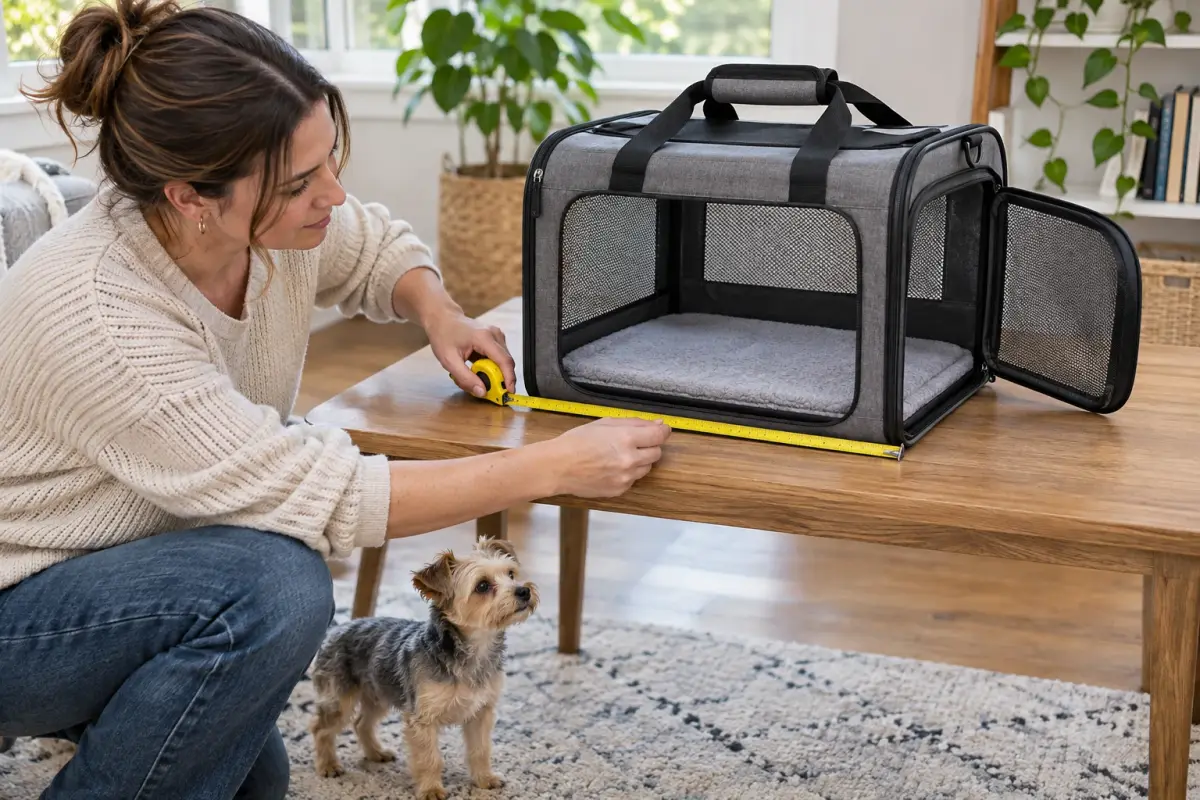
For the cabin, Cornell's veterinary college says to use a soft-sided, well-ventilated carrier that fits under the seat in front of you, and to confirm the airline's measurements before you buy. The AKC likewise says to check current airline rules instead of trusting a product's label, since each airline sets its own limits.
Short-faced breeds such as Bulldogs are at greatest risk when flown as cargo, and Cornell says never to tranquilize a dog for a flight, because sedation can suppress breathing. Talk to your vet well before the trip about whether your dog is fit to fly and what paperwork you need.
Getting your dog used to a carrier
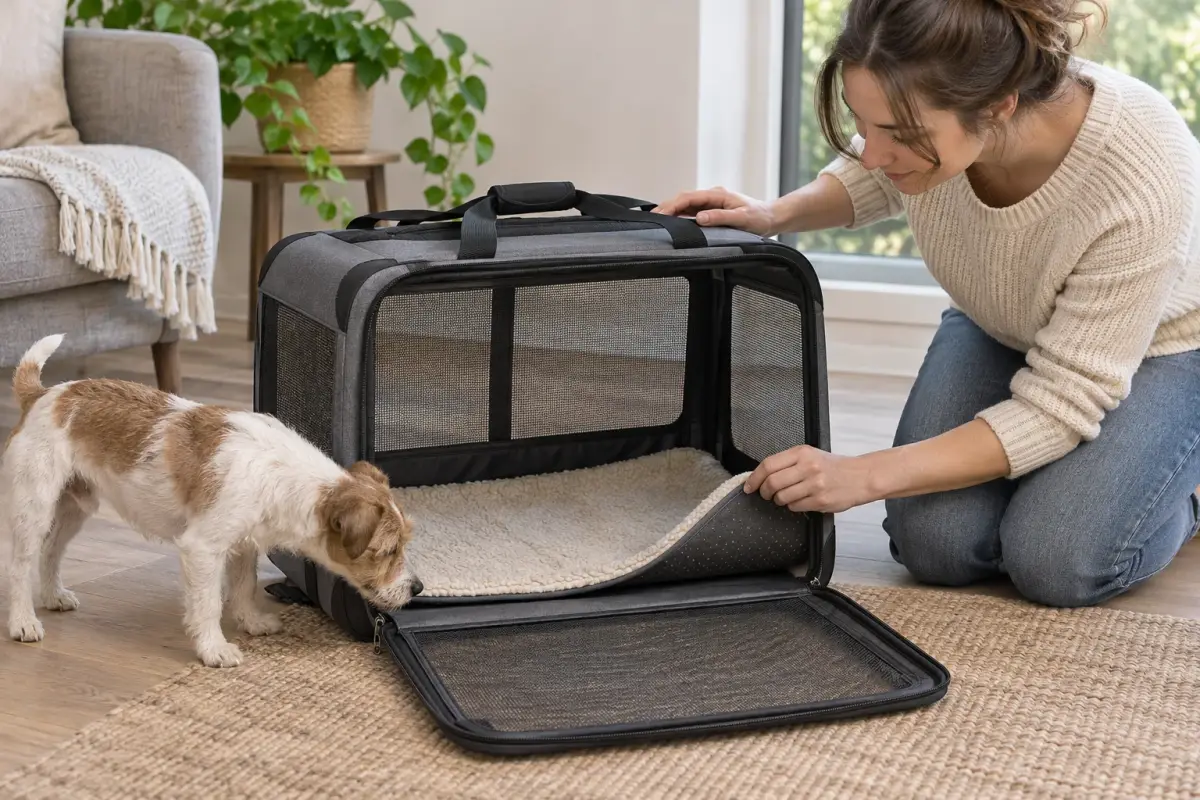
Introduce the carrier in a calm room with the entry points open, and put familiar, scented items inside to make it inviting. The AKC suggests rewarding each interaction with praise, petting or treats, and then increasing the time inside in short increments, watching for signs of discomfort and making sure there is room to lie down.
Leave the carrier out between trips so it becomes part of the furniture, not a signal of a vet visit. Keep early sessions to five or ten minutes, and slow down if your dog becomes anxious. For other gear in this range, see our small dog harnesses, and read our guide to the best dog carrier for general advice.
Carrier bodies and carry supports
| Format | Physical arrangement | Measure or inspect |
|---|---|---|
| Soft-sided | Fabric body with a supported base | Interior,closures and mesh |
| Hard-sided | A rigid shell with door access | Inside floor and opening sizes |
| Backpack or front pack | A body worn on straps | Interior and strap adjustment |
| Sling | A pouch worn against the body | Support and opening arrangement |
| Rolling | A carrier supported on wheels | Base,wheels and handle |
Common questions
What size carrier does a small dog need?
Measure your dog from the base of the neck to the base of the tail and from shoulder to floor, then add a few inches to both. Your dog should be able to stand, turn around and stretch out.
Is a soft or hard carrier better for a small dog?
Soft-sided carriers suit walks, errands and flights, while hard-sided carriers are more durable and, secured in the vehicle, are the usual choice for car trips. The best choice depends on how you travel.
Where should I put a carrier in the car?
Use a crash-tested harness, seat belt or crate if you can. Cornell advises that if none is crash-tested, the carrier belongs on the floor behind either front seat, and your dog should never ride loose.
Can I fly with a small dog in the cabin?
Usually, in a soft-sided, well-ventilated carrier that fits under the seat in front of you. Check your airline's exact measurements and rules before buying, and talk to your vet before you travel.
Sources we checked
This guide is general information, not veterinary advice. If your pet is unwell or injured, contact your veterinarian.


