






Buying guides
Best Harness for Corgis: What Actually Matters
The best harness for a corgi is an adjustable, padded one sized from your dog's measured chest, not from the weight printed on the label. Corgis are short-legged, deep-chested and thick-coated, so fit behind the front legs decides comfort. Choose a front-clip or dual-clip style if your corgi pulls and a back clip if leash manners are solid. You can compare harnesses for corgis once you have your numbers.
By Matt GarnettUpdated November 13, 20265 min read3 sources
What matters most for a corgi's build
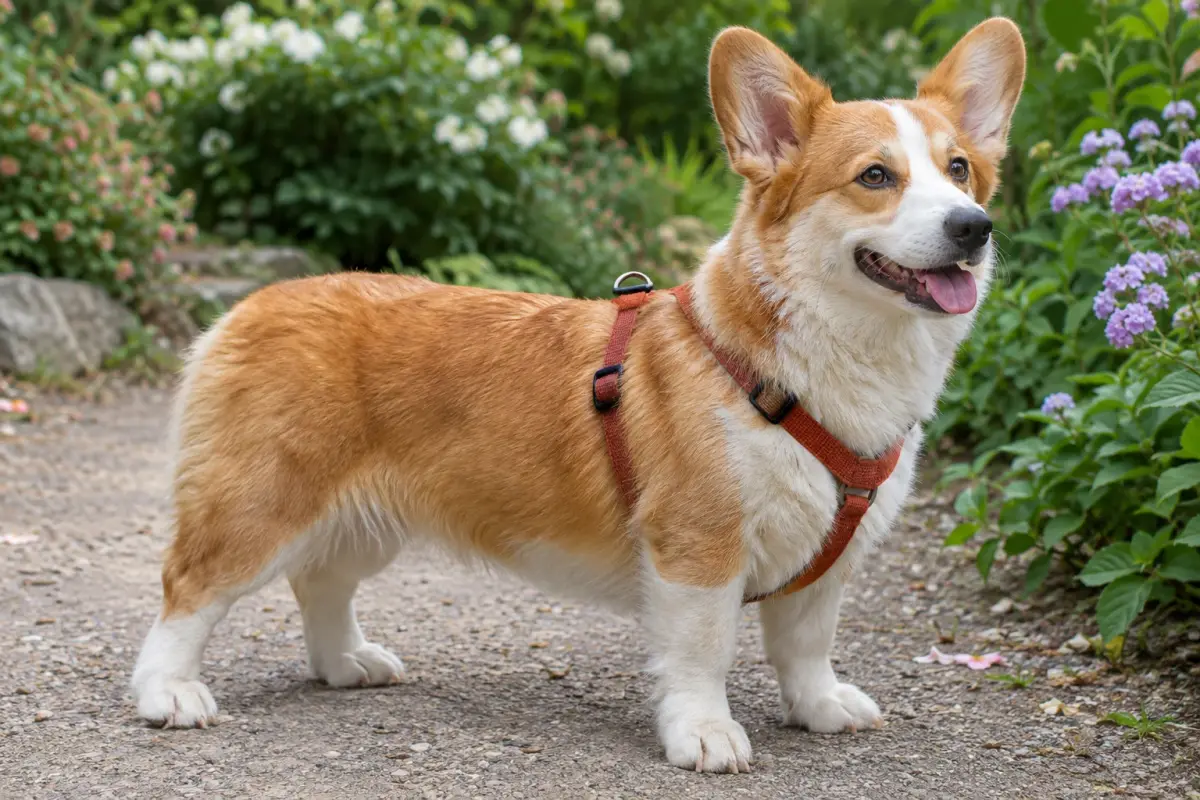
A Pembroke Welsh Corgi stands 10 to 12 inches tall and weighs 25 to 27 pounds, according to VCA Animal Hospitals, and the coat is medium length and somewhat coarse. That means a compact, long-bodied dog with a deep chest and very little leg to work with. A harness sized by weight alone often fits the neck loop badly, so sizing by measurement matters more than for most breeds.
The AKC advises measuring the widest part of the chest, usually just behind the front legs, and the neck where it meets the shoulders. Use a soft cloth tape, or a piece of string held against a ruler, and compare the numbers with the maker's size chart rather than guessing from a label. Pembrokes also tend to be overweight, per VCA, so measure again if your dog's weight changes.
The main harness types compared
A front-clip harness attaches the leash at the chest. The AKC notes that it redirects a dog's forward movement and so discourages pulling, though the clip position can make the leash a little less convenient. A back-clip harness sits between the shoulder blades and is quick to clip on, which suits dogs that already walk politely. A dual-clip model combines both, so you can start on the front clip for control and move to the back later.
A step-in harness has openings for the front legs and fastens on the back, and the AKC singles it out for escape artists because it is harder to back out of when properly fitted. Over-the-head styles slip on and are tolerated well by many dogs. For a simple everyday option, an adjustable pet harness in a padded style is a reasonable place to start, and a harness with leash keeps the walking kit in one set.
Best type for each kind of corgi
For a corgi that pulls hard toward every squirrel, a front-clip or no-pull style with a front D-ring gives you leverage without putting pressure on the throat. VCA points out that a back clip can make pulling easier for some dogs, so a corgi that drags you along may do better with a front attachment at first. For an already well-trained walker, a back clip is simple and comfortable.
For a corgi that wriggles out of everything, try a step-in design and check the fit carefully. For a puppy, expect to adjust or replace the harness regularly as the dog grows. If your vet has raised any concern about your dog's back or chest, ask which style they prefer before you buy. A dog harness and leash set is a practical way to start a puppy on the same kit every walk.
How to check the fit
Slide two fingers under the straps: snug but not uncomfortable. The vet quoted by the AKC thinks the usual two-finger rule can be slightly too loose, so start a little looser and tighten gradually. A thick coat can hide how tight a harness really is, and fluffy dogs may need slightly tighter adjustments to stop slipping, so check by feel as well as by eye.
Then do a walking test. Watch that the shoulders and front legs move freely, tug gently from several directions, and back your dog up to confirm the harness does not slide over the head. Look for rubbing under the legs and behind the elbows after the first few walks, because a corgi's short legs leave little room for straps to sit away from the armpit.
What to avoid
Avoid a harness that is too tight, one that slides over the head when your dog backs up, and anything with worn or frayed stitching. The AKC also cautions that mesh harnesses offer less padding where chafing is a concern, and that nylon or neoprene can trap heat and moisture in hot weather, which matters for a double-coated breed in summer.
A flat collar alone is a poor tool for a corgi that pulls. VCA says a harness is probably the best starting tool for leash training because a puppy will not injure the neck by pulling on it. Keep a collar for the ID tag, but clip the leash to the harness.
Coat, care and when to replace it
Corgis shed, and VCA advises weekly brushing to clear out loose hair. Hair packed under straps causes rubbing, so brush before a walk and see our dog brushes if you need a tool for the coat. Wipe the harness clean regularly, let it dry fully, and check buckles, stitching and clips for cracks.
Recheck the fit after any weight change, a grooming appointment or a change in coat, and replace the harness as soon as parts are damaged. Before buying, look at the range of corgi harnesses and match each one to your measurements. This page is general information, not veterinary advice, and it cannot replace an examination by the vet who knows your pet.
Harness ring and entry layouts
| Feature | Physical arrangement | Check before choosing |
|---|---|---|
| Front clip | Ring at the chest | Ring position and leg clearance |
| Back clip | Ring on the upper back | Attachment and adjustment |
| Dual clip | Front and back rings | Permitted leash configuration |
| Step-in | Legs enter openings before closure | Leg opening and back fastening |
| Over-the-head | Neck opening passes over the head | Neck opening and fitted range |
Common questions
What size harness does a corgi need?
Size by measurement, not weight alone. Measure the widest part of the chest behind the front legs and the base of the neck, then match both numbers to the maker's size chart, choosing an adjustable style so you can fine-tune the fit.
Is a front-clip harness good for a corgi that pulls?
Often yes. The AKC explains that a front attachment redirects a dog's forward movement and discourages pulling. Introduce it gently, keep the leash loose, and reward walking beside you so the harness works alongside training rather than replacing it.
Should a corgi wear a harness or a collar?
For walks, a harness is usually the better choice because it avoids pressure on the neck when a dog pulls, as VCA notes. A collar is still useful for carrying the ID tag, so many owners use both.
How often should I recheck my corgi's harness fit?
Check it every few weeks, and again after weight changes, grooming or a coat change. Puppies outgrow harnesses quickly, so check them more often and replace any harness that is worn, loose or rubbing.
Sources we checked
This guide is general information, not veterinary advice. If your pet is unwell or injured, contact your veterinarian.


