






Buying guides
Best Food for Rottweilers: What to Look For
The best food for a Rottweiler is a complete and balanced diet for its life stage, fed in measured meals that keep a very heavy dog lean. For puppies, choose a large-breed puppy formula with controlled calcium and energy, because steady growth protects developing joints. The label's adequacy statement and the maker's expertise matter more than any brand name.
By Matt GarnettUpdated November 14, 20264 min read3 sources
What a Rottweiler's diet has to support
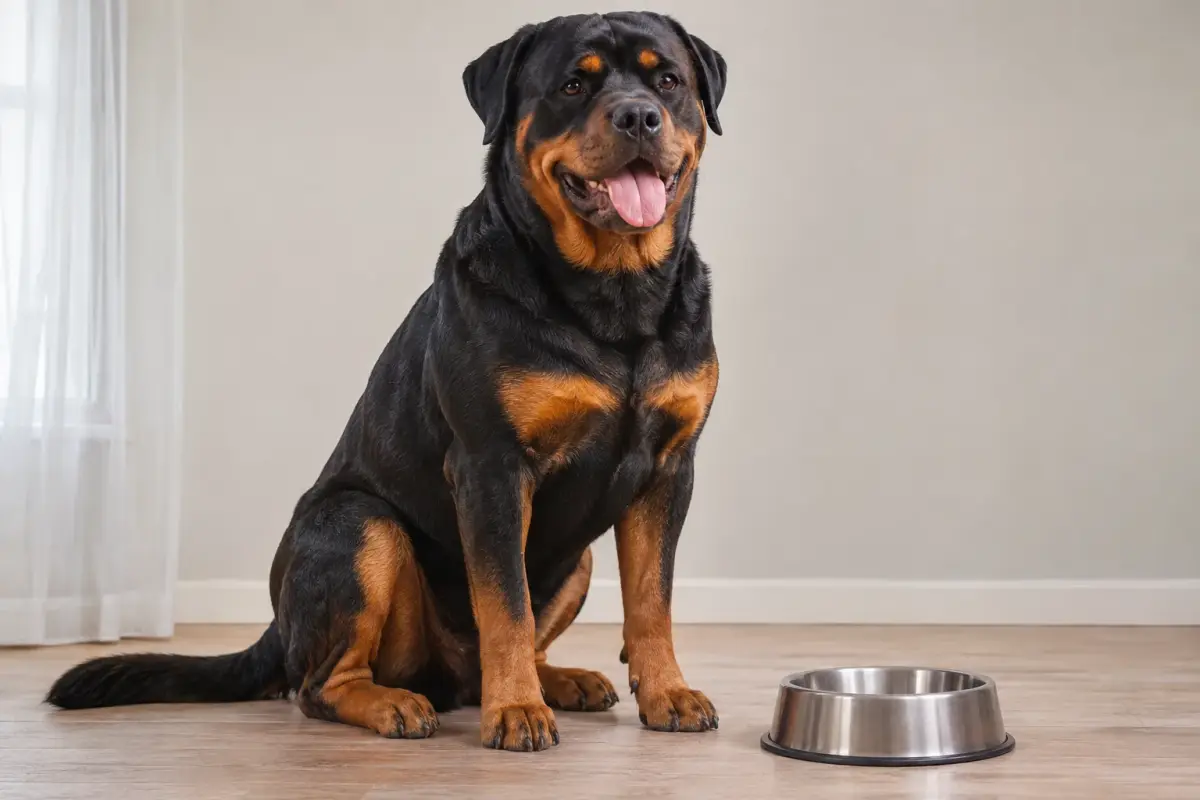
The AKC lists Rottweilers at 95 to 135 lb for males and 80 to 100 lb for females, 22 to 27 inches tall, with a life expectancy of 9 to 10 years. That is a giant-sized frame on a muscular working breed, and the AKC notes that large breeds need careful monitoring for orthopedic disease, obesity and bloat. Food influences each of those through growth rate and body weight.
The practical goal is simple: steady growth as a puppy and a lean, well-muscled adult. Every extra pound on a big dog adds load to hips, elbows and knees. A Rottweiler at a healthy weight should have a visible waist from above and ribs you can feel with light pressure, rather than a broad, flat back.
Large-breed puppy food comes first
Rottweiler puppies grow from a few pounds to around 100 in well under two years, and the AKC explains that this growth should be steady, not fast. Large-breed puppy formulas are lower in fat, calcium, phosphorus and vitamin D than regular puppy foods, because overnutrition and excess calcium are linked to developmental orthopedic disease, including hip and elbow dysplasia.
Choose a food whose label says it is complete and balanced for growth, including growth of large-size dogs. Do not add calcium or other supplements unless your vet prescribes them, and avoid free feeding. Large and giant breeds keep growing until 12 to 18 months or later, so ask your vet when your puppy should move to an adult food.
How to judge any dog food label
The WSAVA Global Nutrition Committee suggests owners look past unregulated marketing terms such as premium or holistic and read the nutritional adequacy statement. It should state that the food is complete and balanced for a life stage, based on AAFCO feeding trials or AAFCO nutrient profiles. Foods marked for intermittent or supplemental feeding should only be a small part of the diet.
WSAVA also recommends asking the maker whether it employs a qualified nutritionist, who formulates the recipes and how it controls quality. A company that answers clearly is a better sign than a long ingredient list. For a big dog, check the calories per cup too, because energy density decides how much you should actually feed.
Feeding a big, deep-chested dog safely
Large, deep-chested breeds are among those at higher risk of gastric dilatation-volvulus, or bloat, a twisting of the stomach that is a life-threatening emergency. Practical steps owners often take include splitting the daily food into two or more meals, avoiding hard exercise around mealtimes and slowing down a fast eater with a ceramic slow feeder bowl. Ask your vet about your dog's individual risk and the signs to watch.
Weight control is the other half. Use the feeding guide for your dog's ideal weight, not its current one, measure every meal, and count treats as part of the day. Weigh your Rottweiler every month or two. Because the breed's average lifespan is shorter than many, keeping it lean is one of the most useful things you can do for its comfort as it ages. Regular walks in a well-fitted Rottweiler harness are the other half of keeping weight down, and a slow feeder bowl for large dogs suits a Rottweiler that gulps its meals.
Common questions about food types
Dry, wet and fresh commercial foods can all be complete and balanced; the formulation and the portion matter more than the format. Large-breed adult formulas are a sensible choice because they are designed around the calorie needs of bigger dogs, but any complete adult food fed in the right amount works. Grain-free diets are not necessary for most dogs; ask your vet before choosing one.
If your Rottweiler has ongoing loose stool, itching, ear problems or weight change, talk to your vet before switching foods again and again. A vet-guided elimination trial is the reliable way to find a food intolerance, and some problems that look dietary turn out to have other causes entirely.
This page is general information, not veterinary advice, and it cannot replace an examination by the vet who knows your pet.
Common questions
What is the best food for a Rottweiler puppy?
A complete and balanced puppy food labeled for growth of large-size dogs, with controlled calcium and calories. Feed measured meals, skip supplements unless prescribed, and keep the puppy lean while it grows.
How much should a Rottweiler eat?
It depends on the food's calories and your dog's age, ideal weight and activity. Use the bag's guide for the ideal weight, split it into two or more meals, and adjust after regular weigh-ins.
Should Rottweilers eat large-breed dog food?
Large-breed puppy food is strongly recommended for Rottweiler puppies. For adults, a large-breed formula is a sensible option, but any complete and balanced adult food fed in the right amount can work.
How can I lower my Rottweiler's bloat risk?
Many owners split food into two or more meals, avoid vigorous exercise around mealtimes and slow down fast eaters. Ask your vet about your dog's risk and the emergency signs to watch for.
Sources we checked
This guide is general information, not veterinary advice. If your pet is unwell or injured, contact your veterinarian.


