






Buying guides
Best Food for Great Danes: What to Look For
The best food for a Great Dane is a complete and balanced diet made for giant breeds: a puppy food formulated for growth of large-size dogs, with controlled calcium, then measured adult meals that keep the dog lean. Great Danes have the highest bloat risk of any breed, so how often and how fast they eat matters as much as the food itself. Plan both with your vet.
By Matt GarnettUpdated November 14, 20264 min read3 sources
What matters most for a Great Dane
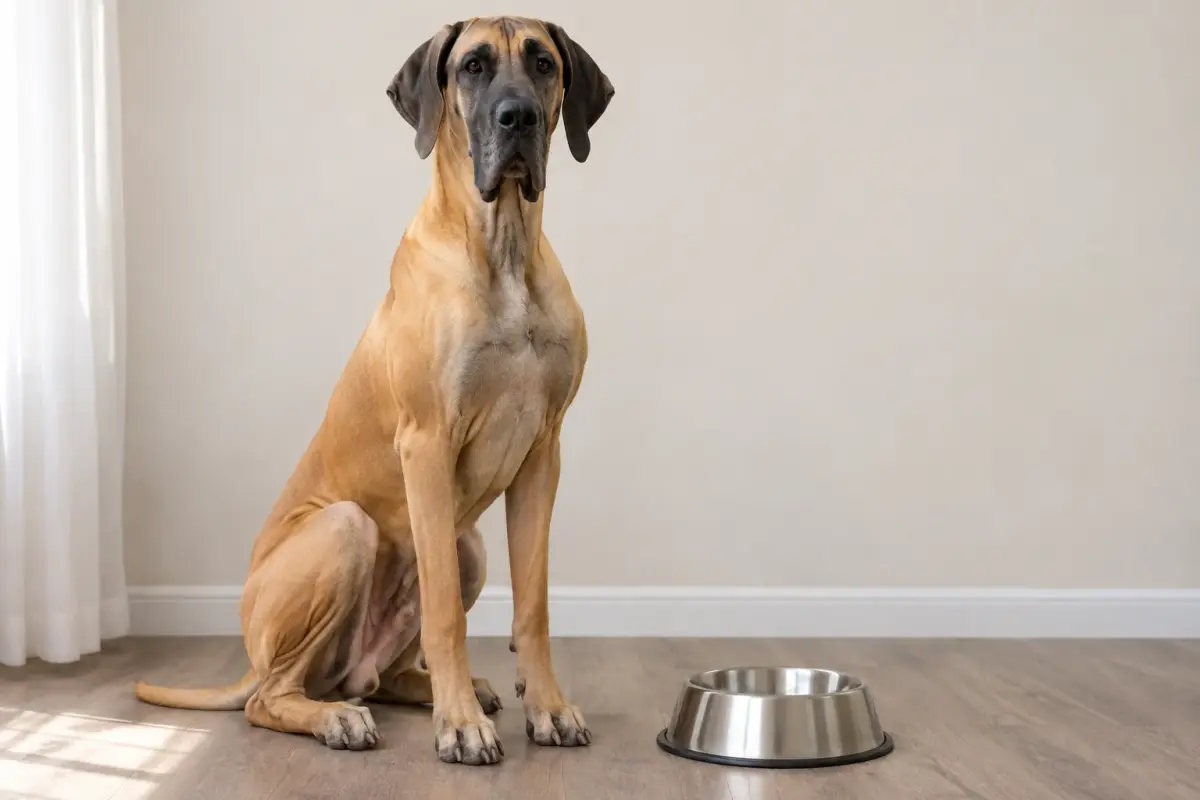
Great Danes commonly reach 110 to 175 lb, and they do most of that growing in their first year and a half. That makes growth rate the central nutrition question for puppies, and lean weight and bloat prevention the central questions for adults.
Choose a food with an AAFCO statement that it is complete and balanced for your dog's life stage, from a company that can answer the WSAVA's questions about who formulates the food and what quality control it uses. The WSAVA notes the ingredient list on its own says little about quality.
Puppies: slow and steady
VCA explains that puppies cannot regulate calcium absorption like adults, so excess calcium is absorbed and can cause skeletal malformations, and that large and giant breed puppy foods have different calcium and phosphorus levels for this reason. Choose a food formulated for growth including large-size dogs, over 70 lb as adults.
Do not add calcium or other supplements to a complete diet. Keep your puppy lean, measure every meal, and weigh it regularly so your vet can track its growth. VCA notes giant breeds may stay on puppy food for up to two years; your vet will tell you when to switch.
Bloat: the Great Dane's biggest risk
Gastric dilatation-volvulus, in which the stomach fills with gas and twists, is an emergency. VCA estimates that about 40 percent of Great Danes will develop it at some point, and names them as the breed most often recommended for preventive gastropexy, a surgery that tacks the stomach in place.
Feeding habits help. The AKC says eating too fast can raise bloat risk and that feeding smaller portions two to three times a day has been shown to reduce it. Split meals, slow down a gulper with a ceramic slow feeder bowl or other slow feeder bowl for large dogs, and avoid hard exercise around meals. A swollen belly, restlessness or retching with nothing coming up means go to an emergency vet immediately. Ask your vet about gastropexy, which can be done at spay or neuter.
Adults: keeping a giant lean
Every extra pound on a giant dog loads its joints. Use the bag's guideline for your dog's ideal weight as a starting point, weigh food, and check body condition: VCA describes ribs that feel like the back of your hand as ideal.
Keep treats to about 10 percent of daily calories. Great Danes are often surprisingly modest eaters as adults compared with their size, and many need less than the bag suggests once fully grown and neutered. A frame this big also changes the gear: see XXL dog crates and a Great Dane harness made for a dog of this size.
Grain-free, raw and boutique diets
Grain-free diets have no proven advantage for dogs without a diagnosed grain allergy. The FDA has investigated a possible link between some diets, many grain-free with peas, lentils or potatoes high on the list, and dilated cardiomyopathy, and notes many cases were in breeds not previously known to be predisposed. Causation is not proven.
Raw and homemade diets are especially risky to get wrong for a growing giant breed, where small errors in calcium and phosphorus matter. If you want homemade, use a board-certified veterinary nutritionist.
Changing food and when to call your vet
Switch foods gradually over about a week. Feed from a bowl, or an elevated feeding station, at whatever height your dog is comfortable with, and discuss raised bowls with your vet rather than assuming they help.
Call your vet for limping or swollen joints in a puppy, a change in appetite, vomiting or diarrhea, or low energy, coughing or breathing difficulty. Seek emergency care at once for any sign of bloat.
This page is general information, not veterinary advice, and it cannot replace an examination by the vet who knows your pet.
Common questions
What should a Great Dane puppy eat?
A complete puppy food formulated for growth including large-size dogs, in measured meals, without added calcium. The aim is slow, lean growth. Your vet can track weight and advise when to move to adult food.
How many times a day should a Great Dane eat?
Two or three meals a day rather than one large one. The AKC notes smaller portions fed two to three times daily have been shown to reduce bloat risk, alongside slowing down fast eaters.
Should Great Danes eat from raised bowls?
The evidence is not settled, so ask your vet. Height should be comfortable, but feeding smaller meals, slowing eating and avoiding exercise after meals are the habits best linked to lower bloat risk.
Is grain-free food good for Great Danes?
There is no proven benefit without a diagnosed allergy, and the FDA has been investigating a possible link between some grain-free diets and heart disease. Discuss any diet choice with your vet.
Sources we checked
This guide is general information, not veterinary advice. If your pet is unwell or injured, contact your veterinarian.


